Solar-Powered Tricycles for Women in Zimbabwe
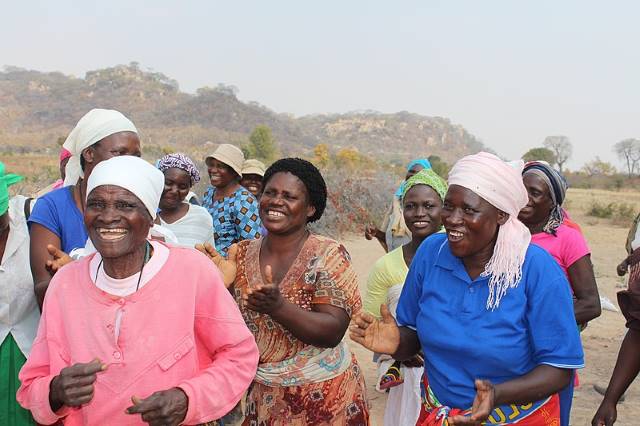 Zimbabwe is one of the most impoverished countries in the world. After years under the dictatorship of Robert Mugabe, and with the added impact of the COVID-19 pandemic, the number of Zimbabweans living in extreme poverty peaked at 7.9 million in 2020, equating to almost 49% of the population. In the rural Zimbabwean district of Wedza, a solar-powered tricycle scheme is helping women improve their living standards. The scheme was started in 2019 by a Zimbabwean startup called Mobility for Africa to promote community-based transport solutions for rural communities. Mobility for Africa leases solar-powered tricycles to groups of Zimbabwean women.
A Tricycle Scheme for Women
The groups of women consist of up to five members and pay $15 a month as a group to lease a solar-powered tricycle. The solar-powered tricycle called “Hamba” rotates from one group member to another. To change the battery of the tricycle, which functions on solar power, costs up to $1. The tricycle transport solution allows women to sell their farm produce at markets a distance from their homes. It also allows them to offer transport service to locals and carry out domestic duties with more ease. According to one of the coordinators of the solar-powered tricycle scheme, women have even been able to increase their incomes because they are now able to engage in income-producing activities like baking and tailoring.
According to U.N. Women, females engage in “at least two and a half times more unpaid household and care work than men.” As a consequence, women have less time to engage in paid work that would bring in an income and help women rise out of poverty. Mobility for Africa’s solar-powered tricycle scheme recognizes that giving Zimbabwean women access to affordable transport solutions can empower women and help reduce poverty as it gives women an opportunity to increase household income.
Community Model and COVID-19
By using a community model, Mobility for Africa provides a clean energy transport solution to women facing poverty in Africa. The community model of the solar-powered tricycle scheme has enabled women with farms in rural Zimbabwe to increase their income by selling produce in markets that were previously too far to reach. The solar-powered tricycles have also made household chores less time-consuming. For example, women no longer have to walk long distances carrying heavy firewood back home.
The community model pursued by Mobility for Africa has helped people in the Wedza district during the COVID-19 pandemic. A nationwide decrease in household income is one of the most significant economic impacts of the COVID-19 pandemic. The solar-powered tricycle scheme has allowed women in the Wedza district to contribute to increasing household income during the pandemic. The scheme has also been important in ensuring rural communities receive essential health services. The tricycles are often used to transport people to health clinics and collect medicines for patients.
Increasing women’s access to paid labor goes hand-in-hand with reducing global poverty. Women, especially in developing countries, are more vulnerable to poverty. Empowering women means recognizing the fact that women play a significant role in reducing global poverty. Mobility for Africa’s Hamba scheme is one example of how private companies can contribute to the fight against global poverty.
– Frank Odhiambo
Photo: Wikimedia Commons
