Relief for Palestinian Refugees in Lebanon
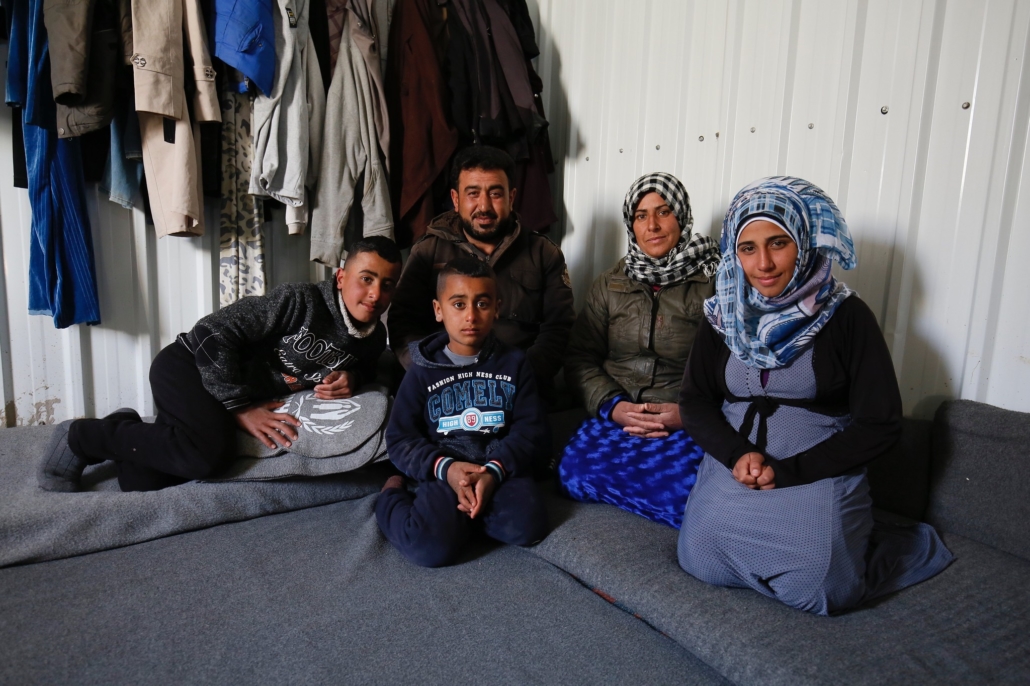
In an essay on humanitarian purpose, Ilana Feldman expressed a sentiment that many humanitarian workers share. She expressed hopelessness in her ability to alter the lives of suffering Palestinians. She believes that this despondency has led many humanitarian workers to promote endurance and resilience within a harsh reality. Instead of a determination to alter this reality, Palestinian refugees must endure it, including those in Lebanon. This hopelessness was not as prevalent in 1947.
The Nakba
Between 1947 and 1949, the flight of Palestinians reached staggering numbers. By 1949, approximately 750,000 Palestinians had fled Israel. According to the Palestinian narrative, these refugees underwent forcible expulsion. In fact, evidence exists to suggest this. One Israeli intelligence document estimates that 75% of Palestinians fled as a result of Zionist military action. Israelis claim otherwise.
Their flight followed the U.N. partition plan. In 1947, because of increasing feuds between the Palestinian, British and Jewish inhabitants of Palestine, the British decided to end its mandate over Palestine and transfer control to the U.N. general assembly. The U.N. chose to partition Palestine into two separate states. The Jews would receive around 56% of the land, and the Arabs would receive around 43%.
The majority of Arabs, however, experienced disillusionment with this outcome, as their population outweighed Jews by more than half a million. Thus, the ensuing war led to what Arabs term the nakba or the catastrophe and what Zionists term the Israeli War for Independence. This nomenclature highlights the contrasting narratives of the Palestinians-Israeli conflict.
After the Israeli victory in 1948, many of the 750,000 Palestinian refugees fled to neighboring countries. One of these countries was Lebanon. Today, the number of Palestinian refugees has risen to approximately 5 million. As many as 476,000 reside in Lebanon and are registered with the United Nations Relief and Works Agency (UNRWA).
The Weight of Economic Decline on Palestinians
On August 4, 2020, catastrophe plagued Lebanon. A port in Beirut housing ammonium nitrate, a highly explosive chemical, exploded. According to the World Health Organization (WHO), 178 people have died and 300,000 people are homeless as a result of the explosion. These conspicuous hardships accompany economic decline.
Approximately half the population lives below the poverty line, and the Lebanese currency has dropped by 80%. Before the explosion and the rise of COVID-19, the debt was nearly $80 billion, the third-highest debt-to-GDP ratio in the world. Some ascribed this economic crisis to corruption. Others believed it was the vestiges of the 15-year Lebanese civil war. Today, the debt is $93.4 billion, an 8.9% increase from February 2020.
Such circumstances have disproportionately affected Palestinian refugees in Lebanon. The financial crisis has fostered a decline in services provided by the UNRWA, the Palestinian Liberation Organization (PLO) and the Palestinian Authority (PA). For years, Palestinian refugees in Lebanon could not obtain employment in as many as 39 different professions.
Today, the financial crisis has bred unemployment for the few Palestinians fortunate enough to receive employment in Lebanon. In conjunction with inadequate electricity and a lack of clean water, the 12 Palestinian refugee camps in Lebanon have also experienced a spike in depression.
Conclusion
Despite grim circumstances, various organizations—the Lebanese Red Cross, the Lebanese Food Bank, Impact Lebanon and the Amel Association–have raised millions of dollars to assuage the economic and health-related impacts of the explosion. Additionally, the UNRWA is ameliorating the spread of COVID-19. Efforts range from regular sterilization of camps to education on the virus for Palestinian refugees. Much more can occur to acknowledge the plight of Palestinian refugees in Lebanon, and the opportunity to return to their self-proclaimed homeland is still a distant hope. But these efforts do not simply contribute to endurance for Palestinian refugees. They do not amount to a default outcome. Though they should feel unsatisfying to any ambitious humanitarian worker, they still render real-world outcomes for Palestinian refugees. Amid growing hopelessness, that is nonetheless something to praise.
– Blake Dysinger
Photo: Flickr
