Modern-day Maya Artisanal Weaving
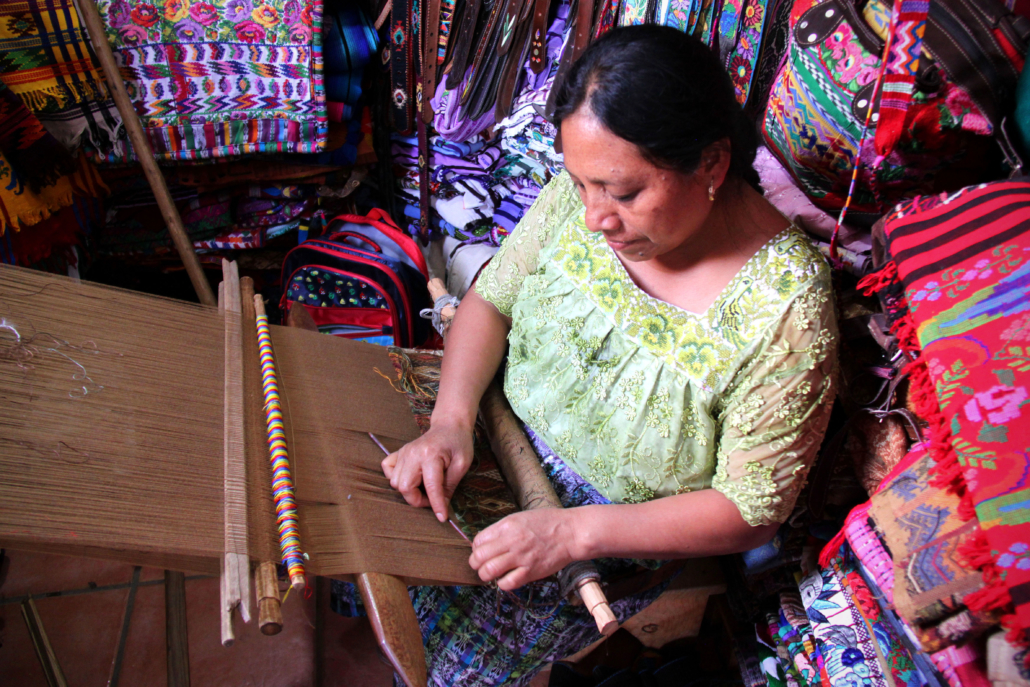 What do the 365-day calendar, the mathematical concept of “zero,” chocolate and rubber all have in common? All of these innovations are credited to the Maya, a civilization that survived for over 2,000 years in Mesoamerica. This article will feature another innovation: Maya artisanal weaving.
At the turn of the 11th century, war disrupted the mighty rule of the Mayas. Unfortunately, after centuries of dominance, the Maya culture fell into disrepair. Furthermore, what was left of the civilization was decimated through conflict and epidemics brought by Spanish colonizers a few centuries later. In 1960, the Guatemalan Civil War began, during which the Guatemalan government attempted to exterminate the Maya culture through savage village bombings and genocidal executions. Of the 200,000 people who died amidst the war, 95% were Maya. This article discusses the modern-day history of the Maya and highlights a group of women practicing their culture and making a living with Maya artisanal weaving.
Modern Day Marginalization of the Maya
Thankfully, the Maya people have survived their tragic near-extinction. However, the Maya continue to face marginalization. Most of the poorest families in Guatemala are Maya families; the average Maya family has eight children, making necessities costly. Generally, these indigenous families remain in isolated, rural areas and receive very little government aid for medical care and quality education. Throughout Guatemala, there is a 60% drop off between the attendance rates of primary and upper secondary school. This statistic is even more drastic for Maya students. While teachers speak Spanish, most ethnic Maya children speak one of the twenty Mayan dialects. This additional obstacle contributes to these early dropouts. Unfortunately, many Maya children also drop out before the end of primary school.
Connecting Maya Artisanal Weaving with Global Markets
The Ancient Maya created a complex weaving machine. Modern-day indigenous crafts-women and men still employ this machine, working to combat endemic poverty in the region of Panajachel, Guatemala. Today, the backstrap loom, foot pedal loom and needlepoint hand-embroidery create the bold cloth which tourists and global shoppers adore. Hiptipico is a company that connects these works of art with the global market. Founded in 2012, Hiptipico, a certified B-Corps company, aims to preserve and develop Maya communities through sharing and protecting their cultural practices. The company’s namesake “tipico” comes from the Spanish word for the traditional clothing of the Maya.
Artisans Earn Fair Wages and a Global Platform
The artisan weavers that work with Hiptipico are small business owners, as well as the Quiejel and Chontala Weaving Cooperatives. Maintaining close relationships with these individuals and small cooperatives of women weavers allows Hiptipico to maintain fair wages when pricing products for the global market.
Socially-conscious shoppers can purchase a wide variety of products from Hiptipico’s fashion line including woven greeting cards, camera straps, bags, totes, and face masks; all available in brightly colored, hand-woven patterns. Production of each Hiptipico product is incredibly time-intensive. A camera strap can take anywhere from 3 days to 3 weeks to complete. Nevertheless, purchases provide a stable income for the artisans. The high-quality merchandise of Guatemala’s indigenous artisans has brought Hiptipico attention from all over the fashion industry. For instance, Hiptipico has organized collaborations with large brands such as Free People. By earning fair, stable wages and establishing a global platform, artisans of Hiptipico are empowering themselves and celebrating their culture.
– Tricia Lim Castro
Photo: Flickr
