Technological Innovations and Diseases in Africa
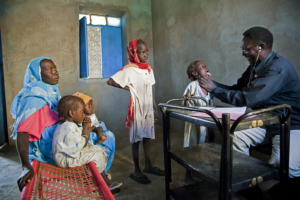 Currently, diseases such as HIV, malaria, meningitis and tuberculosis are among the top causes of death in Africa. In the U.S., these diseases are not within the leading 15 causes of death. Therefore, it is crucial to develop technological innovations to improve Africa’s ability to test and treat diseases to allow for safe, sustainable and prosperous economic growth to occur.
The prevention and treatment of deadly diseases provide a long list of benefits to countries and their citizens. For example, research has found that the decrease in child death slows population growth and reduces the average family size. This reduction in family size allows parents to spend their resources on their community or their family rather than on medical supplies or more family members.
Malaria Disease Tracing
CEO Dr. Eddy Agbo and his team at Fyodor Biotechnologies developed the Urine Test for Malaria (UMT). UMT was the first malaria test not to require blood. Therefore, a specialist is not needed to administer a blood test, process the blood, or dispose of emergency equipment. Patients can conduct the test themselves and receive results in less than half an hour.
UMT’s convenience has revolutionized the ability to test and trace malaria accurately. Since the introduction of UMT, regions in Africa have experienced dramatic decreases in malaria death rates. Before the UMT, it was also common for specialists in Africa to associate fevers with malaria. This association would lead to a large number of falsely diagnosed patients and, therefore, improper medical treatments. These incorrect treatments lead to other illnesses and more death.
Fyodor Biotechnologies focuses primarily on developing new technologies to solve global issues. The company will continue designing and manufacturing technological innovations to improve Africa’s ability to test and treat diseases.
HIV Testing
The convenience of self-testing reveals to improve disease tracing, disease prevention, appropriate medical treatments and reduce the amount of death. Members of Unitaid recognize the benefits of self-testing and have established the Self Testing Africa initiative (STAR).
The STAR initiative collects data regarding how to distribute HIV self-testing kits to various populations effectively. Over 80 countries have adopted HIV self-testing policies since the establishment of the enterprise. The World Health Organization believes that the STAR initiative contributed immensely to providing more opportunities for individuals to trace, treat and prevent the spread of HIV.
Plant-Based Malaria Medication
Dr. Valentin Agon developed an anti-malaria medication that virtually eliminates the disease found in the patient’s blood. The name of the drug is Api-Palu. Api-Palu originates from a plant extract and is considerably less expensive than other malaria medications. People hail this drug due its harmless effects on the human body. As a result, it is trendy in several markets. Dr. Agon hopes to have the drug available to every country in Africa. In 2016, Dr. Valentin Agon won 100,000 U.S. dollars for his creation. Dr. Agon plans to use this money to further aid in the fight against malaria.
Throughout the world, organizations aim to develop technological innovations to improve Africa’s ability to test and treat diseases. As companies push to provide large-scale availability for disease testing, disease treatment and prevention, it is vital to continue to raise awareness for this cause. Eliminating deadly diseases has a profound impact on poverty, education, population and economic growth.
– John Brinkman
Photo: Flickr
