• Link to X
  • Link to Facebook
  • Link to Instagram
  • Link to TikTok
  • Link to Youtube
  • About
    • About Us
      • President
      • Board of Directors
      • Board of Advisors
      • Financials
      • Our Methodology
      • Success Tracker
      • Contact
  • Act Now
    • 30 Ways to Help
      • Email Congress
      • Call Congress
      • Volunteer
      • Courses & Certificates
      • Be a Donor
    • Internships
      • In-Office Internships
      • Remote Internships
    • Legislation
      • Politics 101
  • The Blog
  • The Podcast
  • Magazine
  • Donate
  • Click to open the search input field Click to open the search input field Search
  • Menu Menu
Blog - Latest News
Global Poverty

Social Media Used in Social Revolutions
Social Revolutions
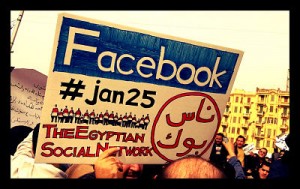
More than two years ago, social media helped Egyptian activists organize massive street protests that lead to the end of President Hosni Mubarak’s reign. With billions of people logging onto Facebook, Twitter and Youtube everyday, it is no wonder that social media has become a celebrated and useful fixture in the voice of the people. However, as quickly as revolutions are sparked, third-party antagonists and governments are sure to falsify what is posted on these sites in an attempt to silence people of opposition. In Egypt, sites that seemed beneficial at the start of the revolution have transformed into venues used to spark violence, hate and oppression revealing the dark side of social media used in social revolutions.

During the Tahrir Square uprising in early 2011, networking websites, like Twitter and Facebook, allowed anti-regime activists to organize mass rallies while providing platforms to articulate political demands. Today, those sites allow a rampant slew of messages focused on provoking anger, hatred and in some cases unsubstantiated rumor. Since the revolution, provocative photos or videos appeared on social media venues which, after eliciting angry reactions, were later proved entirely false or highly exaggerated.

The anonymity of the cyber world is partly to blame for the abuse of social media worldwide and begs the question of validity regarding how effective social media is when used in a full blown revolution. A prominent Egyptian political analyst, Ammar Ali Hassan, notes that one of the main downsides of online social media is the ability of anonymous parties to create fake websites or social media accounts and to issue statements on behalf of political figures or groups that are in fact false. Another explanation of the unbridled use of social media comes from Adel Abdel-Saddiq, social media expert at the Cairo-based Al-Ahram Centre for Political and Strategic Studies. Abdel-Saddiq believes that a significant problem is the lack of legal oversight of social media platforms in Egypt, where “laws against libel and slander only apply to traditional media – i.e., television, radio and newspapers – but not to the Internet.”

– Kira Maixner

Source: INTER PRESS SOURCE
Photo: Policy Mic

May 20, 2013
Share this entry
  • Share on Facebook
  • Share on X
  • Share on WhatsApp
  • Share on Pinterest
  • Share on LinkedIn
  • Share on Tumblr
  • Share on Vk
  • Share on Reddit
  • Share by Mail
https://borgenproject.org/wp-content/uploads/borgen-project-logo.svg 0 0 Borgen Project https://borgenproject.org/wp-content/uploads/borgen-project-logo.svg Borgen Project2013-05-20 06:05:562021-12-14 02:07:59Social Media Used in Social Revolutions

Get Smarter

  • Global Poverty 101
  • Global Poverty… The Good News
  • Global Poverty & U.S. Jobs
  • Global Poverty and National Security
  • Innovative Solutions to Poverty
  • Global Poverty & Aid FAQ’s
Search Search

Take Action

  • Call Congress
  • Email Congress
  • Donate
  • 30 Ways to Help
  • Volunteer Ops
  • Internships
  • Courses & Certificates
  • The Podcast
Borgen Project

“The Borgen Project is an incredible nonprofit organization that is addressing poverty and hunger and working towards ending them.”

-The Huffington Post

Inside The Borgen Project

  • Contact
  • About
  • Financials
  • President
  • Board of Directors
  • Board of Advisors

International Links

  • UK Email Parliament
  • UK Donate
  • Canada Email Parliament

Get Smarter

  • Global Poverty 101
  • Global Poverty… The Good News
  • Global Poverty & U.S. Jobs
  • Global Poverty and National Security
  • Innovative Solutions to Poverty
  • Global Poverty & Aid FAQ’s

Ways to Help

  • Call Congress
  • Email Congress
  • Donate
  • 30 Ways to Help
  • Volunteer Ops
  • Internships
  • Courses & Certificates
  • The Podcast
Link to: 10 Facts You Should Know About the Nobel Peace Prize Link to: 10 Facts You Should Know About the Nobel Peace Prize 10 Facts You Should Know About the Nobel Peace Prize Link to: World Briefing: Bosnia 101 Link to: World Briefing: Bosnia 101 World Briefing: Bosnia 101
Scroll to top Scroll to top Scroll to top