What to Know About Hunger in Vietnam
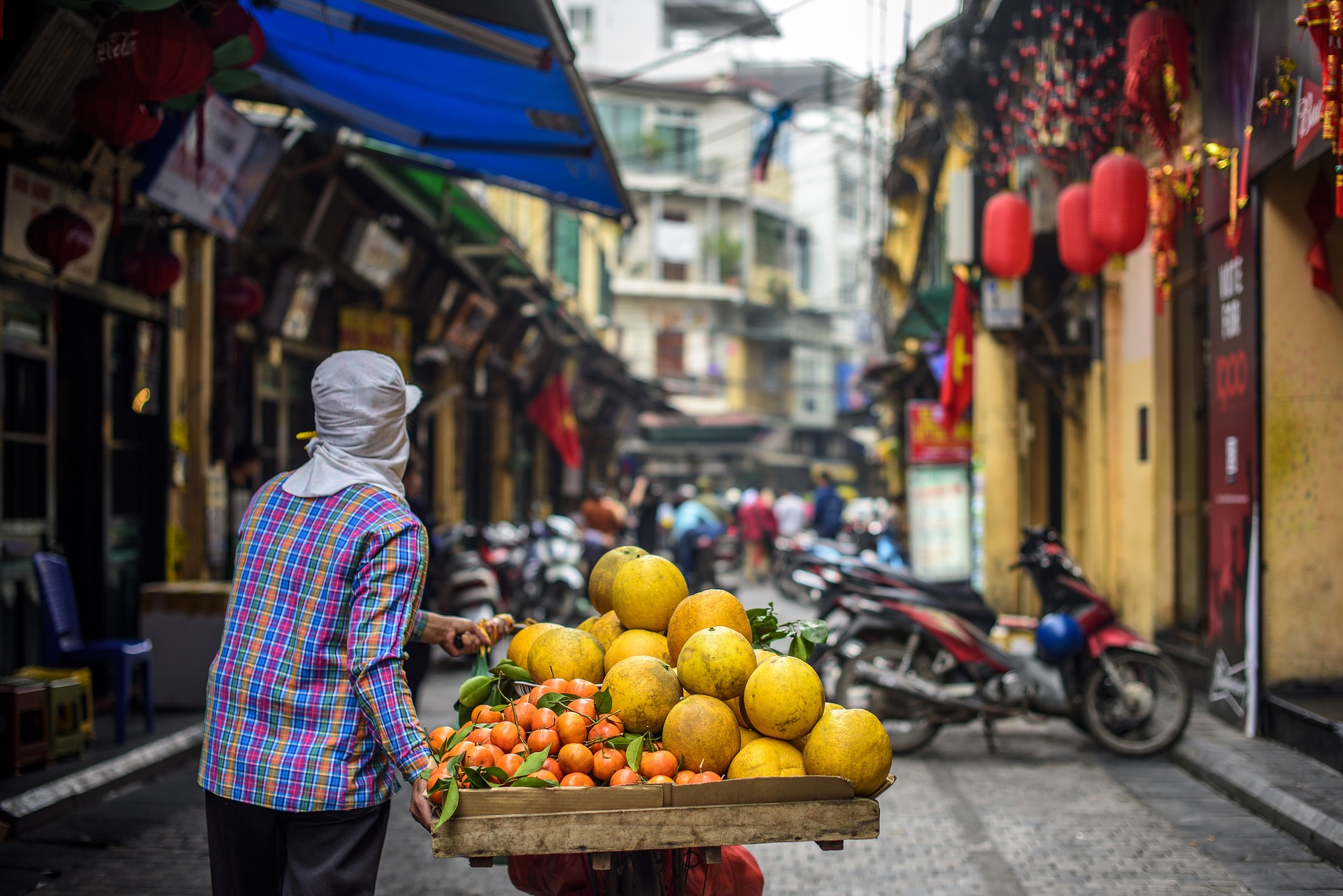 The Socialist Republic of Vietnam is a southeastern Asian country with a coastline of over 2,000 miles on three different bodies of water—the Gulf of Thailand, the Gulf of Tonkin, and the South China Sea. A long, narrow country, its almost 3,000-mile land borders are shared with Cambodia, China and Laos. Vietnam’s 105.8 million population, considered to be one of the highest population densities in the world, is 39.5% urban, distributed in several clusters, with the largest concentration in the north.
Hunger, Nutrition and Food Security in Vietnam
The Global Hunger Index classifies hunger in Vietnam as moderate, with a rank of 56 out of 127 countries. Its most serious issue is children under 5 stunted (19.5%), with child wasting (4.7%), child mortality (2%) and undernourished population (5.2%) all considered to be low. The country’s overall GHI score has been more than halved since 2000, with undernourishment dropping from 42.5% to 19.5%.
Of the 13 global nutrition targets, Vietnam is “off course” for eight, and has shown no progress or is worsening in anemia among women of childbearing age. It has made only “some progress” with childhood stunting, childhood wasting, low birthweight and exclusive breastfeeding. The country has implemented national food and NCD (noncommunicable disease) policies in six of the ten recommended areas and has included specific nutrition targets in almost all related national policy areas.
Given the country’s moderate level of hunger, it is not surprising that it ranks above average (67.9:100) in the Global Food Security Index (GFSI), a 113-country comparison of food security (2022). Its highest (best) ranks are for affordability, availability and quality and safety. It is weakest in sustainability and adaptation. Its greatest weakness in sustainability is water, which includes access to safe drinking water and agricultural water supply and quality. It also gets a lower rating for political commitment to adaptation.
Addressing Hunger in Vietnam
In March 2023, the year following the 2022 GFSI report highlighting Vietnam’s need to address sustainability, Vietnam approved the National Action Plan on Food Systems Transformation toward Transparency, Responsibility and Sustainability in Vietnam by 2030. This plan is being implemented by Vietnam’s Ministry of Agriculture and Rural Development and identifies programs and missions with 16 specific targets to achieve by 2030, including:
- Decreasing severe and moderate food insecurity
- Maintaining food export turnover
- Reducing children’s stunting, malnutrition and underweight malnutrition
- Reducing overweight and obesity
- Increasing the area of agricultural land for organic production, as well as the amount of organic fertilizer used in agricultural production
- Increasing the application of advanced and water-saving irrigation methods
- Reducing post-harvest losses of products
- Reducing greenhouse gas emissions from the food systems
Global Food Donation Policy Atlas
In September 2024, Harvard Law School’s Food Law and Policy Clinic (FLPC), in collaboration with the Global FoodBanking Network (GFN) and Foodbank Vietnam (FBVN), conducted research that outlined steps to build on Vietnam’s national food systems plan. Vietnam was noted as a pioneer in food recovery and redistribution, with local innovation and successes providing the basis to “reduce food waste, boost food donation, feed people who are hungry, and curb environmental damage.”
A significant outcome of this collaboration was the Global Food Donation Policy Atlas, with recommendations to expand food donations. The atlas includes an interactive tool that enables the comparison of country policies for the 25 participating countries plus the European Union. FBVN chairman Nguyen Tuan Khoi describes the Atlas as part of the foodbank’s mission and sees it as contributing “to reducing food waste, and [ensuring] timely, safe and high-quality nutritional food supplies, especially in times of disaster and pandemic response.” GFN has made the map, legal guidelines, policy recommendations and country summaries available on its website.
Sustainable Food Security at Home and Globally
Vietnam’s commitment to its own food security and to making environmental sustainability a part of that security has thus allowed it to play a role in modeling similar activities for other developing countries.
– Staff Reports
Photo: Pixabay
