Planting Trees of Knowledge: A Way to Make Education Accessible
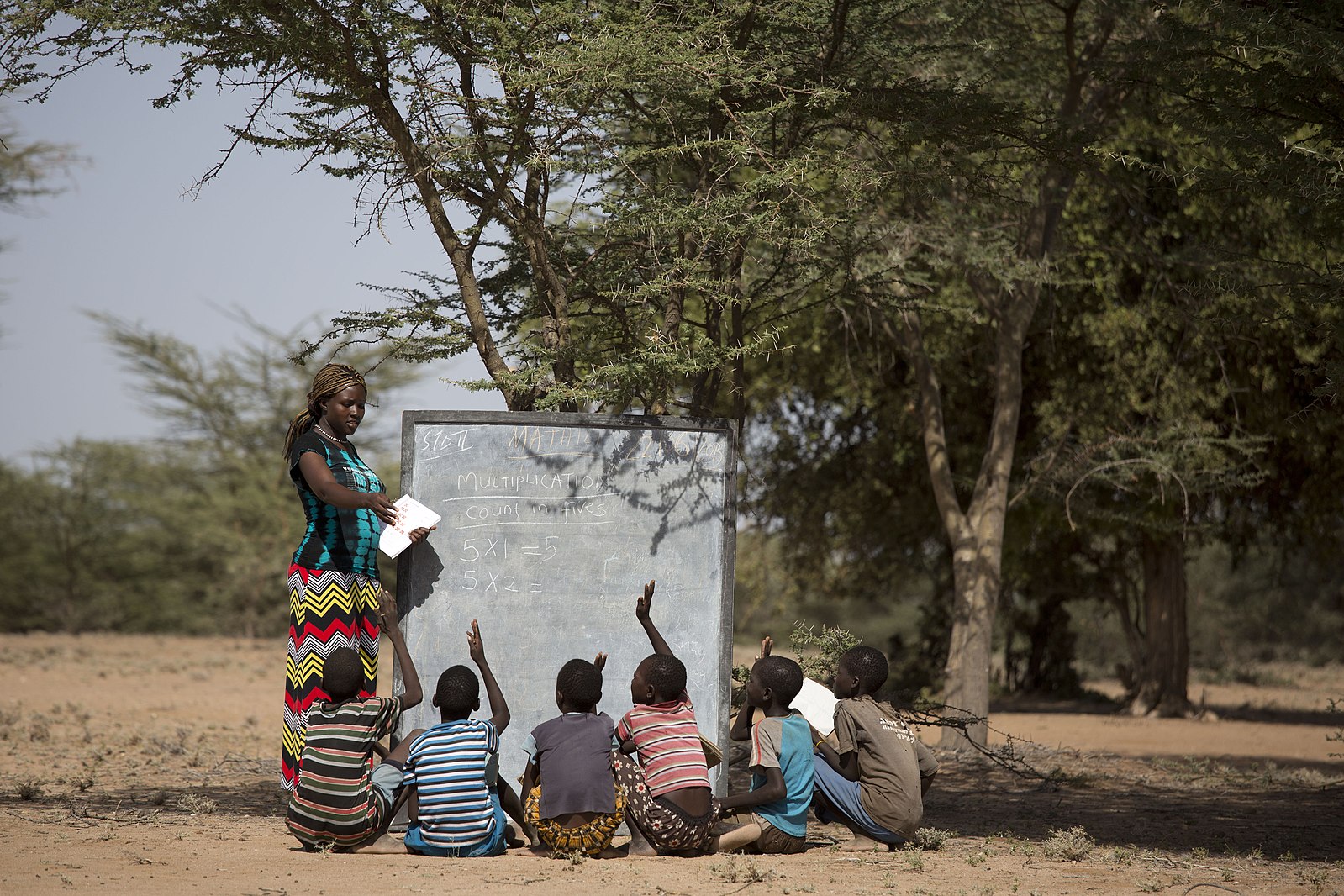 Sub-Saharan Africa continues to face high rates of education exclusion. Across the region, nearly 34 million children do not attend school due to inadequate funding, geographical distance and lack of educational staff. Children living in impoverished areas often have treacherous commutes to school and may experience teacher absenteeism upon arrival. Other children cannot attend school because they must work to support their family or tend to their livestock and land. Trees of Life is working to address the issues limiting access to education.
Education Challenges in Zimbabwe
In countries like Zimbabwe, the problem is pronounced. Most children in Zimbabwe receive primary education but only 49% of high-school-aged Zimbabweans attend secondary school. Furthermore, economic challenges have tightened funding for public and boarding schools, causing a steep increase in the cost of attendance. As a result, communities have taken to creating make-shift alternative schools run by locals to save on expenses. These schools remain unregistered in order to avoid fees and therefore do not undergo government inspections.
These challenges, however, are not unique to Zimbabwe. There is an urgent need to improve access to education in many communities throughout Sub-Saharan Africa. Experts have suggested that the implementation of technology into educational services may be a more cost-effective route than building physical infrastructure. Additionally, much of the population has access to basic smartphones or mobile devices. In fact, Sub-Saharan Africa is the world’s fastest-growing region in terms of smartphone adoption, estimating an addition of 167 million subscribers by 2025.
However, inconsistent and expensive data coverage as well as limited electricity for charging limits internet connectivity for many devices. Zimbabwean AI expert and entrepreneur, William Sachiti, has recently taken up this challenge with an idea for improving access not only to the internet but also to educational tools in rural areas. The project is entitled Trees of Knowledge, which reflects the common practice of gathering under the shade of a tree for class.
Technological Solutions
The Trees of Knowledge technology allows a tree or other landmark to broadcast a Wi-Fi signal. Any device within a 100-meter radius can connect to the network and access a pre-loaded server of educational content. The signal is produced by a micro-computer molded into the tree to protect it from damage. The module is powered by a small rechargeable battery that can run for several years without maintenance. The system also includes a solar-powered charging station that users can plug their devices into.
Any content can be uploaded to the educational server, but Sachiti hopes to eventually transition toward including lessons from local educators, making the content specific to each region. This would allow teachers to work with each country’s department of education to ensure that the curriculum is appropriate.
Trees of Knowledge has the potential to improve educational opportunities for rural and excluded communities. This highly integrated solution could mitigate long commutes to school, which can span from five to 1o kilometers. The system provides access to educational content as well as guidance for those unfamiliar with these new resources. As an open-source technology with no patents or intellectual property regulations, the logistics behind Trees of Knowledge are available to be shared and replicated. Since its publication in 2019, several large NGOs in Africa have picked up the idea.
Future Steps
The concept behind Trees of Knowledge is highly adaptable and can be applied to other uses. Similar technologies have recently been implemented by some national parks and nature preserves, who are using interactive digital programs to teach visitors about the ecology of an area. In rural communities, this technology could provide tutorials on first-aid skills, health and hygiene. On remote trails or routes, it may be used to offer critical safety information and orientation.
By removing the obstacles of cost, data coverage and power consumption, Trees of Knowledge is a highly sustainable idea aligned with the goal of minimizing climate change and habitat destruction. This new technology can provide a variety of educational resources by seamlessly integrating into the environment, yet leaving it unchanged.
– Sylvie Antal
Photo: Wikimedia
