• Link to X
  • Link to Facebook
  • Link to Instagram
  • Link to TikTok
  • Link to Youtube
  • About
    • About Us
      • President
      • Board of Directors
      • Board of Advisors
      • Financials
      • Our Methodology
      • Success Tracker
      • Contact
  • Act Now
    • 30 Ways to Help
      • Email Congress
      • Call Congress
      • Volunteer
      • Courses & Certificates
      • Be a Donor
    • Internships
      • In-Office Internships
      • Remote Internships
    • Legislation
      • Politics 101
  • The Blog
  • The Podcast
  • Magazine
  • Donate
  • Click to open the search input field Click to open the search input field Search
  • Menu Menu
Blog - Latest News
Global Poverty

Colon Misses Out on Panama’s Economic Growth
Colon Misses Out on Panama's Economic Growth
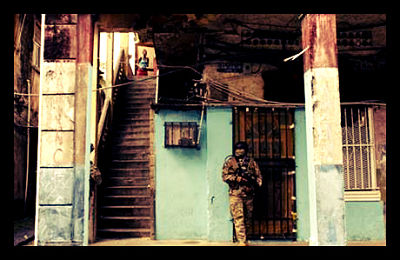
The Panama Canal is framed by Panama’s two largest cities. At one end is Panama City, a vibrant, bustling metropolitan center that is currently experiencing some of Latin America’s greatest growth. At the Canal’s other end, just forty miles away, lies the city of Colon, where potable water, electricity, structurally sound buildings, and meaningful work are all in short supply for the city’s 220,000 residents.

Panama has had an average economic growth of nine percent every year for the last five years. This is due in large part to foreign investment and development in Panama City, where Central America’s first subway is currently under construction. The tallest building in Latin America, a 70-story Trump hotel and condominium, is not out of place among newly constructed skyscrapers, malls, and restaurants.

But Colon has not enjoyed the same booming industrial and commercial development. The city has the largest duty-free trade zone in the Western hemisphere, which has long been a point of contention between residents and developers. Recent development within the zone has benefited businesses there, but not the city at large. The duty-free zone caused social unrest last year when Panama’s president passed a law allowing sale of land in and near the zone. Residents feared this would displace them from their homes and hurt their incomes. Several were killed in the protests.

The economic inequality between Colon and Panama City stems in part from racial segregation and discrimination. Racism is a long-standing problem in many Latin American countries, and Panama is no exception. Those with light skin are often viewed more favorably than those with dark skin in terms of wealth, attractiveness, and ability.

Colon is predominantly black, while Panama City has a larger percentage of European descendants. Many believe that racial discrimination has played a role in Colon’s economic depression.

The stark disparity between Panama City and Colon is an example of the unequal economic growth occurring all over the world. In many places, wealth remains concentrated where it is already abundant, while the poor remain poor, and grow poorer. Correcting this imbalance will require a multifaceted, in-depth, strategic approach that the world’s poor are unable to implement themselves. Therefore, those who have the means to do so are responsible for working to make humane living conditions and economic security realities for every person on the planet.

– Kat Henrichs

Source: NY Times
Photo: AP

April 13, 2013
Share this entry
  • Share on Facebook
  • Share on X
  • Share on WhatsApp
  • Share on Pinterest
  • Share on LinkedIn
  • Share on Tumblr
  • Share on Vk
  • Share on Reddit
  • Share by Mail
https://borgenproject.org/wp-content/uploads/borgen-project-logo.svg 0 0 Borgen Project https://borgenproject.org/wp-content/uploads/borgen-project-logo.svg Borgen Project2013-04-13 08:43:402024-06-07 04:44:45Colon Misses Out on Panama’s Economic Growth

Get Smarter

  • Global Poverty 101
  • Global Poverty… The Good News
  • Global Poverty & U.S. Jobs
  • Global Poverty and National Security
  • Innovative Solutions to Poverty
  • Global Poverty & Aid FAQ’s
Search Search

Take Action

  • Call Congress
  • Email Congress
  • Donate
  • 30 Ways to Help
  • Volunteer Ops
  • Internships
  • Courses & Certificates
  • The Podcast
Borgen Project

“The Borgen Project is an incredible nonprofit organization that is addressing poverty and hunger and working towards ending them.”

-The Huffington Post

Inside The Borgen Project

  • Contact
  • About
  • Financials
  • President
  • Board of Directors
  • Board of Advisors

International Links

  • UK Email Parliament
  • UK Donate
  • Canada Email Parliament

Get Smarter

  • Global Poverty 101
  • Global Poverty… The Good News
  • Global Poverty & U.S. Jobs
  • Global Poverty and National Security
  • Innovative Solutions to Poverty
  • Global Poverty & Aid FAQ’s

Ways to Help

  • Call Congress
  • Email Congress
  • Donate
  • 30 Ways to Help
  • Volunteer Ops
  • Internships
  • Courses & Certificates
  • The Podcast
Link to: Mobile Banking With M-Pesa Link to: Mobile Banking With M-Pesa Mobile Banking With M-Pesa Link to: 10 Quotes from Margaret Thatcher on Leadership, Poverty and Peace Link to: 10 Quotes from Margaret Thatcher on Leadership, Poverty and Peace 10 Quotes from Margaret Thatcher on Leadership, Poverty and Peace
Scroll to top Scroll to top Scroll to top