The Link Between Deforestation and Poverty
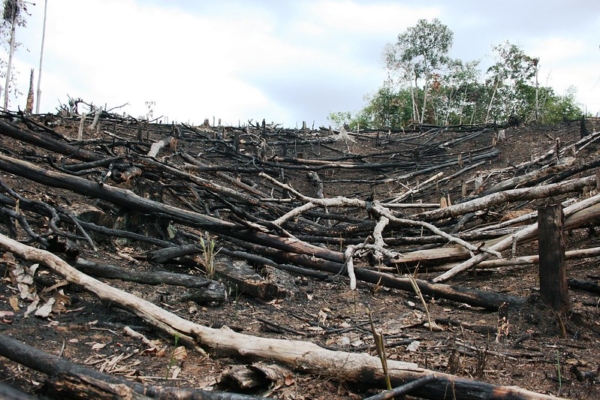
Deforestation throughout the world has been increasing over the past decades. Forests contribute to 90 percent of the livelihood of those that live in extreme poverty. Once people cut down and remove these resources, it takes years to replace them, which puts people deeper into poverty. Deforestation and poverty connect because of what the forest can provide for people living in poverty.
Reasons for Deforestation
There are several reasons that deforestation is so much a part of developing nations. One of the most prominent reasons is logging or cutting down trees for processing. While logging does provide temporary relief from poverty once loggers cut down the trees, it takes years for them to grow back.
Indonesia has the worst problem with illegal logging with 80 percent of its logging exports being illegal. Agriculture is necessary for a country to become self-sufficient and rely on itself to feed its people. Hence, to clear land for crops, farmers cut down large sections of forests. Indonesia also has the worst problem with clearing forest for agriculture; the country states that it is necessary to make way for the trees for palm oil, one of its major exports, in order to reduce poverty.
In Brazil, clearing forests to make way for grazing livestock is the reason for deforestation. Brazil is a top beef exporter having exported over $5 billion worth of beef in 2018 and beef is a significant contributor to its economy.
The Benefits and Harm of Deforestation
The three countries that have the most deforestation are Brazil, Peru and Bolivia. These countries all have access to the Amazon rainforest and they use its resources to help alleviate the strain of poverty. Deforestation has devastated all three of these countries, as each has cut down millions of acres of rainforest.
Since 1978, Brazilian loggers, cattle rangers and farmers have cut down 289,000 square miles of rainforest. One of Brazil’s top crops is soybeans that farmers use to feed its growing cattle population. Massive sections of forest require cutting to make way for both soybean production and cattle and this impacts the indigenous people of Brazil the most. Their entire livelihood is dependent on the forest and when the trees disappear, they suffer extreme poverty.
Peru has recently increased its efforts to control deforestation due to mining. Gold is a large part of the economy of Peru along with logging. These efforts have worked for the people of Peru who were able to cut their poverty rate from 48.5 percent to 25.8 percent in less than 10 years. However, experts believe that this relief, while significant, could only be temporary because the rate of deforestation will have a profound impact on climate change that will, in turn, harm the forests and economy of the country.
The GDP per capita of Bolivia is currently at $2559.51. This makes it one of the poorest countries in the western hemisphere. To help the poor people of the country, the government has doubled the amount of deforestation that occurs in the country to make way for cattle, agriculture and infrastructure.
With the increase of deforestation, the benefits can seem like relief for those that are deeply immersed in poverty. While these countries’ removal of whole forests can help those living in poor conditions, the help is only temporary and in the long run can harm their well being as much as help. Deforestation and poverty are linked and to save the forests, it is essential to help those living in and around the forests.
– Samuel Bostwick
Photo: Flickr
