Infrastructure Development in Micronesia
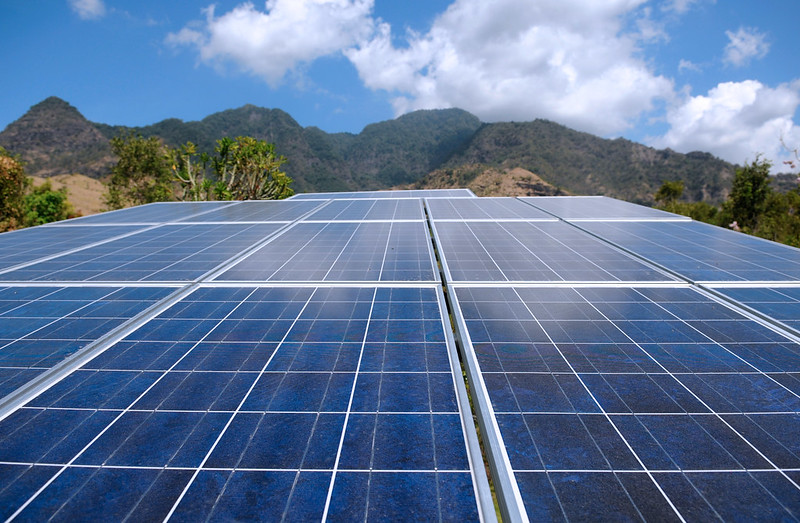
The Federated States of Micronesia relies heavily on foreign aid, yet under its Infrastructure Development Plan 2016-2025, it plans to gain self-reliance and growth in six main areas. In addition, the Sustainable Energy Development and Access Project and the Maritime Investment Project, funded by the World Bank, are two major projects that are already underway. The developments are in key areas, such as fishing and island connectivity, which many Micronesians rely on for their livelihood.
Federal States of Micronesia Infrastructure Development Plan 2016-2025
As part of Micronesia’s Infrastructure Development Plan, economic growth and self-reliance are two areas of improvement. Micronesia is a remote region containing more than 600 islands northeast of Papua New Guinea, 74 of which are inhabited. Due to its remoteness, tourism and investment in the main regions of Micronesia are sparse. The Infrastructure Development Plan is focused on six main areas: macroeconomic stability, good governance, developing a private sector-led economy, health and education services, infrastructure improvement and long-term environmental sustainability.
Under this umbrella, Micronesia already has a number of accomplishments under its belt. Specifically, the School Facility Repair and Construction Master Plan came to fruition in 2013. Likewise, the Airport Master Plan was completed in 2012 and involves safety and security in air transportation. There are four international airports, and development in air transportation is another step to attracting tourism to Micronesia, and therefore, income to those employed in the tourism industry. Although infrastructure development in Micronesia covers many areas, positive economic growth and progress in becoming self-reliant are two important goals for developing its economy.
Sustainable Energy Development and Access Project
The World Bank donated $30 million to Micronesia’s Sustainable Energy Development and Access Project in December 2018. The project aims to increase electricity access and quality and to reduce the reliance on fossil fuels. The four main states of Micronesia, Pohnpei, Kosrae, Chuuk and Yap rely on fossil fuels like diesel. About 96 percent of electricity use in Micronesia comes from fossil fuels, and about 75 percent of the total population has access to electricity.
The project’s goals are the following: increase electricity status in the state of Chuuk, increase renewable energy generation in the states of Chuuk, Kosrae and Yap, improve performance of the Pohnpei Utility Cooperation and provide technical assistance relating to governance, accountability and financial performance of the energy sector. Electricity access varies on the islands. Only 27 percent of the population in Chuuk has access to electricity, yet Pohnpei has a 95 percent electrification rate. The project aims to provide access to renewable energy to the islands for long-term use.
Federated States of Micronesia Maritime Investment Project
The Maritime Investment Project is another source of infrastructure development in Micronesia that was approved on May 9. At a cost of over $38 million, its focus is to increase efficiency, safety, security and climate resilience of maritime infrastructure and operations in Micronesia, including upgrades or repairs to terminal structures at Kosrae, Pohnpei, Chuuk and Yap ports. The project will also improve the connection between the islands with regards to access to food, water and emergency response services.
More than 90 percent of exports are fish. The project benefits not only for infrastructure development in the major ports but also for Micronesians that work in the strong fishing industry. The project ends on August 1, 2024. Sihna Lawrence, Microneisa’s Secretary of the Ministry of Finance, said, “Guided by our Infrastructure Development Plan, we look forward to working with the World Bank to improve our maritime transport and develop stronger connectivity across the archipelago.”
Ongoing Infrastructure Developments
Micronesia’s goal of self-reliance is given through the development plan and projects. Infrastructure development in Micronesia is a major move toward reducing the 41 percent poverty rate and improving health, education and the overall wellbeing of Micronesians.
– Lucas Schmidt
Photo: Flickr
