Ways the World Can Foster Special Education in Refugee Camps
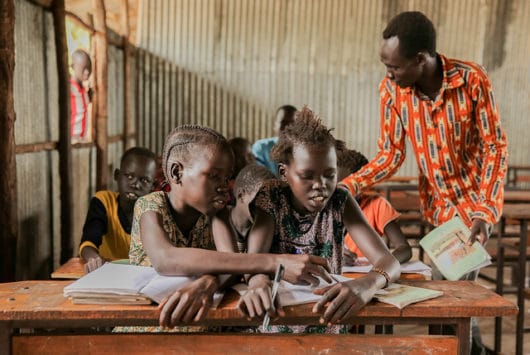
Lack of education is a contributing factor to the cycle of poverty. The 1989 ‘Convention on the Rights of the Child’ and the 1951 ‘Refugee Convention’ emphasizes the fact that access to education is a basic human right. However, approximately half of the world’s refugee children are out of schools. Access to schooling becomes increasingly difficult when countries enter conflicts and develop refugee camps.
The United Nations passed the ‘Convention on the Rights of Persons with Disabilities’ in 2006. The declaration clearly stated disabled peoples’ right to an education. This right is only accessible in 28 percent out of 193 states, and although there are many initiatives to support special education in refugee camps, further support is needed to help refugees with disabilities obtain and maintain the education they need.
Classification of Disabilities
Disability can be categorized into two branches: mental disability and physical disability. A mental disability is any mental disorder that affects the everyday life of an individual, and examples include post-traumatic stress disorder (PTSD), depression, intellectual disabilities and schizophrenia. A physical disability is an impairment of the body and/or a person’s motor abilities. These are either acquired at birth or as a result of a traumatic experience and include cerebral palsy, spina bifida, muscular dystrophy and amputations.
Obstacles Faced by Refugee Children
Special education in refugee camps is not an easy task to accomplish, and there are many obstacles that refugee children with disabilities must face in order to receive an education. The first obstacle is very simple to notice — the challenge of getting to school. In many large refugee camps, there are typically no more than a few schools that children can go to and children usually walk to school. For people with physical disabilities, transportation can pose a great problem, especially as most infrastructure is not built to accommodate disabilities. For example, an 8-year-old girl named Hayam lives in the Za’atari refugee camp in Jordan and suffers from muscular dystrophy. Hayam had to take a quarter-mile walk to her school every day, and her illness made this very difficult.
Another obstacle for people with disabilities is the misunderstanding of physical and mental disabilities in many communities. In many cases, people are taught to fear and look down on people who have disabilities. There are situations in which parents of able-bodied children do not want to have students with disabilities in the same classroom as their child for fear that their child’s education will be harmed.
Furthermore, integration into schools for refugee students can be a difficult task due to political, cultural, religious or linguistic differences. It can be extremely hard for schools to deal with these differences and misconceptions if they lack necessary resources, and such status is incredibly harmful to refugee children with disabilities as it can make it very difficult for them to receive schooling. Refugees are also likely to have PTSD and other related mental disorders due to witnessed trauma, and such effects can harshly affect education if there are no treatments for mental disorders that make it difficult for children to pay attention in class or attend school at all.
Organizational Support
UNICEF and Mercy Corps helped 100 students in the Za’atari refugee camps in Jordan. The two organizations have given wheelchairs to students who have physical disabilities and cannot walk. In another part of the world, the Karen Women Organization (KWO) works in Burma to support special education in refugee camps and rights for the disabled. Not only does KWO aim to ensure increased levels of education, but the organization also aims to support and expand care to children who have disabilities and educate the community.
In 2003, the KWO started the Special Education (SE) Project that runs in every Karen refugee camp. SE Project gives instruction to teachers in the schools and families at home to fully maximize the disabled child’s well-being and reach their goal of integration into society. KWO also helps to combat the misconceptions by creating various activities and workshops for those who are able-bodied and those who are not.
A nongovernmental organization helping refugees receive mental healthcare is the International Medical Corps (IMC). The IMC knows that mental illness is a huge limiting factor for education and they work to make sure there are ways that refugee children can acquire treatment. The group works with local partners in refugee camps to create spaces to talk and provide activities for children and adolescents to develop healthy habits and create relationships. IMC connects children to local youth support and sets up sustainable mental healthcare.
An Unalienable Right
Education is an unalienable right of every person, and special education in refugee camps is crucial for enabling the most endangered people to achieve this right. It is critically important that various organizations and governments continue to build systems that support the abilities of all, especially those most vulnerable.
– Isabella Niemeyer
Photo: Flickr
