Why Typhoon Mangkhut in the Philippines Hit the Poor Hardest
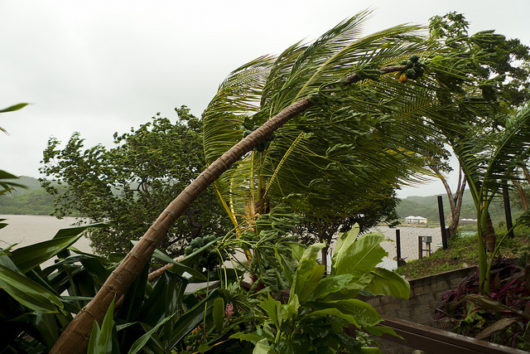
On September 15, the Philippines was struck by a massive typhoon. Winds were blowing at 210 km/h, gusting up to 285 km/h. The most recent death toll was 81 with dozens still missing. The World Meteorological Organization has named the storm the “strongest tropical cyclone the world has faced this year.” As with most other natural disasters, Typhoon Mangkhut in the Philippines hit the poorest populations the hardest.
Landslides
Deadly landslides occurred as a result of overflowing rivers. One of the most disastrous was in Itogen, a remote northern mining town. Emergency workers used shovels and their bare hands to recover the bodies of forty people from the debris. Of the victims, almost all are impoverished gold miners and their family members. Officers in the area told people to find safe shelter prior to the typhoon, but many stayed behind to work the tunnels where they perished.
In Naga, Cebu, landslides wiped out 30 homes in two rural villages, killing 18 people while 64 others are still missing. At least seven of the villagers were rescued after sending text messages calling for help. Too many farmers did not leave quickly enough because they were trying to harvest their crops before the storm or landslides destroyed them.
Authorities say that the typhoon was particularly damaging in the central northern mountainous Cordillera region (CAR), which is composed of the provinces of Abra, Apayao, Benguet, Ifugao, Kalinga, Mountain Province and the cities of Baguio and Tabuk. Populations that live in these mountains are heavily indigenous and predominantly poor, with 17.1 percent of the population living below the poverty line. Most farmers who live there grow rice, and their margin of income is very thin at best.
According to an article in First Point: “Poverty has forced many to live on or near volcanoes, steep mountains and storm-vulnerable coasts, often leading to disasters.” So, it is the poorest populations that bear the brunt of the destruction.
Massive Flooding
The flash flooding that has resulted from Typhoon Mangkhut in the Philippines has been disastrous for rural farmers. Mangkhut swamped farm fields in the north, where much of the agriculture is located. Unfortunately, the typhoon came a month after severe monsoon rains that had already made these provinces vulnerable to disaster. Agriculture Secretary Manny Piñol predicts a total of 1.5 million farmers and over 100,000 fishing communities will be impacted by the typhoon.
The flooding was so bad that rice fields in Iguig could be mistaken for the town’s river. Oxfam’s April Bulanadi said of the disaster: “While I was able to see some farmers desperately harvesting crops the day before the storm hit, it was clear many were not able to do so. This is heartbreaking because it was supposed to be harvest season next month. This will have devastating impacts on small farmers, many of whom are still recovering from Typhoon Haima in 2016.” Some farmers lost their lives in the floods, but those who left in time will still lose their income due to lost and damaged crops.
The Aftermath of the Typhoon
The only current solution is to support the recovery of the victims of Typhoon Mangkhut. Clean water and materials needed to build shelters for those who have lost their homes are being sent by organizations such as Oxfam. Getting through to the villages has been problematic since the airport was also hit by the typhoon.
Maria Rosario Felizco, Oxfam Philippines Country Director, said that “we must also anticipate that the survivors of Typhoon Mangkhut, especially small fishers and farmers who have lost their source of income, will need support far beyond the first few days of this response.” However, aid is not the only thing that the country needs. Changes also need to be made in order to prevent disasters like this from completely destroying the livelihoods of poor farmers.
Typhoon Mangkhut in the Philippines was tragic. For those living in poverty, the storm directly posed a threat to their lives, work and homes all at once. The typhoon was particularly detrimental to the country’s poorest citizens because of their location and the devastating loss they must now endure due to destroyed crops.
Photo: Flickr
