Slowly but Surely: 10 Facts About Living Conditions in North Korea
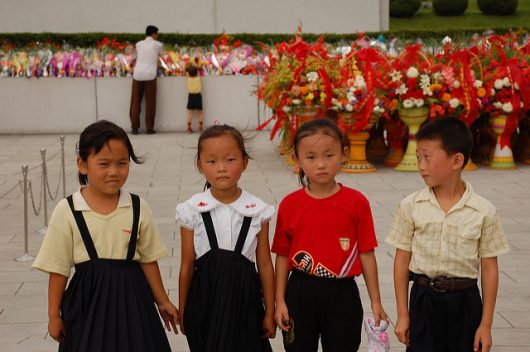
The world was watching when Kim Jong Un ascended the international stage to shake hands with U.S. President Donald Trump. Yet the fanfare of a once-in-a-blue-moon summit in Singapore between the North Korean and American heads of state shuffled North Korean human rights abuses to the back of the media’s story deck. The latest member of the Kim dynasty lives and speaks in superlatives; his people do not. Here are the top 10 facts about living conditions in North Korea.
Top 10 Facts About Living Conditions in North Korea
- For a time following the immediate years of the Korean War, North Korea held a slight lead in wealth over South Korea, but famines and increasing state control over the domestic market led to economic contraction. Today, North Korea relies heavily on China for energy and food imports.
- North Korea’s GDP per capita stood at about $1000 in 2017. In comparison, China’s GDP per capita in 2016 was about eight times that; the United States measures in at approximately $58,000.
- North Korea’s weather is often harsh as it borders Siberia. Winters there can drag temperatures down below zero degrees Celsius (about eight degrees Fahrenheit). A profoundly inadequate heating system forces many inhabitants to gather fuel to keep warm months before the winds and snow arrive.
- In 2013, upwards of 18 million people in North Korea lived without electricity; infrastructure has yet to see major improvement since. In urban areas, approximately 41 percent of the population had access to electricity — that number drops down to 13 percent for rural areas.
- Although the state economy is running only by virtue of China’s life support, North Korea has a burgeoning black market. Smuggling and dealing in products from drugs to ice supplies many citizens with the income to buy food.
- Propaganda is ingrained in both North Korea’s billboards and in many of its people’s minds. As a correspondent for CNN discovered in his time in the hermit kingdom, many in Pyongyang, the capital and most prosperous city of the country, heap praise on the Kim dynasty and hate the Americans. It is unclear whether or not they are forced to do so.
- North Korea’s government groups its citizens via a categorization system called “songbun,” which is comprised of three different categories — loyal, wavering and hostile. As expected, those who are deemed loyal receive benefits, while those marked as hostile often find themselves recipients of discrimination.
- Life expectancy in North Korea averages at about 70 years. For perspective, it is ranked 157th in the world in this category by the CIA World Factbook. A variety of factors, such as inadequate health infrastructure and food shortages, contribute to its ranking.
- North Korean refugees are among the most disadvantaged groups in the world. If they are caught (illegally) crossing the North Korean border into China by DPRK officials, they risk being sent to labor camps. If caught by Chinese officials, they are turned back to their host country; even if they aren’t caught, many are forced into slave labor and prostitution in China and Russia.
- Religion remains a sensitive spot for North Korean officials. Buddhists and Taoists are frequently persecuted if found practicing their beliefs and/or religion, and any official religious spaces exist only for propaganda purposes.
Improving Day to Day
The top 10 facts about living conditions in North Korea show that the situation is abysmal, but standards are on the rise. Kim Jong Un has been more liberal than his predecessors in state control of the economy, allowing pockets of capitalism to flourish.
Despite this, totalitarian shackles remain as steadfast as ever before, and the possibility of political reform seems a distant specter. A long bridge of negotiation and diplomacy on the part of outside powers must be crossed if living conditions in North Korea are ever to substantially improve.
– Alex Qi
Photo: Flickr
