How Tourism Reduces Poverty in Peru
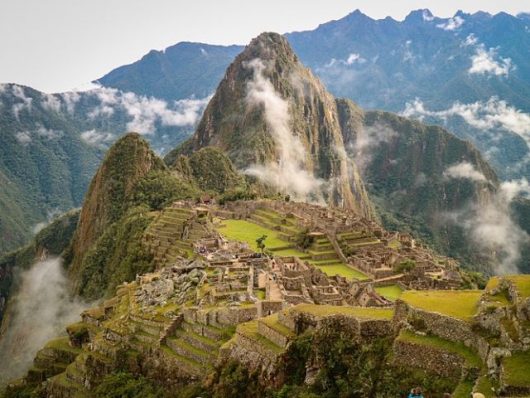
Machu Pichu is a premier tourist destination in the developing country of Peru. It is listed as one of the new seven wonders of the world, attracts over 1.2 million tourists each year and continues to be incredibly well preserved. Peruvian tourism authorities are restricting access to the Incan ruins to minimize the impact of the millions of visitors who journey to the ancient citadel each year. Efforts like these have preserved most of the city and its buildings that are over 500 years old. Machu Pichu is the “golden goose” of the Incan ruins that are spread throughout Peru and has shown that tourism reduces poverty.
Machu Pichu
The ancient citadel was built on a mountain ridge in the Cusco region for the Incan emperor Pachacuti around 1450. It was soon abandoned during the Spanish conquest, but its isolated location left it completely unnoticed by the conquistadors, who were responsible for the destruction of most Incan relics. Machu Pichu remained unknown to the outside world until 1911, when it was discovered by American historian Hiram Bingham. It was declared a World Heritage Site by UNESCO in 1983 and still features its famous astronomical clock, Temple of the Sun and Room of Three Windows that have given historians and tourists an accurate glimpse into Incan life.
Tourism in Peru
The astronomical growth in the popularity of Machu Pichu, from having around 800,000 visitors in 1980 to over 1.2 million in 2013, has made tourism an essential development tool in Peru. According to a guide for Akorn Destination Management, “tourism is the main industry in the region of Cuzco followed by mining and then agriculture.” Tourism reduces poverty in Peru by providing the government with tax revenue from restaurants, sales and income, in addition to the $6 million generated per year from Machu Pichu’s entrance fee.
The Peruvian people also benefit from the enormous popularity and interest in the ancient ruins, through a multiplier effect, a phenomenon whereby a given change in a particular input causes a larger change in output. The new money that is brought into the economy by tourists attracts new businesses and services that are highly labor intensive, which creates millions of jobs for Peruvians. Both the employment benefits for Peruvians and the tax dollars going to the government are having a positive impact on the overall economy.
The Economy in Peru
Peru is one of the world’s fastest growing economies with a GDP of 6.3 percent in 2011 and is classified as an upper-middle economy. According to the guide, “Peru has grown exponentially in the last decade.” This steady increase in GDP has been coupled with tourism in Peru, growing by an annual rate of 25 percent. Overall, travel and tourism contribute 10.1 percent to the country’s GDP and supports 1,366,500 jobs. Thus, Peru has the largest tourism sector in all of South America and is one of the leaders in the global tourism industry.
Tourism is responsible for 5 percent of the world’s GDP and over 235 million jobs. It is an important development tool for developing countries, which host several of the world’s wonders. Peru’s use of Machu Pichu as a tool for domestic progress is a prime example of how tourism reduces poverty.
– Anand Tayal
Photo: Unsplash
