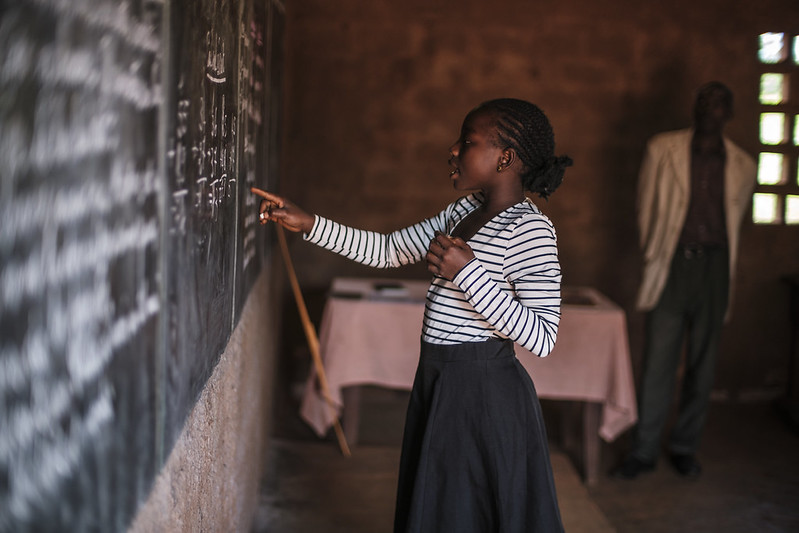
The literacy rate of youth in the Central African Republic (CAR) remains one of the lowest in Africa, with 38.3% of citizens aged 15 to 24 capable of reading and writing, according to a 2022 UNESCO report. However, the country’s male literacy rate of 49.2% is almost double the female literacy rate of 26.2%. The substantial gap between genders indicates that the lack of girls’ education in the Central African Republic is a critical issue.
According to a 2024 UNESCO report, equal access to school is not available for both boys and girls. As of 2017, only 40% of girls completed primary school (compared to 57% of boys who did so); meanwhile, only 8.3% of girls and 13.5% of boys complete secondary school. The Central African Republic is one of the poorest countries with the lowest number of girls attending school.
Barriers to Girls’ Education in the Central African Republic
Girls in the Central African Republic continue to face significant barriers to access a quality education:
- Lack of resources and safety. With civilians enduring the conflict of war and displacement since 2012, male and female students have lost many years of education as a result. Various villages lack schools, teaching material and basic facilities. Potential violence and terror of Seleka forces and anti-balaka groups create dangerous conditions for any child trying to get an education.
- Teacher shortages. Conflict in the Central African Republic also resulted in a shortage of teachers, especially at the elementary level. Departing experienced teachers are typically replaced by parents or non-trained teachers, creating a lack of qualified teachers. Furthermore, these teachers will often have overcrowded classrooms.
- Child marriage. The majority of female students in the CAR drop out of school because of child marriage. According to a 2024 UNICEF report, 61% of the population marries before 18, and 26% of girls marry by 15. The Central African Republic has the third-highest child marriage rate according to Statista, most likely due to poverty and low access to education.
- Sexual violence and slavery. Armed groups involved in the conflict, including Seleka factions and anti-balaka militias, have used sexual violence and sexual slavery as tactics of war. Survivors of these assaults are less likely to return to school due to stigma and humiliation. Others do not return because their parents fear for their safety, especially if the assault occurred on their way to or from school. Survivors who do return to school often do not receive the support necessary to continue their education.
Improvements to Girls’ Education in the Central African Republic
There was no school in the village of Bamingui Bangoran prior to 2000; but upon returning to the CAR, Abtraman — a resident of Bamingui Bangoran — decided to open the first school in the village.
The school was built with straw, makes up three classrooms and as of 2018 served 225 students between ages 6 to 14. UNICEF funds have also helped train professional teachers and parents who are taking on the teaching role. Furthermore, the Norwegian Refugee Council has created information sessions for parents to teach them the importance of maintaining their child’s education.
After parents attended these information sessions, attendance rates among female students increased. Abtraman said, “More girls are attending school, which would have been unthinkable only a few months ago.”
Furthermore, the Global Partnership for Education has as of 2023 provided $103 million to the CAR to improve the education system. The GPE’s Accelerated Learning Program had as of 2023 taken 5,265 students, almost half girls, and the GPE continues to fund programs to improve education in the CAR and to close the gap between girls and boys in education.
La Fondation Voix du Coeur
La Fondation Voix du Coeur (The Voice of the Heart Foundation) is the first non-governmental organization in the Central African Republic dedicated to taking care of children in untenable situations. Among other services, La Fondation runs the Damala Girls’ Center, a home where female victims of violence are sheltered, fed, educated and given psychological and medical care. La Fondation’s goal is to provide at-risk children with the support and education they need to thrive.
The United Nations Girls’ Education Initiative
The United Nations Girls’ Education Initiative (UNGEI) established its partnership with the Central African Republic in 2004. UNGEI partners with various education associations and strives to build classrooms, recruit and train teachers and promote the message of girls’ education. Despite the recent conflicts of war in the CAR, various doors are beginning to open as parents become educated on education’s significance.
As Gayle Smith, the former president and CEO of the ONE Campaign, said, “Over 130 million girls are still out of school — that’s over 130 million potential engineers, entrepreneurs, teachers and politicians whose leadership the world is missing out on.”
Education can be seen as one of the fundamental avenues for ending the cycle of poverty within a family, and educating more girls will be crucial for the Central African Republic and, indeed, the world. Through organizations like UNGEI, the Global Partnership for Education, and La Fondation Voix du Coeur, the education gap between boys and girls in the Central African Republic will be able to close.
– Diane Adame
Photo: Flickr
