• Link to X
  • Link to Facebook
  • Link to Instagram
  • Link to TikTok
  • Link to Youtube
  • About
    • About Us
      • President
      • Board of Directors
      • Board of Advisors
      • Financials
      • Our Methodology
      • Success Tracker
      • Contact
  • Act Now
    • 30 Ways to Help
      • Email Congress
      • Call Congress
      • Volunteer
      • Courses & Certificates
      • Be a Donor
    • Internships
      • In-Office Internships
      • Remote Internships
    • Legislation
      • Politics 101
  • The Blog
  • The Podcast
  • Magazine
  • Donate
  • Click to open the search input field Click to open the search input field Search
  • Menu Menu
Blog - Latest News
Global Poverty

Differences Between Congressmen and Senators
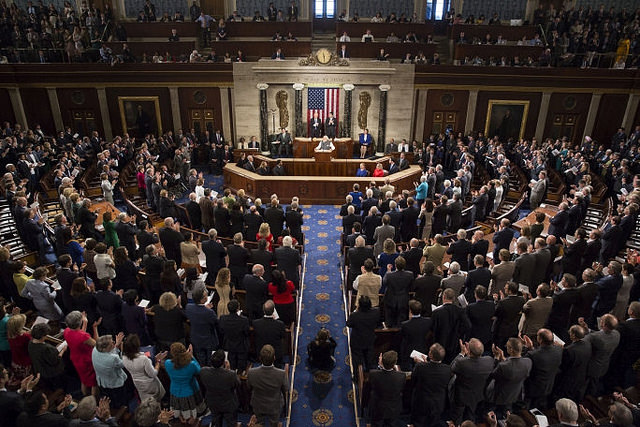

The differences between congressmen and senators are often confusing. Oftentimes, the two roles are used interchangeably to represent someone who works and composes the legislature of the United States. However, the roles, influences and powers of congressmen and senators vary.

Congress refers to both the Senate and the House of Representatives. A congressman is any member of either the Senate or the House of Representatives. There are a total of 535 voting congressmen, 435 of which are representatives and 100 which are senators.

To become a senator of the U.S., the potential candidate must be elected by the people of the state. Like any election, the candidate with the most votes wins. Each senator has an office in Washington, D.C., as well as one in the home state.

Senators are members of the legislative branch – their job is to represent the people living in their state. For example, to support a bill which aims to reduce poverty, individuals can contact their state senator. These bills are voted on and passed by the U.S. Senate and the House of Representatives, which are then signed by the president to become law. Each state within the U.S. has two senators representing it, regardless of the size or population of the state.

In accordance with the Constitution, “all legislative Powers herein granted shall be vested in a Congress of the United States, which shall consist of a Senate and House of Representatives.” The Constitution grants the Senate its own unique power: ratifying treaties, approving presidential appointments and a two-thirds vote of Senate is required before a person is impeached from office.

The differences between congressmen and senators also relates to their level of authority. Congress has an important role in national defense, including the power to declare war, raise and maintain armed forces and create rules for the military.

The Senate and the House of Representatives must approve and ratify legislation before it is executed.

– Jennifer Serrato

Photo: Flickr

January 14, 2018
Share this entry
  • Share on Facebook
  • Share on X
  • Share on WhatsApp
  • Share on Pinterest
  • Share on LinkedIn
  • Share on Tumblr
  • Share on Vk
  • Share on Reddit
  • Share by Mail
https://borgenproject.org/wp-content/uploads/borgen-project-logo.svg 0 0 Borgen Project https://borgenproject.org/wp-content/uploads/borgen-project-logo.svg Borgen Project2018-01-14 01:30:522024-06-05 23:55:35Differences Between Congressmen and Senators

Get Smarter

  • Global Poverty 101
  • Global Poverty… The Good News
  • Global Poverty & U.S. Jobs
  • Global Poverty and National Security
  • Innovative Solutions to Poverty
  • Global Poverty & Aid FAQ’s
Search Search

Take Action

  • Call Congress
  • Email Congress
  • Donate
  • 30 Ways to Help
  • Volunteer Ops
  • Internships
  • Courses & Certificates
  • The Podcast
Borgen Project

“The Borgen Project is an incredible nonprofit organization that is addressing poverty and hunger and working towards ending them.”

-The Huffington Post

Inside The Borgen Project

  • Contact
  • About
  • Financials
  • President
  • Board of Directors
  • Board of Advisors

International Links

  • UK Email Parliament
  • UK Donate
  • Canada Email Parliament

Get Smarter

  • Global Poverty 101
  • Global Poverty… The Good News
  • Global Poverty & U.S. Jobs
  • Global Poverty and National Security
  • Innovative Solutions to Poverty
  • Global Poverty & Aid FAQ’s

Ways to Help

  • Call Congress
  • Email Congress
  • Donate
  • 30 Ways to Help
  • Volunteer Ops
  • Internships
  • Courses & Certificates
  • The Podcast
Link to: Success for Women’s Empowerment in Macedonia Link to: Success for Women’s Empowerment in Macedonia Success for Women’s Empowerment in Macedonia Link to: Sustainable Agriculture in the Philippines a Model for the Region Link to: Sustainable Agriculture in the Philippines a Model for the Region Sustainable Agriculture in the Philippines a Model for the Region
Scroll to top Scroll to top Scroll to top