• Link to X
  • Link to Facebook
  • Link to Instagram
  • Link to TikTok
  • Link to Youtube
  • About
    • About Us
      • President
      • Board of Directors
      • Board of Advisors
      • Financials
      • Our Methodology
      • Success Tracker
      • Contact
  • Act Now
    • 30 Ways to Help
      • Email Congress
      • Call Congress
      • Volunteer
      • Courses & Certificates
      • Be a Donor
    • Internships
      • In-Office Internships
      • Remote Internships
    • Legislation
      • Politics 101
  • The Blog
  • The Podcast
  • Magazine
  • Donate
  • Click to open the search input field Click to open the search input field Search
  • Menu Menu
Blog - Latest News
Development, Global Poverty, Women and Female Empowerment

Kenya’s Female Literacy Rate Continues to Improve
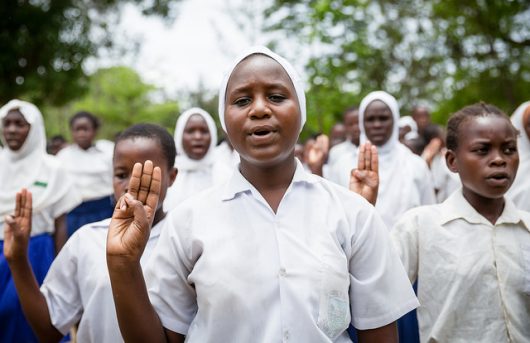
Female Literacy Rate
In September 2017, a BBC News correspondent reported a 60-year old woman from East Africa, Florence Cheptoo, learning to read for the first time. This feat is surprisingly uncommon for Cheptoo’s demographic in Kenya.

Although Kenya is one of the “best-educated low-income countries in sub-Saharan Africa,” the literacy rate among females, particularly the elderly, are lower than males. According to Global Ageing Campaign, “literacy rates among older people – especially older women – remain low and are often lower than for the population as a whole.”

The literacy rates among women have increased exponentially within the last 30 years, since the National Literacy Campaign launched in Kenya in 1979. During this time, according to a study from the International Review of Education, around 35 percent of males 15 and older and 70 percent of females in the same age group were illiterate. Furthermore, 93 percent of women over the age of 55 could not read.

In 1993, women comprised 70 percent of those enrolled in the adult literacy programs in Kenya, due to a lack of available educational opportunities for girls. Prior to the National Literacy Campaign, Cheptoo, who was born in 1957, did not receive support from her parents for education, encouraged instead to get married and have children. This is typical in sub-Saharan Africa, where females are often persuaded to marry early and are “unlikely to find any professional opportunities that enable economic self-sufficiency,” according to Daraja Academy.

Today, the female literacy rate is 74.9 percent, compared to the literacy rate of males at 81.1 percent, a stark difference from the literacy rates of the past. The female literacy rate is continually increasing with the support of secondary schools for girls including Daraja Academy and Oprah Winfrey’s Leadership Academy, which allow females of the future generations to secure an education.

Adult literacy programs are bridging the education gap for women who did not receive proper schooling in their youth. These literacy programs are a turning point for women, like Cheptoo, and provide them with learning opportunities to increase their knowledge of the world that surrounds them.

– Ashley Howard

Photo: Flickr

October 12, 2017
Share this entry
  • Share on Facebook
  • Share on X
  • Share on WhatsApp
  • Share on Pinterest
  • Share on LinkedIn
  • Share on Tumblr
  • Share on Vk
  • Share on Reddit
  • Share by Mail
https://borgenproject.org/wp-content/uploads/borgen-project-logo.svg 0 0 Borgen Project https://borgenproject.org/wp-content/uploads/borgen-project-logo.svg Borgen Project2017-10-12 07:30:072024-06-05 02:12:16Kenya’s Female Literacy Rate Continues to Improve

Get Smarter

  • Global Poverty 101
  • Global Poverty… The Good News
  • Global Poverty & U.S. Jobs
  • Global Poverty and National Security
  • Innovative Solutions to Poverty
  • Global Poverty & Aid FAQ’s
Search Search

Take Action

  • Call Congress
  • Email Congress
  • Donate
  • 30 Ways to Help
  • Volunteer Ops
  • Internships
  • Courses & Certificates
  • The Podcast
Borgen Project

“The Borgen Project is an incredible nonprofit organization that is addressing poverty and hunger and working towards ending them.”

-The Huffington Post

Inside The Borgen Project

  • Contact
  • About
  • Financials
  • President
  • Board of Directors
  • Board of Advisors

International Links

  • UK Email Parliament
  • UK Donate
  • Canada Email Parliament

Get Smarter

  • Global Poverty 101
  • Global Poverty… The Good News
  • Global Poverty & U.S. Jobs
  • Global Poverty and National Security
  • Innovative Solutions to Poverty
  • Global Poverty & Aid FAQ’s

Ways to Help

  • Call Congress
  • Email Congress
  • Donate
  • 30 Ways to Help
  • Volunteer Ops
  • Internships
  • Courses & Certificates
  • The Podcast
Link to: Understanding the Poverty Rate in Seychelles Link to: Understanding the Poverty Rate in Seychelles Understanding the Poverty Rate in Seychelles Link to: Human Rights in Micronesia: Inching Towards Equality Link to: Human Rights in Micronesia: Inching Towards Equality Human Rights in Micronesia: Inching Towards Equality
Scroll to top Scroll to top Scroll to top