10 Facts About Hunger in Serbia
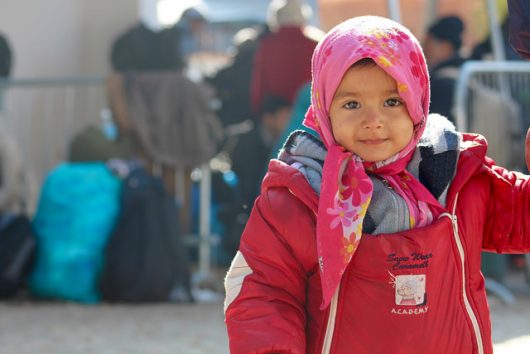 The hunger and deprivation that plagued refugee camps during the Kosovo War inspired Clint Borgen to found The Borgen Project, and one of the countries that saw the largest influx of suffering refugees during that time was Serbia. Though conditions today are far better than they were in 1999, hunger in Serbia is still a problem. Here are 10 facts about the past and present conditions.
- In 1999, the U.N. World Food Program distributed 145,000 tons of food to Serbia, feeding approximately 890,000 undernourished people. At that time, the WFP compared conditions in Serbia, where 10 percent of the population faced a humanitarian crisis, to those in North Korea.
- In 2008, the Global Hunger Index (GHI) was 7.8 in Serbia and has since dropped to 7.1 in 2016. The GHI uses undernourishment, child wasting, child stunting and child mortality in their formula for determining hunger levels.
- The proportion of people experiencing hunger in Serbia, meaning they have insufficient caloric intake, was 6.9 percent in 2016, an improvement from 7.4 percent in 2008.
- The prevalence of wasting in children younger than five, which means their weight is low relative to their height, was 3.9 percent, down from four percent in 2008. Wasting is a measure of acute malnutrition.
- The prevalence of stunting in children younger than five, which means their height is low for their age, was six percent, down from 7.4 percent in 2008. Stunting is representative of chronic malnutrition.
- The mortality rate for children under the age of five is .7 percent, a small improvement from .8 percent in 2008.
- Of 113 index countries, the Global Food Security Index ranks Serbia 47th in affordability, 65th in availability and 52nd in quality and safety. Their overall rank for food security is 59.4, making them 52nd overall of the 113 countries.
- The Global Food Security Index also reports that hunger in Serbia leaves the average intensity of food deprivation at eight kilocalories per person per day. Each day, Serbia’s population lacks a total of 336,00,000 kilocalories.
- Because the nation has been a member of the U.N. since 2000, hunger in Serbia is a major factor in the 2030 Agenda for Sustainable Development. The agenda is comprised of 17 goals, the second of which is “zero hunger.”
- Because it is far cheaper, it was reported that Serbians ate three times more bread than the average EU citizen in 2014 (89 kilograms/year), and close to a third of the amount of meat, at 35 kilograms per year, compared to 90 in Germany, 91 in Italy and 102 in France.
Conditions have been steadily improving to help eliminate hunger in Serbia. Where the country faced a humanitarian crisis at the beginning of the century, it is now working with the U.N. to meet a goal of zero hunger by 2030. The statistics concerning Global Hunger and Global Food Security clearly illustrate the successes of aid programs and domestic growth in the country, while the presence of malnutrition and child mortality reiterates that until there is no hunger, there is always more to be done.
– Brooke Clayton
Photo: Flickr
