• Link to X
  • Link to Facebook
  • Link to Instagram
  • Link to TikTok
  • Link to Youtube
  • About
    • About Us
      • President
      • Board of Directors
      • Board of Advisors
      • Financials
      • Our Methodology
      • Success Tracker
      • Contact
  • Act Now
    • 30 Ways to Help
      • Email Congress
      • Call Congress
      • Volunteer
      • Courses & Certificates
      • Be a Donor
    • Internships
      • In-Office Internships
      • Remote Internships
    • Legislation
      • Politics 101
  • The Blog
  • The Podcast
  • Magazine
  • Donate
  • Click to open the search input field Click to open the search input field Search
  • Menu Menu
Blog - Latest News
Developing Countries, Global Poverty, Hunger

Locally Grown Produce Can Help Prevent Hunger in Guadeloupe
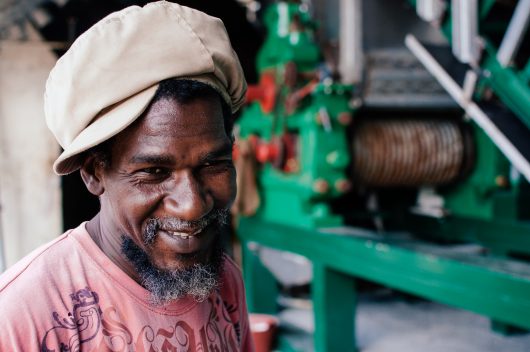
Hunger in Guadeloupe

Residents of Guadeloupe bore witness to the 2009 food crisis in Haiti, watching as people protested in the streets, asked for more food from their government. Fights don’t occur over hunger in Guadeloupe; the people do what the government says, and do their best outside of that.

Guadeloupe authorities have neglected subsistence agriculture and have favored export crops, like bananas and sugarcane. These two crops cover half of the island’s cultivated land alone. While this is great for trading and exports to other nontropical countries, big-buck companies often dominate these trades, yielding high profits and strictly maintaining farmers and crops. Plus, agriculture only accounts for 3.3 percent of the workforce. Guadeloupe needs government support to start focusing on locally grown foods. Otherwise, hunger in Guadeloupe is inevitable.

Guadeloupe has good soil, although often polluted. Produce farming locally could be year-round due to its tropical climate. It also has a wide array of plants and animals, with more than 220 edible species including 60 vegetables and 130 fruits, because 43 percent of the island is a forest. All of the locally grown products are rich in antioxidants and Vitamins A, C and E. The two main causes of premature death in Guadeloupe are diabetes and cardiovascular disease, both of which can be helped by these vitamins and nutrients.

This would be great news for hunger in Guadeloupe, except that the French territory imports 80 percent of its food. People there have grown accustomed to importing their food. The locals prefer to consume imported food and don’t trust locally grown foods that they’ve never seen. They consume products that have likely been processed and only do so because the imported food is accessible and cheaper than locally grown produce.

Hunger in Guadeloupe is a difficult statistic to measure due to it being a part of France. However, most people agree that the islanders can still improve their way of living to avoid a hunger crisis. If the nation pushes for the purchase of local produce off shelves and for imported foods to go down from 80 percent, and tries to convince government officials and authorities that half the land isn’t needed to farm exported goods, Guadeloupe would save itself from the possibility of a future food crisis.

– Rilee Pickle

Photo: Flickr

June 26, 2017
Share this entry
  • Share on Facebook
  • Share on X
  • Share on WhatsApp
  • Share on Pinterest
  • Share on LinkedIn
  • Share on Tumblr
  • Share on Vk
  • Share on Reddit
  • Share by Mail
https://borgenproject.org/wp-content/uploads/borgen-project-logo.svg 0 0 Borgen Project https://borgenproject.org/wp-content/uploads/borgen-project-logo.svg Borgen Project2017-06-26 01:30:292020-02-12 19:20:44Locally Grown Produce Can Help Prevent Hunger in Guadeloupe

Get Smarter

  • Global Poverty 101
  • Global Poverty… The Good News
  • Global Poverty & U.S. Jobs
  • Global Poverty and National Security
  • Innovative Solutions to Poverty
  • Global Poverty & Aid FAQ’s
Search Search

Take Action

  • Call Congress
  • Email Congress
  • Donate
  • 30 Ways to Help
  • Volunteer Ops
  • Internships
  • Courses & Certificates
  • The Podcast
Borgen Project

“The Borgen Project is an incredible nonprofit organization that is addressing poverty and hunger and working towards ending them.”

-The Huffington Post

Inside The Borgen Project

  • Contact
  • About
  • Financials
  • President
  • Board of Directors
  • Board of Advisors

International Links

  • UK Email Parliament
  • UK Donate
  • Canada Email Parliament

Get Smarter

  • Global Poverty 101
  • Global Poverty… The Good News
  • Global Poverty & U.S. Jobs
  • Global Poverty and National Security
  • Innovative Solutions to Poverty
  • Global Poverty & Aid FAQ’s

Ways to Help

  • Call Congress
  • Email Congress
  • Donate
  • 30 Ways to Help
  • Volunteer Ops
  • Internships
  • Courses & Certificates
  • The Podcast
Link to: Infrastructure to Maintain Water Quality in the Maldives Link to: Infrastructure to Maintain Water Quality in the Maldives Infrastructure to Maintain Water Quality in the Maldives Link to: What Does UNESCO Stand For? Link to: What Does UNESCO Stand For? What Does UNESCO Stand For?
Scroll to top Scroll to top Scroll to top