Closing the Economic Gap to End Poverty in Hungary
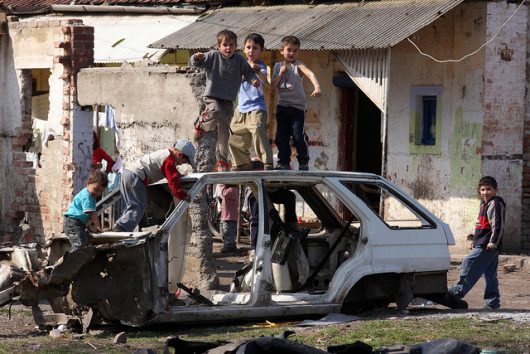
As poverty in Hungary continues to increase, aid from several countries has been provided to the struggling European nation. As of 2015, Hungary suffers from the highest child poverty rate in the European Union.
One in three children lives in a home detrimental to their health with leaking roofs, mold, lack of an indoor toilet, and other sources of health risk. Data from the same year shows over 35 percent of Hungarian families now live below the poverty line.
For those living under these circumstances, day-to-day reality can be bleak. Increased rates of child starvation when not in school, overcrowded flats, and homes lacking insulation are just a few struggles of daily life which confront impoverished Hungarian families.
These devastating circumstances combined with economic pressures have motivated Hungarian youth to leave for work abroad — producing a rapidly aging population threatening to present welfare issues.
In efforts to make international relief funds as effective as possible, a new series of reports from the World Bank offers a promising method for ensuring their strategic use.
European Union funding and the commission of Hungary’s Ministry of Human Capacities have produced the Promoting Inclusive Growth in Hungary Advisory Service Activity, a project which has provided the framework for the World Bank reports.
These reports have identified a need for concrete initiatives, coordination between local and national level efforts, and targeted investments in order to more successfully combat poverty in Hungary.
Working with communities to address the needs specific to local areas, in addition to learning from positive and negative examples of past initiatives, is hoped to improve the efficacy of targeting poverty in the country.
In counteracting the departure of young workers, the reports have identified a particular need for emphasis on better skill development and increased job prospects. These measures will be instrumental in combating a simultaneously aging and declining population.
An additional factor addressed by the reports is the social exclusion faced by impoverished Hungarian families. This exclusion is often accompanied by a lack of access to the job skills training needed by young Hungarians for the transition from school to the workplace.
Efforts to close the economic gap between Hungary’s advantaged and disadvantaged populations must also include attention to this accompanying social gap. The World Bank reports identifying investment in implementing social inclusion activities as a mechanism for accomplishing this.
In addition, there lacks institutional coordination in implementing these programs, which could be improved by streamlining the efforts of mayors and civil society.
With European Structural and Investment Funds providing Hungary with a 2014-2020 opportunity to invest in the socioeconomic incorporation of its disadvantaged families, the series of World Bank reports comes at a crucial time.
Equipped with these reports and a long-term investment framework, the nation stands to maximize its potential progress.
– Charlotte Bellomy
Photo: Flickr
