Greater Access to Education for Girls in African Countries
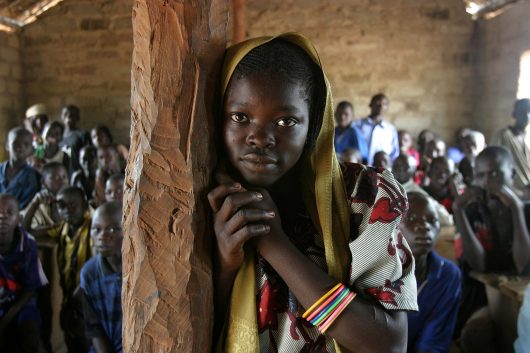
The U.N. Millennium Development Goal of achieving universal education has played a vital role in advancing education for boys and girls in African countries, however, obstacles still remain.
In addition to increasing access to education, the U.N. Millennium Development Goals also included overcoming extreme poverty, promoting gender equality and women’s rights, reducing child mortality and improving maternal health, combating HIV and malaria, creating a sustainable environment and advocating for global partnership. These goals are not isolated in nature, but rather each builds upon the next.
“Children who don’t have access to clean water and who aren’t taught proper hygiene practices like hand-washing with soap are more likely to be ill and absent from school,” according to Canadian Feed the Children (CFTC). “Combined with lack of proper nutrition – and often, the schools are the one place they have a guaranteed daily meal – children’s susceptibility to preventable, waterborne disease increases dramatically. Disease also spreads much more rapidly in schools without proper hygiene and sanitation.”
Canadian Feed the Children is a registered Canadian charity that works with local partners to establish food security and education in developing countries. The organization believes that “education is the best investment in prosperous, healthy and equitable societies.”
With more children having access to an education, more resources are needed; such as books, maps, research and reference materials, blackboards and writing materials. Infrastructure becomes a challenge when the number of students outgrows the number of available classrooms.
Additionally, kitchens and latrines are essential components for health and hygiene and each must be outfitted with their own supplies and equipment. A productive learning environment requires the availability of meals and safe, clean facilities.
When schools are overpopulated, understaffed and lacking necessary supplies, it is difficult to recruit teachers. Many times underqualified and unpaid volunteers step in to teach in impoverished communities, which can do more harm than good.
Crop failure, parents’ illness and rising prices are some of the barriers families living below the poverty line are facing when they sacrifice the education for one or more of their children in order to feed the family. Most often, it is the girls who are chosen to miss out.
Schools lacking a latrine present another obstacle for girls, for whom modesty and safety are important.
“For many girls, the need to leave the classroom several times a day makes going to school anxious and unpleasant. For older girls, menstruation in an environment where there is no toilet and no water causes embarrassment and further complicates matters. And where toilet facilities are not available or located far away, there is a much higher risk of violence for girls. The risks and hassle just aren’t worth it – and they drop out. There are so many barriers to girls’ education, toilets shouldn’t be one of them,” said Amboka Wameyo, CFTC’s Regional Program Manager – Africa.
Girls in African countries like Ghana, Ethiopia and Uganda endure early or forced marriage, the burden of chores, pressure to care for siblings and long-distance walks to school leaving them vulnerable to rape or violence. The dropout rate for girls around age 12 increases dramatically, sometimes reaching 100 percent.
According to Canadian Feed the Children, every year a girl attends school translates into a 15 percent increase in their income as they become less vulnerable to the threat of domestic violence and poverty.
Girls in African countries must be given the opportunity to improve their lives and subsequently contribute to the alleviation of the poverty cycle in their communities.
– Emily Ednoff
Photo: Flickr
