Microsoft: Internet Access in Africa Using TV White Space
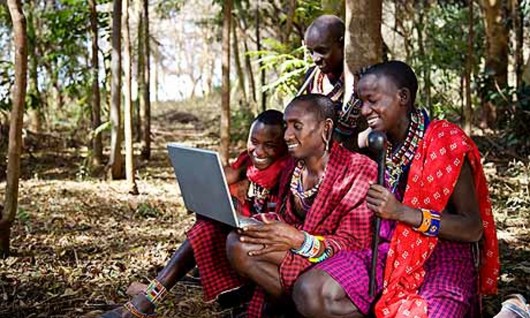
The Wi-Fi networks we use at home or in cafés have a limited signal reach of about 100 square feet.
To manage the problem of Internet connection, IT companies and Microsoft Corp. are utilizing TV white space. The technology is a spectrum of broadcast frequencies, typically used to transmit TV channels from one location to another, harnessed for wireless networks.
Through the 4Afrika initiative, Microsoft collaborates with local universities and IT companies including those in Namibia, Kenya, Ghana, South Africa and Tanzania, to bring the internet to unconnected parts of Africa. Microsoft launched the initiative in February 2013, with the latest project this year in Botswana.
TV white space makes broadband internet access in Africa affordable for most users in isolated parts of Namibia that could not otherwise access using typical café Wi-Fi. The distance of the frequency waves from the TV towers is much farther than a basic modem signal radius.
Namibia is an example of a large-scale white space project that covers a 38.5 by 94-mile area. The regions of Oshana, Ohangwena, Omusati and 28 schools in Northern Namibia are now connected to a broadband network.
One of the purposes of connecting secluded areas is to ensure that schools can communicate with other schools, businesses and nations.
Namibia is not an exceptional country grappling with access to the internet. Many African schools and hospitals outside of urban areas require the internet to provide learners and patients with the best education and health care.
In Ghana, tablets and other electronics are used to connect students to a broader academic and business community. Orlando Ayala is chairman of emerging markets at Microsoft.
He says that “We have to be an active participant in ensuring that by empowering this young human resource, that translates into innovation and creation of jobs. Hopefully, Tech Start-ups come from not only Africa but beyond Africa.”
Broadband Internet connection in Limpopo, South Africa also links secondary schools to a larger education community. Mountain View secondary school teacher Simon Matlebjame says that “We will be able to interact with other countries. Learners will be marketable and employable.”

The Internet gap between some parts of Africa and other communities is often referred to as the “digital divide,” or Africa’s economic and technological relationship to the rest of the world.
Another one of 4Afrika initiative incentives is to enhance Africa’s global economic value.
Microsoft looks at Africa as an investment in the future of technology. The company’s message is that the “Microsoft 4Afrika Initiative is built on the dual beliefs that technology can accelerate growth for Africa, and Africa can also accelerate technology for the world.”
By focusing on world-class skills, innovation and access, the company aims to provide the tools for success in the global market. Beyond economic opportunity, the initiative brings quality health care to African countries.
Project Kgolagano connects hospitals and clinics to allow easy transmission of medical records and patient access to specialized medicine through telemedicine. In partnership with the University of Pennsylvania, Botswana government and other IT companies, Microsoft helps join specialized health care and hospitals.
Director of the Botswana Innovation Hub Marketing, ICT and Registration, Dr. Geoffrey Seleka says that “there is currently a lack of specialized care in remote hospitals and clinics in Botswana.” The specialized care using photo and video transmissions between hospitals will make quality health care realistic.
A 2012 U.N. Human Rights Council resolution declared that Internet access is a basic human right.
Hospitals all over Botswana and Africa are, or are in the process of being, connected. By the efforts of local educators, IT companies and the 4Afrika Initiative, hospitals will have easier access to crucial medical records and students will have easier time learning.
The overarching goal is that people in Africa will share medical, educational and technological innovations with the rest of the world.
– Michael Hopek
Sources: Penn Medicine, Microsoft, UW Electrical Engineering, 4Afrika Microsoft 1, 4Afrika Microsoft 2, 4Afrika Microsoft 3, 4Afrika Microsoft 4
Photo: The Guardian
