Micronutrient-Hungry Children
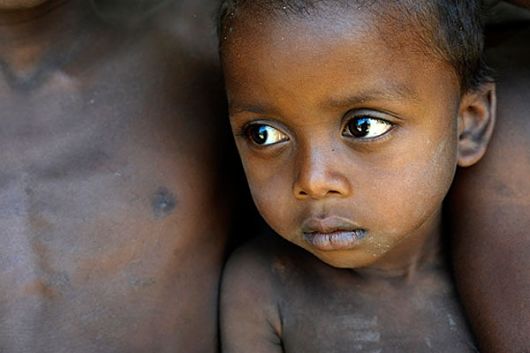
Hunger and malnutrition often result from a person not eating enough calories. But there are some children who may eat enough calories per day, yet not receive adequate nutrients and are still, therefore, malnourished. These are children who are micronutrient-hungry, or have “hidden hunger.” Their bodies are deteriorating, stunted and/or underperforming because their food in not nutritious enough.
Hidden hunger can affect anyone, but growing children and pregnant mothers are at the most risk since the developing children desperately need micronutrients to grow into healthy adults.
Micronutrients are vitamins and minerals that are present in a healthy diet. There are many micronutrients that are needed for optimal living, but UNICEF considers four to be the most vital: iron, Vitamin A, iodine and folate.
Vitamin A helps a person’s vision and keeps a body strong enough to combat diseases that can often take a child’s life such as measles, diarrhea, malaria and pneumonia.
Iodine helps the thyroid function properly. A healthy thyroid “regulates growth and metabolism.” Iodine deficiency is also a leading cause of preventable mental disabilities that often start in utero if the mother does not get enough iodine.
Iron and folate are both vital in the formation of red blood cells.
Often children are at risk to become malnourished after disasters or wars occur since access to food is one of the major issues for those in refugee camps.
But even in areas that are more stable, if poverty is rampant, then access to proper food is still compromised.
People who live in countries that are considered middle class have micronutrient-hungry children because the cheapest, most filling food is often processed or carbohydrate/energy dense food that have the least amount of the necessary micronutrients.
Much good is being done to ensure that the poverty cycle that is perpetuated by poor nutrition is stopped.
The World Health Organization (WHO) has a plan in place to help specifically with vitamin A deficiency. They are taking a multifaceted approach: “The arsenal of nutritional ‘well-being weapons’ includes a combination of breastfeeding and vitamin A supplementation, coupled with enduring solutions, such as promotion of vitamin A-rich diets and food fortification.”
Part of their plan includes helping those in poverty by “planting seeds,” both in the sense of promoting breastfeeding and of planting a physical garden. Helping rural families plant a garden with fruits and vegetables that are naturally micronutrient dense is a great way to help reduce vitamin A deficiency.
UNICEF is working on the problem of iodine deficiency in the Dominican Republic. Most Americans consume iodized salt on a regular basis, but that commodity is not a part of every culture. Since iodized salt is an easy solution to the devastating issue of iodine deficiency, UNICEF has created an educational initiative in the Dominican Republic to raise public awareness about iodized salt consumption.
The Micronutrient Initiative (MI) in a nonprofit organization based out of Ottawa, Canada and works with the Canadian government, private businesses, global partnerships and individuals to end micronutrient hunger. They are a large scale operation that has an impact around the globe providing education and direct resources to those who are suffering from hidden hunger.
Malnutrition is multifaceted. It cannot be solved through feeding hungry people cheap, calorie dense yet micronutrient-deficient food. Thankfully, many great organizations also stand on this principle and the issue of micronutrient-hungry children is making great strides.
– Megan Ivy
Sources: Micronutrient Initiative , UNICEF 1, UNICEF 2, World Health Organization 1, World Health Organization 2
Photo: Zomppa
