10 Pieces of Good News About Sub-Saharan Africa
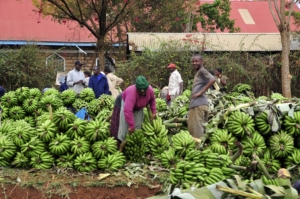 For many Americans, the face of global poverty is sub-Saharan Africa. Sub-Saharan Africa consists of 48 countries in southern, central and eastern Africa. Four years ago, the majority of people living in poverty were in sub-Saharan Africa, but a great deal of progress has been made in the fight against global poverty in recent decades. The effects of that progress can be seen as clearly in sub-Saharan Africa. Twenty years ago, much of sub-Saharan Africa was gripped by extreme poverty and nearly non-existent economic growth. However, there has been significant poverty reduction and economic growth recently, thanks in part to poverty reduction initiatives throughout the region. These ten facts describe the good news about sub-Saharan Africa.
10 Pieces of Good News About Sub-Saharan Africa
- In 2013, 42.6 percent of sub-Saharan Africans were affected by severe poverty. By 2016, this percentage dropped to 35.2 percent. This represents a decrease in poverty rates of over 5 percent in three years.
- Since the 1990s, quality of life in sub-Saharan Africa has improved. Infant mortality is lower and chronic malnutrition is 6 percent less likely. Adult literacy rates have increased by 4 percent as well.
- African children are more likely to survive common diseases. In addition, more treatment options are available for HIV and life expectancy has increased by almost twenty years.
- Throughout the 1990s, sub-Saharan Africa’s GDP growth remained below 3 percent. The region’s economic growth was above 2.5 percent in 2017 and remained above 3 percent for most of the past decade. Even 2016, sub-Saharan Africa’s lowest year of GDP growth during the 21st century, was better than 1993, its lowest year of GDP growth during the 1990s.
- The sub-Saharan African economy was predicted to grow at a faster pace in 2019 than the economies of more affluent regions. For example, Kenya’s economy was predicted to grow by 5.8 percent. Overall regional growth was predicted to be higher than 3 percent.
- Economic growth is expected to continue rising after an economic downturn in 2015, with an expected average growth of 3.7 percent in 2020.
- In 1999, many sub-Saharan African countries adopted poverty reduction policies modeled on the 1999 Poverty Reduction Strategy Paper (PRSP). PRSP programs include cash transfers, subsidies and public works programs. PRSP programs significantly increased economic growth where they were implemented.
- From 1990 to 2012, GDP in PRSP countries increased from 0.82 percent to 5.12 percent. GDP in sub-Saharan Africa (including both PRSP and non-PRSP countries) increased from 4.61 percent to 5.21 percent from 2000 to 2012. PRSP greatly stimulated economic growth.
- By 2013, 80 percent of primary school age children in Africa were enrolled in school. Secondary school enrollment rates also increased. This means that as education improves, poverty will decrease.
- In 1990, industry comprised about 21.9 percent of sub-Saharan Africa’s GDP. In 2012, industry comprised about 24.6 percent of sub-Saharan Africa’s GDP. In the west, the economic transition from a predominantly agricultural economy to a more industrial economy was an indicator of economic growth. A gradual shift away from an economy that relies solely on agriculture is good news for the people of sub-Saharan Africa.
Poverty is still present in sub-Saharan Africa, but the numbers show how much progress has been made. Further, they show that there is plenty of good news about sub-Saharan Africa. Sub-Saharan Africa does not have to be the face of global poverty because of the region’s economic growth and poverty reduction.
– Emelie Fippin
Photo: Flickr
