Maternal Mortality in Nigeria
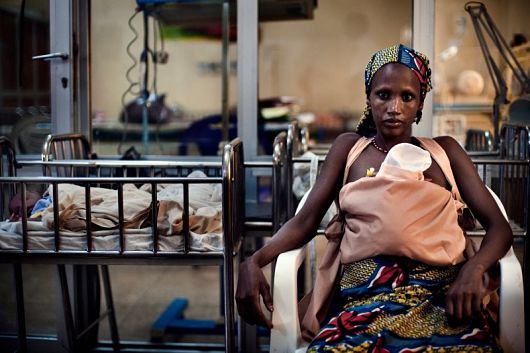
Nigeria is second only to India in terms of the number of maternal deaths it experiences, and along with five other countries—India, Pakistan, The Democratic Republic of the Congo, China and Ethiopia—Nigeria is part of a group which makes up more than 50 percent of the maternal mortalities that occur in the world.
The Maternal Mortality Rate (MMR) in Nigeria was 560 per 100,000 live births in 2013. As UNICEF states, Nigeria loses 145 women to maternal mortality each day. This high level of maternal mortality is also linked to Nigeria’s high rate of deaths for children under 5—newborns account for a quarter of the under-five deaths which occur in the country.
There are many reasons why maternal mortality in Nigeria is so high, including a lack of access to healthcare, rampant poverty, substandard health care and the prevalence of child marriage.
Urban women have more of an opportunity to receive healthcare than rural women do. As stated in a Global One report about Nigeria, women in urban areas have over twice as many deliveries taking place in public and private health facilitates than women in rural areas. This is because women in rural areas are normally not able to afford the transport to the hospitals in urban areas, and have to settle for midwives or traditional birth attendants—or no help at all—when giving birth. Many of these traditional birth attendants do not have the skills and training necessary for delivering a baby—for example, many are not able to perform C-sections—and for treating complications that can occur during birth.
Rural women do not have the money to travel to hospitals to receive better care. Nigeria has a high poverty rate, with a 2010 report stating that 64.4 percent of the population lived in extreme poverty and 83.9 percent of the population lived in moderate to extreme poverty. The fact that many people cannot afford the healthcare that they need contributes to Nigeria’s high MMR.
Even if women in Nigeria are able to have access to a hospital, they sometimes still end up suffering. This is because some hospitals in Nigeria have substandard care. For example, Global One’s report states that substandard birth techniques in government hospitals in North-Central Nigeria, including poor C-section procedures, accounted for 40 percent of all fistula injuries suffered by women in Nigeria.
A fistula, according to the World Health Organization, is a hole in the birth canal. Fistulas are directly connected to obstructed labor, a problem that contributes to high levels of maternal mortality. Even if women survive labor, many of them still have to live with the fistula. Approximately two million women live with an untreated obstetric fistula in Sub-Saharan Africa and in Asia, and women with fistulas suffer incontinence, social segregation and health issues.
Fistulas are more common in women who give birth at a young age. These women’s bodies are not ready for childbirth, leading to many health problems, including obstetric fistulas. Nigeria has an extremely high rate of child marriage—43 percent of girls get married before the age of eighteen—and many of those girls are not given the option of whether or not they want to get pregnant. Contraceptive use is slowly becoming more widespread and acceptable, but in 2008, only 10 percent of women used contraceptives.
Since contraceptive use is still stigmatized, many brides under the age of 18 are forced to give birth, and their bodies are very vulnerable to complications, therefore contributing to a high maternal mortality rate. Nigeria also has a high fertility rate—five children per woman in 2014—which also impacts the MMR.
If Nigeria wants to reduce its high levels of maternal mortality, it has to make sure that access to healthcare is more widespread. It also needs to improve the quality of healthcare available, reduce the number of child marriages and de-stigmatize contraceptive use.
– Ashrita Rau
Sources: UNICEF, WHO 1 WHO 2, WHO 3, WHO 3, Global One Girls not Brides, IRIN News CIA World Factbook
Photo: Healthy Newborn Network
