How Zzapp Malaria Uses AI Technology To Fight Malaria in Africa
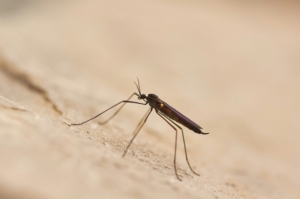 Every year, malaria sickens millions and kills hundreds of thousands worldwide, with most cases concentrated in Africa. In 2023 alone, there were an estimated 263 million malaria cases and nearly 600,000 deaths, with children aged 5 and less accounting for about 76% of those deaths.
Despite decades of progress, including a 38% reduction in malaria incidence and a 60% drop in mortality from 2000 to 2022, gains have stalled. Challenges such as drug and insecticide resistance, underfunding and changing climatic conditions continue to hamper efforts. As traditional tools fall short, technology to fight malaria is becoming increasingly vital.
AI as a Solution
Malaria has been eliminated in several countries that are able to carry out comprehensive control operations, particularly by targeting mosquito breeding grounds in stagnant water bodies. However, such interventions require significant investment.
To overcome these barriers, innovative initiatives like Zzapp Malaria are using technology to fight malaria. They are transforming control operations with AI and mobile tools to offer scalable, cost-effective solutions to one of Africa’s most persistent public health threats.
How Zzapp Malaria Works
Zzapp Malaria is an Israeli nonprofit startup. It uses AI-driven software to plan and execute malaria control operations, particularly larviciding and house spraying, in low-resource and urban settings across Africa.
Its approach combines several key steps:
- Planning and mapping. Neural networks analyze satellite images to detect homes, stagnant water areas and breeding hotspots, incorporating climate and topographic data to determine optimal intervention timing.
- Task allocation. The platform segments areas into grids and assigns them to field workers through its mobile app.
- Field operations. App-guided teams map, sample and treat water bodies with larvicides or sprays, with real-time data optimizing interventions.
- Monitoring. The system flags areas with insufficient treatment or high mosquito levels for rapid response.
The app works offline, supports low-end smartphones and uses icons for low-literacy users. It recognizes traditional huts and modern homes and training is simple. For many field workers, using the app is their first digital experience, empowering them with new skills.
Proven Impact and Cost-Effectiveness
- Obuasi, Ghana. In partnership with the AngloGold Malaria Control Program (AGAMaL), Zzapp Malaria piloted its system in 2017. A 2018 randomized controlled trial showed app-guided teams detected 28% more breeding sites with more than 90% coverage than standard methods. By 2020, a full-scale operation reduced mosquito populations by 60% in less than four months at $0.20 per person protected, compared to about $5 for traditional spraying.
- São Tomé and Príncipe. In collaboration with the Ministry of Health, Zzapp Malaria conducted an eight month-long larviciding operation covering 166,000 people across 240 square kilometers. Results included a 75% reduction in mosquitoes, malaria cases cut by more than half and an average cost of $0.86 per person protected, dropping to $0.44 in urban areas — about twice as cost-effective as bed nets.
Zzapp Malaria remains active in Ghana, São Tomé and Príncipe and has expanded to Mozambique, Zanzibar in Tanzania, Ethiopia and Kenya. Its pilots have reached 500,000 people, with expansion agreements aiming for at least five million.
Recent Developments
- Ghana. In April 2025, The Ghanaian Times reported that AGAMal and Zzapp Malaria’s tools reduced malaria prevalence to about 1% in Obuasi East.
- Mozambique. Following a successful pilot in Maputo with Mozambique’s National Malaria Control Program (NMCP) and Goodbye Malaria, Zzapp Malaria is preparing a nationwide urban rollout.
- Zanzibar. Drone integration trials are underway, using drone maps and LiDAR to identify breeding sites. Zanzibar’s Ministry of Health has implemented this project as part of the spatial intelligence system funded by the Bill and Melinda Gates Foundation through the Innovative Vector Control Consortium (IVCC).
Why Zzapp Malaria’s Solutions Matter
Despite large global investments, conventional tools often fall short and progress has stalled. Technology to fight malaria, like Zzapp Malaria, enables task-shifting to community health workers while enhancing surveillance, diagnosis and treatment. Its AI-powered mapping, targeted larviciding and drone-assisted detection fill key gaps:
- Cost-effective interventions. Optimize resources where funding is limited.
- Complementary strategies. Strengthen existing interventions facing resistance.
- Enhanced operations. Improve data-driven decision-making in challenging contexts.
Zzapp Malaria exemplifies the transformative potential of technology to fight malaria through digital health solutions:
- Technology as a solution. AI and drones directly reduce mosquito populations and malaria cases.
- Scalability and cost-effectiveness. Proven impact at minimal cost.
- Empowerment. Tools designed for low-literacy, low-infrastructure settings democratize access.
- Evidence-based results. Peer-reviewed studies and credible media confirm its effectiveness.
In a world where malaria continues to claim hundreds of thousands of lives each year, Zzapp Malaria shows how technology to fight malaria can provide scalable, cost-effective solutions to one of the world’s most persistent health challenges.
– Jacobo L. Esteban
Jacobo is based in Cali, Colombia and focuses on Technology and Politics for The Borgen Project.
Photo: Flickr
