Introducing Zero Budget Natural Farming in India
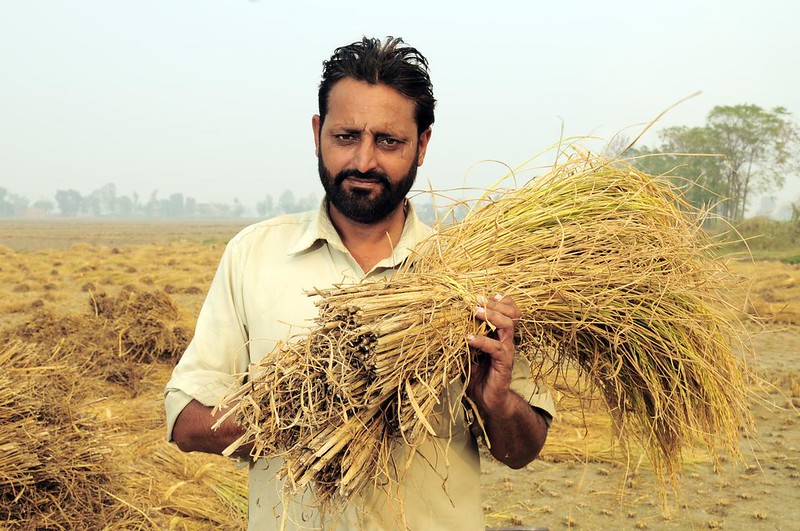 Investing in rural development in India is not only essential for uplifting rural communities but also crucial for supporting the nation’s environmental and economic growth. Rural sustainability seeks to improve the quality of life and overall well-being of people living in these areas. A key factor driving the urgent need for rural advancement is the ongoing agrarian crisis. Marginal farmers’ reliance on chemical inputs and the rising cost of agricultural materials have degraded fertile soil, yielding minimal economic returns and growing debt—ultimately adversely affecting the livelihood of people who depend on agriculture.
In response to these challenges, a promising solution has emerged in the form of Zero Budget Natural Farming (ZBNF), an efficient agricultural system that enriches soil naturally using materials such as cow dung, cow urine, jaggery, pulse flour etc. This approach enhances soil health, strengthens crop resilience against climate extremes and improves access to safe, affordable food. ZBNF holds significant potential to transform rural India by promoting ecological balance, economic resilience and sustainable livelihoods.
The Practices and Principles of ZBNF
Zero Budget Natural Farming (ZBNF) was initially practiced by Masanobu Fukuoka, a Japanese farmer and philosopher, on the island of Shikoku. However, the method gained prominence in the 21st century through the work of Indian agriculturalist Subhash Palekar, who drew inspiration from traditional Indian farming techniques. To reiterate, ZBNF is an ecological and low-cost approach to agriculture that seeks to replace chemical inputs with natural resources, enabling farmers to cultivate without dependence on loans or market-purchased inputs.
Palekar developed four core principles of ZBNF, referred to as the four wheels, each representing a foundational aspect of the practice: Beejamrit, Jeevamrit, Mulching and Waaphasa. Beejamrit is a natural microbial treatment applied to seeds before sowing, made using cow dung liquids comprising of local cow dung, local cow urine, and is designed to stimulate healthy germination. Jeevamrit refers to the enhancement of soil microbes using an inoculum of cow dung, cow urine and jaggery, fostering soil fertility through biological means.
Mulching involves covering the soil with crop residue, such as mulch, to retain moisture and regulate soil temperature. Waaphasa focuses on the building up of soil humus to increase soil aeration, which improves soil structure and reduces water usage. Under this method, irrigation—defined as applying water to crops artificially—is carried out only at noon and in alternate furrows.
The Impact
Researchers have increasingly observed that Zero Budget Natural Farming (ZBNF) holds the potential to substantially improve agricultural productivity when compared to conventional farming methods, which typically rely on synthetic fertilizers and chemical pesticides. Empirical evidence suggests that ZBNF practices increased by up to 22% for crops such as gram, lentil, soybean, black gram and red mash as compared to inorganic farming. This indicates a promising trend toward more sustainable yet productive agricultural systems.
Further supporting these findings, a survey conducted in the state of Karnataka revealed that farmers who adopted ZBNF techniques experienced an impressive 79% increase in crop yields. Even more striking, a separate study carried out in Andhra Pradesh recorded an even higher yield improvement, with increases reaching up to 88% when utilizing ZBNF methods.
Nonetheless, it is important to recognize that agricultural practices are rarely universally effective and outcomes can vary significantly based on regional conditions, crop type and soil characteristics. For instance, a study conducted in the state of Telangana found that maize, in this particular case, yielded better results when grown using conventional farming methods rather than through ZBNF practices. This serves as a reminder that while ZBNF shows great promise, it may not consistently outperform traditional approaches across all contexts and crop systems.
Ongoing Challenges
Despite the promising benefits of Zero Budget Natural Farming (ZBNF), it remains the subject of valid controversy, most notably, the concern that over a couple of decades or less, the soil may run out of organic matter, resulting in a catastrophic crash in food production across India. In other words, experts worry that ZBNF may mine nutrients from the soil’s organic matter, leading to long-term soil degradation, reduced crop yields and a potential collapse in food production if widely adopted without proper research.
Looking Ahead
This highlights the need for future research to reevaluate the long-term effects of ZBNF so that countries utilizing this practice can flourish both in the short term and the long term. The good news is that with timely, science-based evaluation and careful adaptation, ZBNF has the potential to evolve into a resilient, sustainable model of agriculture that benefits both farmers and the environment.
– LaRaymee Lee
LaRaymee is based in Missouri City, TX, USA and focuses on Technology and Solutions for The Borgen Project.
Photo: Flickr
