Water Quality: Building Water Resilience in Bhutan
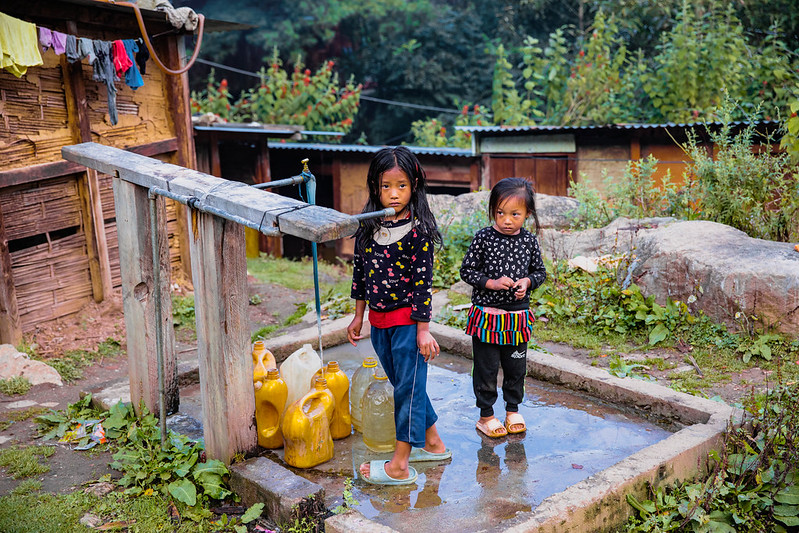 Located within the Himalayan mountains, Bhutan is a small landlocked nation. It is famous for its abundant freshwater stores, but its water supply has been depleting over time. The country is mainly reliant on agriculture as the basis for its economy, but due to the decrease in freshwater availability, the citizens of Bhutan are facing a humanitarian crisis and need to build water resilience to fight the growing water scarcity.
Water Resilience in Bhutan
Water scarcity is not a new issue for Bhutan, but it is becoming steadily worse, which has led the Royal Government of Bhutan to work with the United Nations Development Programme (UNDP). The goal of the partnership is to assess the impact of water scarcity and develop a strategy for building water resilience in Bhutan.
Following a water sector analysis in 2023, the country found evidence that has become the basis for the Advancing Climate Resilience of Water Sector in Bhutan (ACREWAS) project. This project began in 2023 with a proposed duration of 60 months.
This project is ongoing to improve water infrastructure, as well as build up the capacities of the local governments. The UNDP has chosen to focus its efforts in the Dzongkhags of Gasa, Punakha and Tsriang, which are three cities facing higher levels of water scarcity.
Building Water Resilience in Bhutan
The UNDP has identified four ways to build water resilience in Bhutan and they are as follows:
- Pipeline Resilience. The first component of the ACREWAS project looks at pipeline resilience and how it can build better pipelines so that water flow is more reliable and resilient. This falls under the infrastructure aspect of the project, utilizing newer technology in order to build water infrastructure that is less prone to deterioration and is reliable. There is a necessity for more efficient and durable water infrastructure in Bhutan. The project targets include the remaking of 74 kilometers of water transmission and distribution lines to improve water flow throughout the country.
- National Water Inventory. The second objective of the ACREWAS project focuses on the National Water Inventory and how to strengthen water governance in Bhutan. This part of the project includes building up the local governments to better manage water access. It also aims to strengthen water institutions so they can better identify shortages and manage their impact.
- Water Quality Improvements. The third way the UNDP is building water resilience in Bhutan is by improving water quality through new treatment plants and protecting ecosystems to prevent contamination of freshwater sources. The ACREWAS project aims to restore 41,910 hectares of land as well as 38,518 hectares of watersheds. This helps restore local ecosystems to protect freshwater sources and rehabilitate land, which is vital to Bhutan’s agriculture-based economy. It also makes the land more livable for communities.
- Capacity Building and Education. The last way that the UNDP is building water resilience in Bhutan is through knowledge management. This entails educating people on the water issues the country faces. The organization accomplishes this through grassroots advocacy and sharing information about water. By informing citizens, the UNDP hopes to raise more awareness on water management.
Looking Ahead
Building water resilience in Bhutan has become a necessity and through the ACREWAS project, the UNDP aims to reduce water scarcity as well as improve the current infrastructure so that the country can better support its people. Through ongoing efforts, the UNDP hopes to improve the well-being of the people and create lasting conditions to support water resilience in Bhutan.
– Olivia Peters
Olivia is based in Newport, Rhode Island, USA and focuses on Good News and Technology for The Borgen Project.
Photo: Flickr
