• Link to X
  • Link to Facebook
  • Link to Instagram
  • Link to TikTok
  • Link to Youtube
  • About
    • About Us
      • President
      • Board of Directors
      • Board of Advisors
      • Financials
      • Our Methodology
      • Success Tracker
      • Contact
  • Act Now
    • 30 Ways to Help
      • Email Congress
      • Call Congress
      • Volunteer
      • Courses & Certificates
      • Be a Donor
    • Internships
      • In-Office Internships
      • Remote Internships
    • Legislation
      • Politics 101
  • The Blog
  • The Podcast
  • Magazine
  • Donate
  • Click to open the search input field Click to open the search input field Search
  • Menu Menu
Blog - Latest News
Global Poverty, Water Quality

Arsenic Harms Water Quality in Pakistan
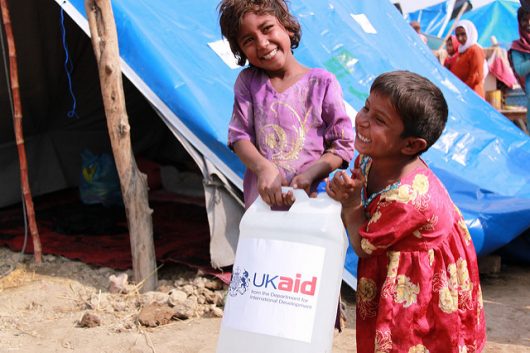
Water Quality in Pakistan
Recent research published in the journal Science Advances has serious implications for up to 60 million Pakistanis—groundwater in the Indus Valley has been found to contain arsenic that likely exceeds a level safe for human consumption. The poor water quality in Pakistan puts many at risk of arsenic poisoning.

The published research comes from the World Health Organization (WHO), which took 1,200 groundwater samples throughout the Indus Plain. Scientists then used this data to create a “hazard map” to determine how many people would be affected by this contamination.

What they found was that 50 million—maybe even 60 million—people would be affected by contaminated groundwater, a number far greater than previously calculated. This estimate was given considering that 60 to 70 percent of the population in Pakistan relies on groundwater.

While the WHO has established that 10 micrograms of arsenic per liter of water is an acceptable concentration, the Pakistani government has always permitted a higher concentration of 50 micrograms per liter.

Although arsenic is naturally present in the ground, researchers suggest that human activities may have exacerbated the amount present in the groundwater in the Indus Plain. Lubna Bukhari, the head of Pakistan’s Council for Research in Water Resources, notes that, due to a lack of regulation, humans have exploited the groundwater, leading to an increase in arsenic.

There are no immediate effects of arsenic poisoning; however, the long-term health effects are severe. Long-term exposure to arsenic-laced water can cause skin lesions, damage to organs and even heart disease and cancer.

A statement by the WHO pressed the need to test “all drinking water wells in the Indus Plain.” With roughly a quarter of the population at risk for arsenic poisoning, the need to address water quality in Pakistan is urgent. Researchers also suggested health intervention programs for those impacted by the contamination.

For those that rely on groundwater for drinking, cooking and farming, the discovery of the contamination could severely impact their livelihoods. The Pakistani government must work to ensure that those impacted by the contamination—no small figure—are offered consumption-worthy alternatives to arsenic-tainted water.

– Jennifer Faulkner

Photo: Flickr

September 19, 2017
Share this entry
  • Share on Facebook
  • Share on X
  • Share on WhatsApp
  • Share on Pinterest
  • Share on LinkedIn
  • Share on Tumblr
  • Share on Vk
  • Share on Reddit
  • Share by Mail
https://borgenproject.org/wp-content/uploads/borgen-project-logo.svg 0 0 Borgen Project https://borgenproject.org/wp-content/uploads/borgen-project-logo.svg Borgen Project2017-09-19 07:30:042020-07-01 19:28:53Arsenic Harms Water Quality in Pakistan

Get Smarter

  • Global Poverty 101
  • Global Poverty… The Good News
  • Global Poverty & U.S. Jobs
  • Global Poverty and National Security
  • Innovative Solutions to Poverty
  • Global Poverty & Aid FAQ’s
Search Search

Take Action

  • Call Congress
  • Email Congress
  • Donate
  • 30 Ways to Help
  • Volunteer Ops
  • Internships
  • Courses & Certificates
  • The Podcast
Borgen Project

“The Borgen Project is an incredible nonprofit organization that is addressing poverty and hunger and working towards ending them.”

-The Huffington Post

Inside The Borgen Project

  • Contact
  • About
  • Financials
  • President
  • Board of Directors
  • Board of Advisors

International Links

  • UK Email Parliament
  • UK Donate
  • Canada Email Parliament

Get Smarter

  • Global Poverty 101
  • Global Poverty… The Good News
  • Global Poverty & U.S. Jobs
  • Global Poverty and National Security
  • Innovative Solutions to Poverty
  • Global Poverty & Aid FAQ’s

Ways to Help

  • Call Congress
  • Email Congress
  • Donate
  • 30 Ways to Help
  • Volunteer Ops
  • Internships
  • Courses & Certificates
  • The Podcast
Link to: The Situation of Refugees in Tonga Link to: The Situation of Refugees in Tonga The Situation of Refugees in Tonga Link to: Income Inequality: One of the Causes of Poverty in Costa Rica Link to: Income Inequality: One of the Causes of Poverty in Costa Rica Income Inequality: One of the Causes of Poverty in Costa Rica
Scroll to top Scroll to top Scroll to top