USAID in Myanmar
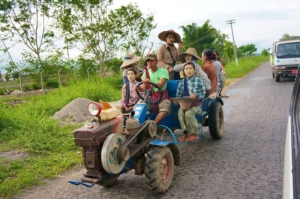 Myanmar, a country in military stronghold turmoil, has been struggling for liberation and democracy amid ethnic disputes and insurgencies ever since 1948. Since 1962, the Burma Socialist Programme has ruled the nation under a totalitarian dictatorship. Rising poverty and social instability led to numerous college-student-led protests up until 1988, often referred to as the People Power Uprising, in efforts to promote democracy and stop the socialist agenda Ne Win and his government were developing.
Renewed Military Control and Civil War
The protests ended with a coup d’état, resulting in the military junta ousting Ne Win and ruling the nation. The military junta later held a general election in 1990, where national icon Aung San Suu Kyi and her party dominated, partly due to their pro-democracy agenda. However, the military leadership would not recognize Kyi’s party’s win and continued to rule the government. Kyi was put under house arrest and, in 2021, when the Tatmadaw military organization came to power following another coup d’état, they imprisoned her. Kyi was a prominent leader in advocating for Myanmar’s democracy in the 2010s, where the Burmese nation seemed to bend toward justice with the democratic elections of Htin Kyaw and Win Myint.
It was only until the coup d’état in 2021 that the population lost all hope of continuous liberation, as the Tatmadaw seized Nay Pyi Taw. From there, a full-on civil war broke out between the National Unity Government (NUG)–the democratic house which was ousted–and the State Administrative Council–the ruling military junta as of 2025, who ousted the NUG. The war is still ongoing, having recorded more than 75,000 deaths.
USAID in Myanmar
The United States Agency for International Development (USAID) was a strong proponent in helping alleviate social, economic and political turmoil in Myanmar, amid the numerous insurgencies and coups. USAID gave Myanmar approximately $2 million in 2001, a number that grew to more than $175 million annually by 2016. Following the 2021 coup, USAID, under the Biden administration, increased spending by more than 30%. A significant portion of the donations funded food, assistance and humanitarian aid. In 2025, that aid abruptly stopped.
Widespread Damage Across Myanmar
In March of 2025, a magnitude 7.7 earthquake rattled Myanmar and neighboring Thailand and Vietnam. The earthquake affected 15 million Burmese people and estimates suggest that between 4,500 to 5,500 people have died, and more than 11,000 were injured, making it the deadliest earthquake in the country’s history. Power outages and interruptions to phone service and internet access affected more than half the population across the country. At least 120,000 homes were damaged, and numerous mosques and government buildings collapsed.
To help with relief efforts, countries such as Canada, the United Kingdom, South Korea, China and Italy sent aid worth millions of dollars—China alone sent more than $150 million. The United States, which had just pulled out its USAID employees, sent only $2 million.
The Way Forward
It could take a while for Myanmar to recover from the impact of the earthquake. However, there are many organizations stationed in Myanmar aiming to shorten the gender gap, expand food security and housing affordability and divert the economy away from reliance and this offers hope for the future.
– Jackson Mailer
Jackson is based in Brooklyn, NY, USA and focuses on Politics for The Borgen Project.
Photo: Flickr
