Trail Bridges in Nepal: Improving Access to Schools and Clinics
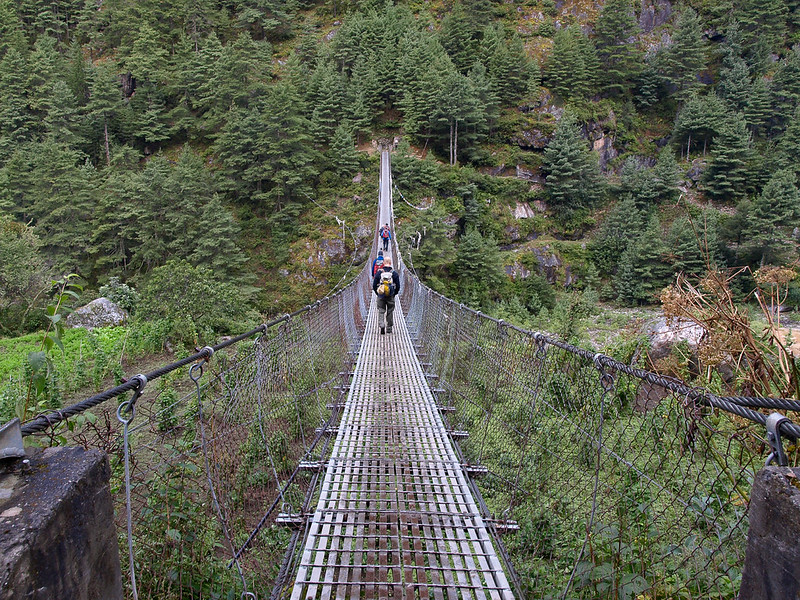 In Nepal’s hill and mountain districts, seasonal rivers often separate communities from essential services. During monsoon season, rising water levels can wash away temporary crossings, forcing children, patients and families to take long detours or attempt unsafe river crossings. Trail bridges in rural Nepal are helping restore safe, year-round access to schools, health posts and emergency care. By replacing damaged or temporary crossings with durable pedestrian suspension bridges, Nepal’s trail bridge program helps reduce travel time and improve safety for rural communities.
Infrastructure and Recovery Needs
The need for resilient rural infrastructure intensified after the 2015 earthquake, which affected 31 districts and damaged transport links and public facilities. In many hill and mountain areas, the absence of a bridge can significantly extend travel time to schools, markets and health facilities, particularly during monsoon periods.
Nepal’s Department of Local Infrastructure (DoLI) coordinates the Trail Bridge Sector Wide Approach (TB SWAp), which provides national standards, financing mechanisms and institutional coordination across federal, provincial and local governments. According to DoLI, Nepal had 8,444 trail bridges in place under the sector framework, with an estimated 4,000 to 5,000 additional bridges still needed to ensure safer crossings and reduce long detours.
The framework sets an access objective aimed at limiting detours to safer crossings to within one hour, with particular focus on rural and disadvantaged communities.
Implementation relies on standardized technical designs, trained bridge builders, user committees and quality monitoring systems operating under national guidelines.
Construction Momentum and National Scale
A 2023 regional presentation on Nepal’s trail bridge sector reported that Nepal reached 10,000 trail bridges by 2023 and constructed 740 trail bridges in fiscal year 2022/2023. The same presentation reported that approximately 1 million people use a trail bridge each day.
Switzerland’s development agency, the Swiss Agency for Development and Cooperation, has supported Nepal’s trail bridge program since the 1960s.
Swiss government reports that Swiss technical support and funding support helped build more than 8,000 trail bridges, improving access to services for millions of people.
Measurable Gains in Education and Health Access
Switzerland’s government reported that the trail bridge program improved access for more than 18 million people, with about 1.4 million people using trail bridges daily.
In areas near newly built trail bridges, average school attendance increased by 16%, and visits to health centers increased by 26%.
Helvetas, which provides technical verification and engineering support to the Nepali government, reports similar outcomes: school attendance increases by an average of 16% and consultations at health centers rise by 26% following construction of a new trail bridge.
Helvetas also reports that each bridge shortens and secures travel routes for an average of approximately 1,800 people.
Why the Model Works
Nepal’s trail bridge sector combines national technical standards with decentralized delivery. The TB SWAp framework outlines institutionalized norms, standardized manuals and training systems that support construction and monitoring at multiple levels of government.
The UNCRD presentation notes that average annual construction increased under the sector-wide approach, reflecting strengthened coordination and sector planning.
Helvetas reports that more than 10,000 trail bridges have now been built in Nepal, many verified through long-term partnerships with the government.
Swiss development reporting highlights that Nepal has developed the institutional capacity to plan, construct and maintain trail bridges through national and subnational systems.
Continuing Need
Despite progress, thousands of additional crossings remain necessary to reduce unsafe river crossings and long detours in rural areas.
Documented increases in school attendance and health facility visits indicate that trail bridges in rural Nepal remain a practical and evidence-based approach to improving access to essential services for remote and marginalized communities.
– Kira Rai
Kira is based in London, UK and focuses on Good News for The Borgen Project.
Photo: Flickr
