Top 10 Facts About Education in Afghanistan
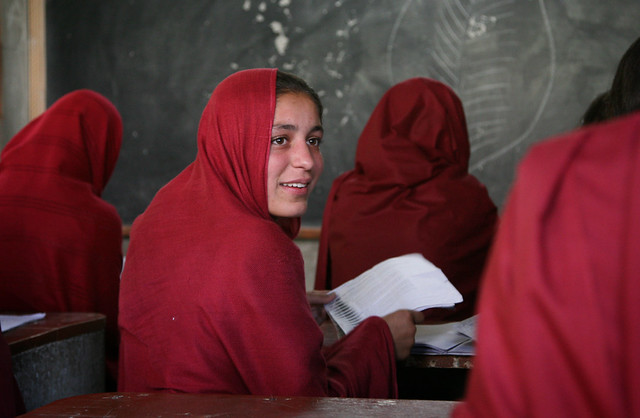 When the United States invaded Afghanistan in 2001, the percentage of Afghan children attending school was extremely low. Now, the educational landscape of Afghanistan is vastly different. More children, especially girls, are enrolled in school. More importantly, they are staying in school. These top 10 facts about education in Afghanistan provide a glimpse of what education looks like in the country now.
Top 10 Facts About Education in Afghanistan
- As of 2019, over 9 million Afghan children are in school.
Around 300,000 students are attending colleges and universities. Additionally, 480,000 new teachers were placed in Afghan schools. Their training was funded by the U.S. Agency for International for Development initiatives.
https://www.usaid.gov/afghanistan/education - It is rare for Afghan children to drop out of school once they are enrolled.
Approximately 85 percent of children who start primary school also finish primary school. Plus, nearly 94 percent of boys and 90 percent of girls who start secondary school also finish secondary school. - Literacy rates are high in urban areas.
Although literacy rates in rural Afghanistan remain relatively low, this is not the case in urban areas. Literacy rates for women living in urban areas are as high as 34.7 percent. However, literacy rates for men living in urban areas are as high as 68 percent. - SEA is improving education.
Strengthening Education in Afghanistan, a USAID initiative, aims to improve the quality and accessibility of education in Afghanistan. Thanks to SEA, over 4,500 teachers received training in 2018. In the same year, 710 women received scholarships. This allowed them to work toward receiving bachelor’s degrees. SEA scholarships also allowed 150 women to work toward receiving master’s degrees at universities in India. - U.S. interference has improved education.
In 2007, six years after the U.S. invasion of Afghanistan, 60 percent of Afghan children attended school in temporary settings like tents instead of in school buildings. About 80 percent of teachers were deemed unqualified. The education of 5 million children was restored but 50 percent of children were still not in school. In the past 12 years, improvements have been made on all of these fronts. - There are currently over 3 million children out of school in Afghanistan.
Out of these 3 million, 60 percent are female. Nearly 17 percent of Afghan girls get married before they turn 15, meaning that they leave school sooner than their male peers. - The number of Afghan children in school is higher now than in 2001.
While more Afghan children are in school now than in 2001, there have not been significant increases in enrollment numbers since 2011. There are also some parts of Afghanistan that have seen decreased enrollment numbers during the past four years. - In some Afghan provinces, female enrollment rates are as low as 14 percent.
Only 33 percent of Afghan teachers are female. The number of female teachers varies widely from one region to the next. In some provinces, 74 percent of teachers are female. In others, only 1.8 percent of teachers are female. - Around 50 percent of Afghans age 15 to 24 are illiterate.
Afghan government spending grew three times higher from 2010 to 2015. However, spending on education was not increased proportionally. Over 50 percent of university students are from high-income areas. - Girls have almost half as many years of schooling than boys.
As of 2014, boys spend 13 years in school on average. Girls spend an average of eight years in school. Moreover, only 38.2 percent of the adult population is literate. As of 2017, Afghanistan was ranked 79th globally in terms of youth unemployment, with 17.6 percent of its population aged 15-24 unemployed.
These top 10 facts about education in Afghanistan show that though there is still room for improvement, the efforts made in the past 18 years have led to positive results. Needless to say, education is vital. The people of Afghanistan cannot overcome poverty and move toward peace without schools. Fortunately, the Afghan government and multiple organizations, including USAID, have made a great deal of progress. International support, including support for USAID from U.S. voters, can further maintain the progress of education in Afghanistan.
– Emelie Fippin
Photo: Flickr
