Thinkers Fighting Extreme Poverty
 A network of public intellectuals in the developed world is making a difference for the most vulnerable populations worldwide. They use their platforms to promote charitable giving and to change the hearts and minds of people in upper-income countries so that they will donate more of their wealth to the fight against poverty. Here are six of the best thinkers fighting extreme poverty.
Rory Stewart and Peter Singer
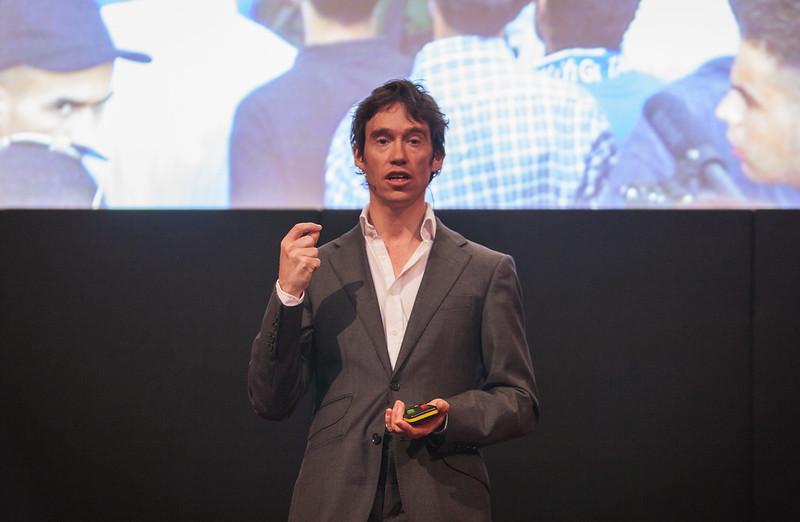
Peter Singer is an Australian utilitarian philosopher and activist fighting extreme poverty. He founded “The Life You Can Save” and is one of the most vital public voices arguing for GiveDirectly. Rory Stewart is a British politician and advisor to GiveDirectly as of January 2024. These influential advocates fighting against extreme poverty promote a highly successful Unconditional Cash Transfer program in Kenya, Uganda and Rwanda. They frequently appear on popular podcasts, speak with journalists and lecture at conferences.
GiveDirectly’s research page highlights the benefits of the program. Research from independent sources like GiveWell, The World Bank, MIT and the University of Chicago finds that UCTs effectively reduce poverty, are not wasted, allow individuals and families to spend money on things they need and improve nearly all measurable aspects of life. Additionally, UCTs have positively impacted several measurable aspects of life, including health, education, employment and economic circumstances.
Will MacAskill & Tony Ord
Will MacAskill and Tony Ord are philosophers, activists and thinkers fighting extreme poverty. Born in Scotland, MacAskill is an Oxford’s Global Priorities Institute member. Ord, an Australian, is also at Oxford as a Senior Research Fellow. The men co-founded Effective Altruism, a movement that uses science to help others most effectively.
They also co-founded Giving What We Can, a pledge to donate 10% of one’s annual pre-tax income or 2.5% of one’s yearly net worth (whichever is larger) to the world’s most effective charities. Effective Altruism is estimated to have raised more than $1 billion between 2014-2022, with most going to global health.
Rob Wiblin
Rob Wiblin is the Head of Research for 80,000 Hours and hosts its podcast. One of the main topics he supports on the podcast is the fight against poverty through Effective Altruism. He frequently interviews thinkers who are working to combat extreme poverty, such as Holden Karnovsky, the founder of GiveWell and Open Philanthropy; Alexander Berger, the Global Health and Well-being Program Lead at Open Philanthropy; EA activist Benjamin Todd and EA co-founders MacAskill and Ord. The 80,000 Hours podcast has 16.5 thousand subscribers and 2.3 million views on YouTube.
Sam Harris
The American philosopher and neuroscientist Sam Harris regularly promotes charities and thinkers fighting extreme poverty on his podcast, Making Sense. He has promoted Giving What We Can, GiveWell and GiveDirectly and has taken the Giving What We Can pledge. His organization, the Waking Up Foundation, was the first business to take the pledge. Harris has interviewed guests such as Stewart, Singer, Steven Pinker, Will McAskill, Ord and Chris Anderson. During Harris’ 2020 podcast with MacAskill, Harris shared that GiveWell expected to receive at least $1 million in donations from his listeners by the end of 2021. Harris also shared that his first podcast with MacAskill resulted in $150,000 in donations to the Against Malaria Foundation.
Steven Pinker
Pinker, a psychologist at Harvard University and public advocate against extreme poverty, global hunger and preventable diseases, highlighted the fight to end extreme poverty in his best-selling 2018 book “Enlightenment Now: The Case for Reason, Science, Humanism and Progress.” Pinker explains why there have been sharp declines in extreme poverty and hunger since the Industrial Revolution, especially in recent decades. He argues that open economies, investment in the developing world and international cooperation can continue to reduce extreme poverty, hunger and disease.
Chris Anderson
Anderson, the Head of TED, uses public appearances, the TED conference and his 2024 book “Infectious Generosity: The Ultimate Idea Worth Spreading“ to focus the attention of middle and upper-income people on charitable giving to the extremely impoverished. In the book, Anderson discusses times when generosity has “gone viral” and how positive emotions, creativity and courage can be used to spread generosity.
A 2024 podcast with Harris, Anderson expands on the ideas in his book by arguing that infectious generosity can be applied to a culture of charitable giving by the ultra-wealthy to those living in extreme poverty. In January 2024, Giving What We Can announced that Anderson had taken its pledge.
– Joey T. McFadden
Photo: Flickr
