Mission Possible: Combating the Water Crisis in India
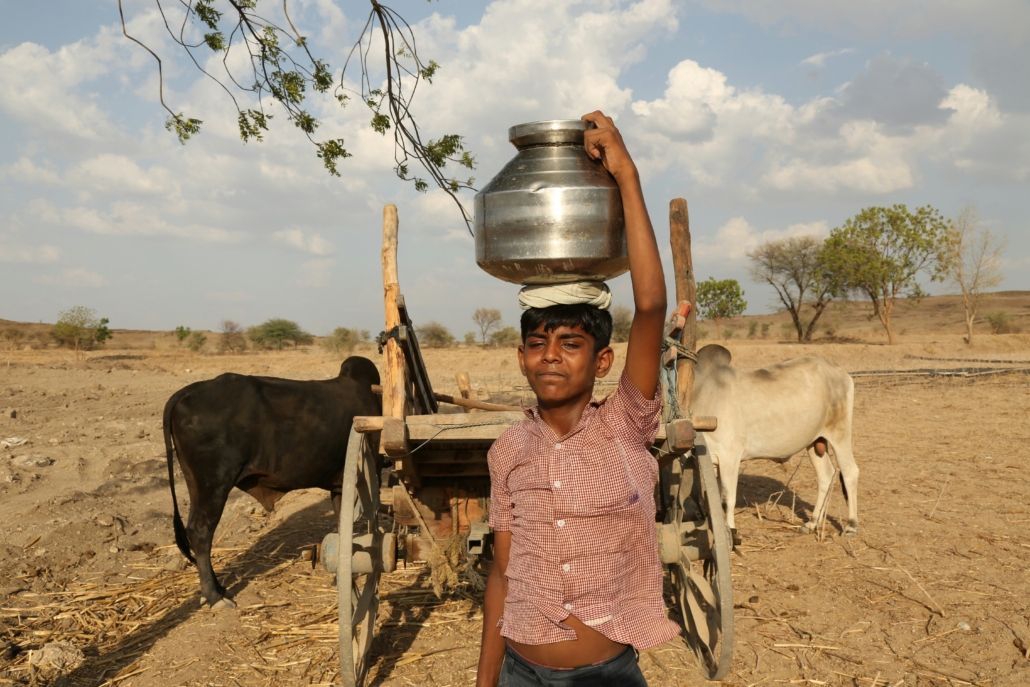 India, home to 18% of the world’s population and only 4% of its water resources, faces a need for sustainable water management. In response, national campaigns and programs that local communities and women are leading are transforming how India conserves, consumes and manages water, thus addressing the water crisis in India.
About the Water Crisis in India
The severe water crisis amid record-breaking heat waves intensifies each summer, and according to data from India’s Health Ministry, between March 1st and June 18th, 2024, 110 people died from heatstroke.
The right to safe drinking water is a fundamental human right. According to the Central Ground Water Board in 2020, 256 districts were water-stressed. In rural areas groundwater levels are overexploited, and as per a report from the National Commission on Integrated Water Resources Development (NCIWRD), India’s average per capita water availability, is likely to reduce drastically by 2050, leading to a severely water stressed country.
In rural settings, the lack of infrastructure and sanitation, fueled by a lack of hygiene education, gives way for preventable waterborne diseases to take the lives of millions every year. It affects countless children and elderly folk whose immune systems are weakened by age. The public taps and tube wells that are the primary source for many in rural areas are the most prone to contamination.
In addition to global causes like changing weather patterns and availability, India faces specific, deeply rooted challenges. In a country like India where social inequalities have persisted, social inequities that linger directly impact access to water, how it is allocated, distributed and consumed. Additionally, water scarcity and exclusion from public resources continue to disproportionately affect marginalized communities. Here are some key missions working to address the water crisis in India:
1. Jal Shakti Abhiyan: Catch the Rain Campaign
The Indian government launched the Jal Shakti Abhiyan campaign, which translates to “water power,” in 2019 to promote water conservation strategies across India, especially the rural areas. The initiative introduces a new slogan and theme each year on World Water Day, March 22nd. In 2024, the focus was to empower women with the slogan “Nari Shakti Se Jal Shakti’ to highlight the role of women in sustainable management of water resources.
This year’s campaign emphasizes water conservation and management through community participation and innovative strategies. It launched in Banaskantha, Gujarat, with the aim to construct 50,000 recharge wells along with water conservation strategies that boost groundwater levels, agriculture and sustainable farming.
To raise awareness this year, it featured several key events including the inauguration of exhibitions that highlighted water conservation through artistic expression and the unveiling of innovative water management projects, including Community Sanitary Complexes, Liquid Waste Management Systems, the Gobardhan Project and a Solid Waste Management Shed in Haryana, according to a press release by the Press Information Bureau.
Since its launch in 2019, this campaign has had tremendous success. Between March 2023 to December 2023 alone, the initiative implemented 66.4 million afforestation activities, built approximately 1.06 million water harvesting structures, renovated more than 250,000 traditional water bodies and created 1.24 million watershed development structures.
2. Jal Jeevan Mission: Har Ghar Jal
The government of India launched The Jal Jeevan Mission in 2019 as a flagship program to provide safe and adequate drinking water to rural households across India. Planned as a four-year initiative, the mission focuses on implementing long term sustainable water systems as well as greywater management and rainwater harvesting.
Since its announcement in 2019, rural households with tap water connections have grown from 17% to 80%, now reaching around 156 million households. The mission enabled a total of 154 districts, 1,570 blocks, 95,728 Gram Panchayats and 1,99,675 villages to become “Har Ghar Jal,” meaning every home has access to water.
According to a report by the World Health Organization (WHO), the mission has helped avert nearly 400,000 deaths from diarrheal diseases, prevented 14 million Disability Adjusted Life Years (DALYs) and saved up to $101 billion in health-related costs.
3. Jal Sahelis or “Water friends”
India’s drought-prone Bundelkhand region saw a movement in water conservation led by local communities and women. Local NGO group Parmarth Samaj Sevi Sansthan set up the Jal Saheli program in 2011 to address the long history of water scarcity in the region. The initiative aimed to empower women— many of whom used to walk over a mile to fetch water from a well— to take charge of water management in their communities.
This program enabled women from different villages to receive training in water conservation efforts and management, learning about sustainability and government schemes. Challenging gender norms, the women became the face of advocacy and leadership.
The initiative’s efforts contributed to a shift in agricultural water use, retention of rainwater techniques, and more. Today, there are around 1,530 Jal Sahelis (water friends) across 321 villages in Bundelkhand.
Other Initiatives
Additional campaigns and government initiatives, such as the Repair, Renovation and Restoration of Water Bodies (RRR) scheme, have launched to support broader water management and conservation goals. The RRR scheme is a more long-term scheme that originated in 2005 with a focus to restore and enhance water bodies such as to improve irrigation and efficiency. Since its launch, more than 1,000 water bodies have been restored across multiple states.
Looking Ahead
The growing impacts of changing weather patterns, groundwater crisis and water availability emphasizes the need to focus on water not just as a resource but as a lifeline. Initiatives and movements like the Jal Shakti Abhiyan and Jal Jeevan mission make empowering communities to learn more about water conservation and management more imperative than ever.
For millions of villages in India, the promise of safe water is not just a milestone, but a shift toward a more water abundant and sustainable country in the face of changing climates.
– Sahana Shastry
Sahana is based in Newtown Square, PA, USA and focuses on Good News and Global Health for The Borgen Project.
Photo: Unsplash
