The Enough Project: Easing Poverty in DRC
 For more than 30 years the people of the Democratic Republic of the Congo (DRC) have endured the perpetual reverberations resulting from ongoing economic and political conflict. The obstructive effects of conflict on the Congolese people continue to attract the attention of multiple organizations, including the Enough Project. Armies and rebels continue to use violence to control natural resources and have repressed independent voices to maintain financial and physical power. Indeed, 75% of the people live in poverty, compounded by “the second largest internally displaced people’s crisis in Africa.” is having devastating effects.
Natural Resources Creating Conflict
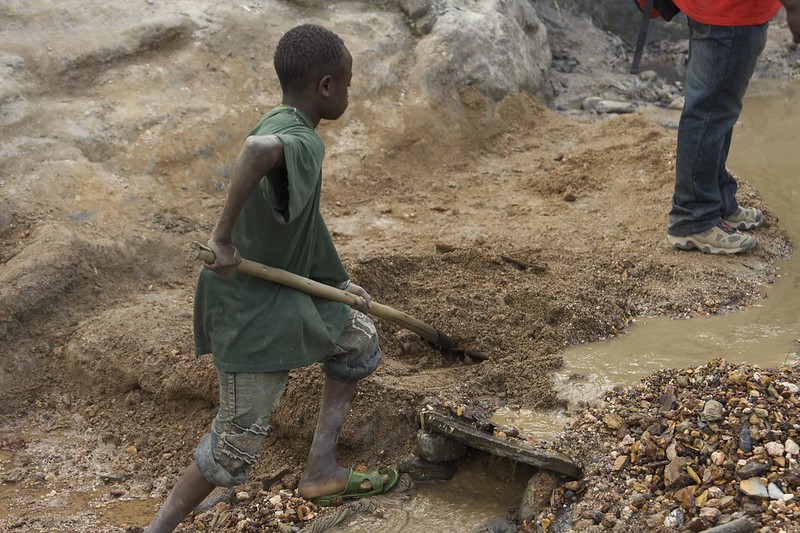
The DRC is rich in natural resources. Yet its wealth has not benefited local communities. Children as young as 11 work in mines or work as child soldiers without pay. Congolese families face cycles of violence and challenges that have led to insecurity and poverty.
The trade of the “conflict minerals” (3TG) cobalt, coltan and tantalum, continues to fuel the armed civil conflict in the DRC. Coltan, (67% of the world’s supply) is the source of tantalum. Cobalt (70% of the world’s supply) is essential to manufacture smartphones. Combined, tantalum and cobalt are used to power batteries.
In addition, the DRC has one of the largest reserves of potential wealth, including 200 million acres of cultivable land. Combined, the DRC’s natural resources total more than $24 trillion worth of minerals.
The World Food Program (WFP) identifies key drivers or motivators of food insecurity and their complex relationship with conflict and economic shocks.
Conflict minerals are a natural resource that has motivated conflict and desperation in the DRC. While the WFP provides emergency food assistance to conflict-affected areas of Eastern DRC, the Enough Project advocates from a different position.
The Enough Project
Founded in 2007, the Enough Project, a non-profit organization based in Washington, D.C. has advocated civilian protection strategies and supported peace in Eastern Congo. In 2008, the Enough Project broadened its strategies. To upgrade the Enough Project’s effectiveness, it formed the Raise Hope for Congo campaign. The campaign aims to educate activists to help alleviate conflicts in Eastern Congo.
In 2016, the Enough Project adopted another campaign, Sentry, to address the increase of civil conflicts and an unyielding situation of food insecurity. Sentry’s mission is to “produce hard-hitting investigative reports and dossiers on individuals and entities connected to grand corruption and violence.”
Addressing the DRC’s situation of malnutrition, illness, and poverty is a primary concern. Confronting the DRC’s volatile civil conflicts, the pressing situation of poverty and food insecurity can benefit the people of the DRC. “The conflict, which has persisted in the east of the DRC for almost 30 years, and is the deadliest since the Second World War, is mainly economic,” explains Nobel Laureate Denis Mukwege. The conflict displaced more than 10 million people, with plenty of them being forcibly recruited into armed groups or killed.
Looking to the Future of the DRC
The children of the DRC are its future. Nearly half of the population of the DRC is under the age of 15. Working in mines or serving as soldiers instead of attending school is not a well-grounded path for any child. Of the 30,000 fighters involved in the ongoing conflicts, one-third are children. The Congolese children are the most vulnerable population. They are witnesses and forced participants.
The threat of conflict in the Democratic Republic of the Congo is immediate. The sale of conflict minerals can be faulted for the existing high levels of food insecurity. The primary concern of the Enough Project has been to liberate government officials and families of the DRC. These actions have enabled them to address the immediate concerns of “malnutrition, illness and poor education that are making the DRC one of the hardest places on earth to raise a family.”
– Pamela Fenton
Pamela is based in Wall Township, NJ, USA and focuses on Politics for The Borgen Project.
Photo: Flickr
