Sustainable Farming in Bihar: Bridging the Poverty Gap
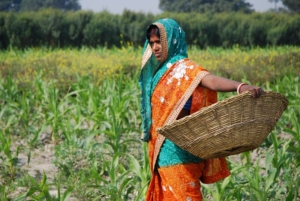 The Sophia Akash Foundation (SAF), in partnership with nonprofit organization PRADAN, is addressing the challenges faced by vulnerable women farmers in Bihar, India. Founded in 2010, SAF aims to combat poverty in underserved and rural communities through collaboration and social impact.
In March 2023, the foundation joined forces with PRADAN to empower women in Bihar with knowledge, tools and resources. The partnership focused on improving traditional farming methods through more sustainable, climate-resilient practices.
Agriculture in Bihar
Bihar, known for its fertile land and rich natural resources, relies heavily on agriculture, which employs about 76% of the state’s population. However, many farmers still rely on ineffective traditional farming practices that use harmful chemical fertilizers and pesticides to sustain their livelihoods.
The growing impact of climate instability, including unpredictable rainfall, droughts and extreme temperatures, has made it even harder for farming communities to earn a stable income and support their families.
Why Women Farmers Matter
This joint initiative focuses on women in rural areas, who often lack access to the necessary tools, agricultural training, support and financial resources. According to SAF founder Shailendra Patel, initial research showed that empowering women empowers communities.
“If you enable the female members of these households, there is empirical evidence that because of maternal instincts, they are going to use that transfer of knowledge, tools and resources to improve the circumstances of their family and children,” Patel said. “They are likely to do that with greater consideration than the male household members.”
Training for Sustainable Farming
The initiative addresses ineffective farming practices in several ways. It trains women farmers in sustainable techniques such as climate-resilient greenhouses and drip irrigation. These methods protect crops during erratic weather conditions. They also increase both harvest size and crop quality.
The hands-on training covers land preparation, seed selection, bio-fertilizer preparation, water conservation, crop diversification and greenhouse management. These skills create a strong foundation for more resilient and productive farming methods.
“Through the transfer of knowledge and sharing of tools, means and resources with these communities will help them to progress on their journey out of poverty,” Patel said.
Success Story
This shift from traditional practices to sustainable farming in Bihar has already shown positive results, including healthier soils, improved harvest and reduced vulnerability to extreme weather conditions. Among the program’s early success stories is Sheetal, a local participant who began cultivating saplings through the Climate-Resilient Farming Program.
With training and support, she established a small nursery business that supplies saplings to other farmers in her village. This has diversified her income sources and positioned her as an entrepreneur, while uplifting her village community.
Along with empowering women in leadership roles in their villages, this program has contributed to greater food security, reduced input costs and more stable incomes through sustainable farming in Bihar.
“Empowering women benefits the families, communities and households,” Patel stated. “We need to find ways to lift the women to some form of equitable status in their families, give them agency in their families and knowledge with which they can make decisions.”
– Sahana Shastry
Sahana is based in Newtown Square, PA, USA and focuses on Good News for The Borgen Project.
Photo: Flickr
