Hershey Focuses on Sustainable Cocoa Farming in West Africa
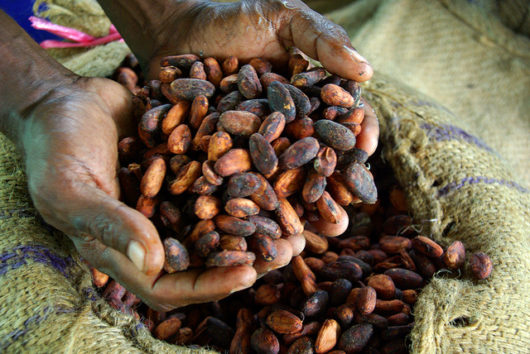
The Hershey Company is committed to achieving its goal of 100 percent sustainable cocoa farming by 2020, investing in two programs targeting small farmers and poverty in West Africa.
Learn To Grow Cocoa
The focus of this program — launched in 2012 — is to help farmers in Ghana, Nigeria and Cote d’Ivoire increase their productivity and improve their livelihoods. Currently, poverty rates in Nigeria are rising while Ghana and Cote d’Ivoire are not on target to meet the U.N. Sustainable Development Goals.
In West Africa, where about 70 percent of cocoa is grown, most cocoa farms are only about two to four hectares in size. The Learn To Grow program empowers farmers by teaching them environmental, social and sustainable agricultural practices. Through Learn To Grow, Hershey offers a three-year training program that “can lead to UTZ certification as producers of sustainable cocoa.”
Farmers who meet the certification requirements will receive premium payments for their cocoa yields, providing a considerable boost in income. The program also provides greater opportunities for their communities to thrive as it, “encourages women and young cocoa farmers to take leadership roles in farmer organizations by leveraging training and knowledge sharing.”
One of the key features of the Learn To Grow Program is called CocoaLink. This is a mobile phone service that connects even the most rural farmers in West Africa. It shares practical information with these farmers, including things such as farm safety, information on good fertilization practices, pest and disease prevention, post-harvest marketing and more.
Learn To Grow also has plans to distribute 1 million higher yielding, drought and disease resistant cocoa trees to West African farmers.
Cocoa For Good
In April of 2018, The Hershey Company launched Cocoa For Good, pledging $500 million by 2030 to support farming communities. This initiative aims to help all cocoa-growing communities, with a focus on West Africa. The initiative targets four key areas:
- Nourishing Families. People are most productive when they are healthy, and the Hershey Company provides increased access to good nutrition, enabling children to be more successful in school and adults to be more successful in their jobs. Of note, every day, 50,000 children in Ghana receive ViVi, a nut-based healthy snack, provided through the Hershey Energize Learning program.
- Elevating Youth. Child labor is a side effect of poverty in West Africa, and children aged 14-17 are at the most risk. Hershey currently targets child labor by increasing access to educational opportunities for the most vulnerable children. So far, the company has built five schools and supported 31 education institutions.
- Prospering Communities. The Hershey Company is investing in programs that support women farmers who make up 45 percent of the cocoa farming industry in West Africa.
- Preserving Ecosystems. The Hershey Company encourages the use of sustainable agricultural techniques such as shade-grown cocoa farming in order to preserve the environment for future generations.
The Hershey Company recognizes its important role in the cocoa value chain and has repeatedly shown its commitment to improving sustainable cocoa farming practices, especially in West Africa.
– CJ Sternfels
Photo: Flickr
