Sustainable Bangladeshi Fish Farming: IMTA
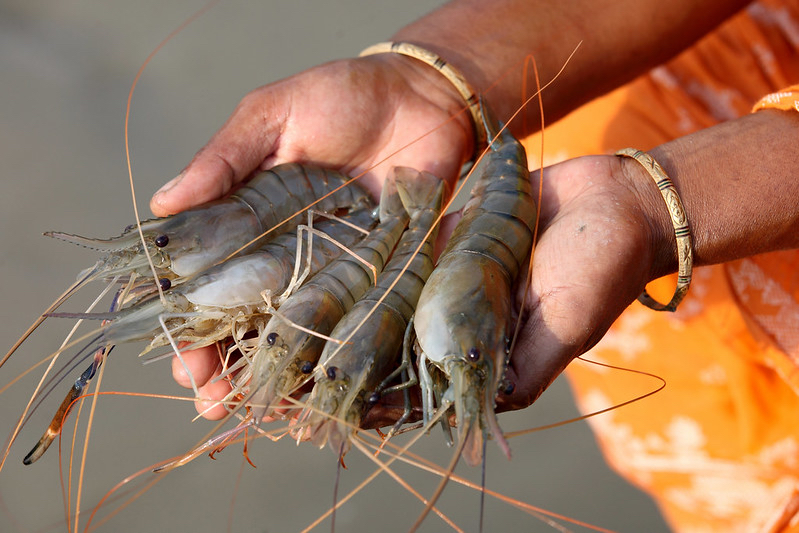 Shrimp farming plays an essential role in Bangladeshi livelihoods, food security and foreign exchange. Prior to the 1970s, Bangladeshi shrimpers typically farmed in inland ponds that trapped tidal waters. These ponds required minimal to no feed, fertilizer or other inputs, relying instead on the natural ecosystem for shrimp production. However, they produced limited output. This article explores the environmental and economic consequences of Bangladeshi shrimp farms, as well as the potential for an alternative method for sustainable Bangladeshi fish farming with IMTA shrimp farms.
Expansion of Shrimp Farming
In the 1970s, international market demand for shrimp grew as part of the “Blue Revolution,” wherein cheap and vacuum-sealed fish appeared in the freezer aisles of grocery stores around the world. The potential for high profits led to the rapid expansion of commercial shrimp farming in Bangladesh. Today, shrimp production contributes dominantly to Bangladeshi fisheries and aquaculture, which comprise about 3.65% of the nation’s GDP. Approximately 14.7 million people depend on Bangladeshi fisheries and aquaculture for full- or part-time employment. Fish products also provide about 60% of all animal protein in the average Bangladeshi’s diet.
Shrimp farming has the potential to combat poverty, malnutrition, hunger and job insecurity among the growing population in Bangladesh, but poor shrimp farm management comes with consequences. In its current state, shrimp farming may pose more problems in Bangladesh than it can resolve.
Consequences
The rapid expansion of shrimp farming has had adverse environmental, economic and social effects in Bangladesh. Poor placement of farming systems can lead to saltwater intrusion in groundwater, deforestation and loss of mangrove forests. All of these consequences overall result in changes to local water systems and the deterioration of soil and water quality. This in turn threatens biodiversity, crop production and both supplies of potable water and critical cooking fuel.
The environmental effects of high-intensity shrimp farming in Bangladesh thus endanger human health and survival tools, particularly among people living in rural coastal areas. These individuals have limited access to alternative livelihoods. This dynamic leads to social imbalance and contributes to criminal activity in the Bangladeshi coastal regions.
The long-term environmental and social ramifications of Bangladeshi shrimp farming pose economic costs as well, including unemployment and loss of natural resources. These may outweigh the economic benefits of Bangladeshi shrimp production.
Solution for a Sustainable Future
To combat the environmental, social and economic consequences of high-intensity shrimp farming, some Bangladeshi shrimp farmers are turning to integrated multi-trophic aquaculture (IMTA) systems. IMTA relies on natural processes to cultivate aquatic organisms at multiple trophic levels within the same farming system. Organisms within the system, including finfish, shellfish and seaweeds, interact to recycle and reuse nutrients. IMTA requires minimal external inputs and simulates natural ecosystem processes, much like shrimp farming systems prior to the 1970s Blue Revolution.
When properly executed, IMTA shrimp farms in Bangladesh can produce multiple marketable organisms, raise organism survival rates, increase biomass yield and reduce harmful nutrient concentrations in water. IMTA systems promote biodiversity by supporting production at multiple trophic levels. They relocate shrimp farms from threatened mangrove forests to open-water environments like coastal rivers and estuaries. This discourages intensive, environmentally degrading shrimp farming practices. Further, the regrowth of mangrove forests contributes to carbon capture. All of these processes increase ecosystem resiliency and bolster the long-term efficacy of sustainable Bangladeshi fish farming practices.
In 1998, Bangladesh adopted a National Fisheries Policy. The policy recognizes the detrimental effects that shrimp farming has on the nation. It seeks to optimize fishery resource use in order to encourage economic growth, feed the population, alleviate poverty and protect human and environmental health in Bangladesh. Widespread adoption of IMTA shrimp farms could facilitate sustainable Bangladeshi fish farming practices and, overall, be a step in the right direction.
– Avery Saklad
Photo: Flickr
