Youth Empowerment Through Surfing in Ivory Coast
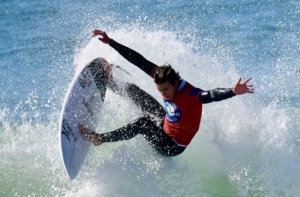 Surfing is gaining momentum along the coastline of Ivory Coast, not just as a sport but as a tool to fight poverty, build life skills and promote gender equality. Local pioneers like Nadi Saddy and Souleyman Sidibe lead the charge with their organization, Surf Côte d’Ivoire, using surfing to open new doors for youth empowerment and community development.
Surfing in Ivory Coast as a Driver for SDG 1 and SDG 8
On the Ivorian coastline, surfing is a growing force against poverty and unemployment. Côte d’Ivoire’s poverty rate decreased from 46.3% in 2015 to 39.4% in 2020, but unemployment and regional disparities persist. Surfing, led by young pioneers like Nadi Saddy and Souleyman Sidibe, is creating new jobs and economic potential in coastal communities.
“There are many opportunities around surfing,” Nadi said. “Surf camps, guided beach tours, board rentals, surf classes — all these can create jobs.” Souleyman Sidibe, a national champion and co-founder of Surf Côte d’Ivoire, now earns a living teaching surfing.
In 2024, he opened Souley Surf School in Assinie Terminal to offer lessons and mentorship to local youth. “Surfing can’t end poverty overnight,” he said. “But it can help. It gives young people a purpose and can generate income for communities.”
Building Life Skills and Encouraging Education
Surfing provides more than economic benefits. It fosters confidence, discipline and resilience, vital for personal development and success in school and work. “To surf, you have to respect nature. You learn humility,” Sidibe said. “These are values we want to share with our students.” Saddy adds, “It helps kids build confidence and face their fears. That strength carries into other parts of life — work, school, adulthood.”
Surfing programs also include mentorship and environmental education, encouraging youth to stay engaged in their communities and pursue lifelong learning.
Promoting Gender Equality and Inclusion
According to the United Nations Educational, Scientific and Cultural Organization (UNESCO), only 55.5% of girls in Côte d’Ivoire complete lower secondary education, compared to 60.2% of boys. This reveals a 4.7% point gender gap in completion rates at this level.
However, surfing is breaking this gender barrier. While some families remain hesitant, demanding that girls stay home, progress is visible. Sidibe’s surf school has welcomed a dozen girls aged 8 to 14, with hopes to train the country’s first female surf instructors.
Overcoming Challenges and the Path Forward
Despite growing interest, surfing remains a niche sport with challenges such as limited access to equipment and lingering fears of the ocean. “In Côte d’Ivoire, many people are afraid of the ocean,” Saddy explained. “It can be powerful and dangerous. Many people don’t know how to swim, so the ocean is seen as something to fear, not to enjoy.”
Support from local authorities and the international community is essential. “We need support from local authorities to see surfing as a real economic asset — just like Senegal has done,” Saddy said.
From Childhood Dreams to a National Movement
Saddy and Sidibe’s love for surfing in Ivory Coast started when they were young. “When I was a kid, I used to spend weekends in Assinie,” Saddy said. “I would watch the waves and the few surfers there. I dreamed of having my own board one day.” “My older brothers surfed,” Sidibe said. “They were my role models. I wanted to be like them.”
Today, their shared vision is a growing community inspiring youth to dream bigger and believe in themselves. “Whether you’re a surf coach, a teacher, a photographer — come join us,” Saddy stated. “Help us show the youth of Côte d’Ivoire that they don’t have to be afraid of big waves — or big dreams.”
– Alexandra Diallo-Scholler
Alexandra is based in Los Angeles, CA, USA and focuses on Good News for The Borgen Project
Photo: Flickr
