USAID and UNICEF’s $40 Million Partnership To Support Education in Afghanistan
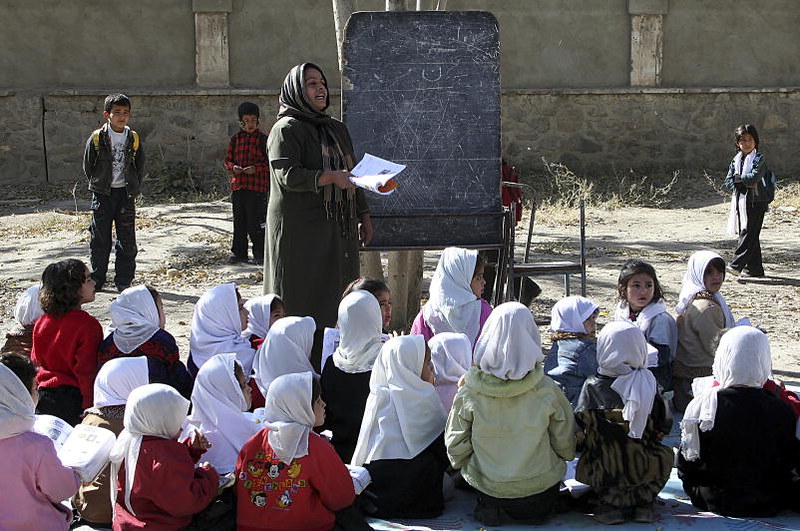
On August 12, 2022, the U.S. Agency for International Development (USAID) announced its $40 million partnership with the United Nations Children’s Fund (UNICEF) to support education for children in Afghanistan, particularly Afghan girls.
The Issue
The Taliban regained control in Afghanistan in August 2021. Since then, it has placed a ban on girls’ education in Afghanistan, restricting school access for millions of Afghan girls. Tens of thousands of teenage girls cannot access public secondary school (high school), even after the Taliban promised to reopen their schools. Meanwhile, the Taliban has authorized all primary school-aged children to go back to class, including girls, but schooling remains segregated by gender. The Taliban has allowed women to continue their degrees at universities under the condition of “a strictly gender-segregated system that will dramatically lower the range and quality of women’s options.”
Past Achievements in Afghan Girls’ Education
Previous to the Taliban takeover, support for children’s education in Afghanistan was increasing. Before the ban, 1.1 million girls attended secondary schools. From 2003 to 2017, secondary school attendance for teenage girls increased by 32%, and by 2018 there were 3.8 million female students in the country. This number increased dramatically from the 5,000 girls enrolled in schools in 2001. This increase was also accompanied by a rising number of women in higher education, decreasing the gender disparity in university enrollment.
The Taliban Takeover in August 2021
Following the Taliban takeover in August 2021, “access to safe, quality, and relevant education is no longer a reality for many Afghans.” In Afghanistan, the Taliban has scaled back women’s rights. Countless women are losing their jobs or ability to enter the workforce, and tens of thousands of girls losing their right to an education. “Women are being deprived of their dignity… status at home and in society.” While the Taliban has allowed the reopening of primary schools for both boys and girls, they are to attend gender-segregated classes. In September 2021, the Taliban reopened public secondary schools only to boys, claiming that girls could only return to class under “a safe learning environment.” While some private secondary schools reopened in 10 out of 34 provinces, allowing a limited number of girls to re-enroll, the majority of teenage girls have lost their rights to education in Afghanistan.
The Taliban’s Block on Girls’ Education
“In October 2021, Afghan officials announced that girls would be able to resume attendance in government secondary schools but only after the development of a new educational framework.” In January 2022, the Taliban announced plans to reopen schools for girls aged 13 and up in late March. Yet, when the deadline to reopen came earlier this year, the blockage of girls’ education in Afghanistan Only continued. “On March 23, the first day of the school year in Afghanistan, eager female students arriving for class found closed gates and armed Taliban guards who told them to go home.”
The Good News: Afghan Girls’ Dedicated Pursuit for Education
Despite this ban, many Afghans still have the determination to receive an education. An estimated few hundred young female students have decided to continue their educational lessons in secret, whether that be through online resources or in hidden makeshift classrooms. Code to Inspire (CTI) is Afghanistan’s first all-girls coding academy, and the CEO/founder Fereshteh Forough announced the academy’s creation of encrypted virtual classrooms. Through CTI, Forough has helped Afghan girls pursue their right to an education by uploading online courses and providing “laptops and internet packages to about 100 of her students.”
The Aim of the Agreement
The $40 million agreement between USAID and UNICEF will “provide hundreds of thousands” of Afghans with “cash assistance to keep their children in school.” USAID will fund the project while UNICEF will supply the resources needed to assist students during Afghanistan’s “ongoing humanitarian, economic, and political crises.” More specific information about the agreement and the resources it intends to supply is to come. This agreement to support children’s education is especially significant for Afghan girls and women amidst the Taliban’s blockage of schools. USAID did announce that the project intends to support the learning of “foundational skills, such as reading, writing, and math.” In the same press release, USAID emphasized the importance of girls’ education in Afghanistan. When girls in Afghanistan have access to education, they gain access to “resources and tools [that will] support their safety, social, and economic well-being.”
– Ashley Kim
Photo: Flickr
