The World Bank Aids Smallholder Farmers in Ethiopia
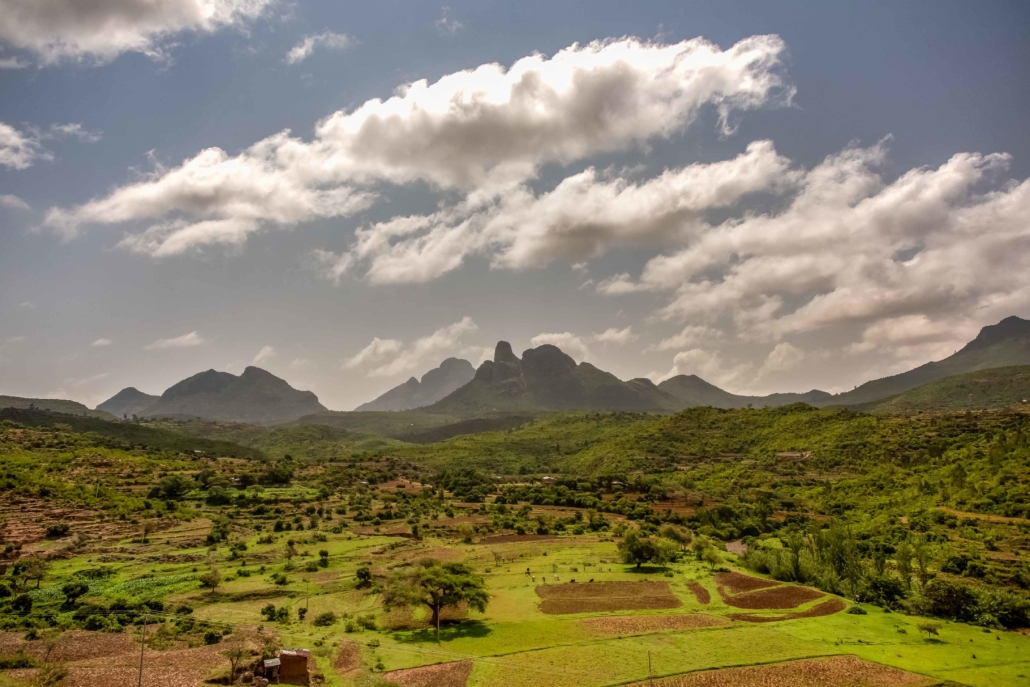
As of 2018, 31.1% of Ethiopia’s gross domestic product (GDP) comes from the country’s agriculture, forestry and fishing sectors. These sectors are essential to the country and employ nearly two-thirds of Ethiopia’s workforce. Smallholder farmers in Ethiopia are vital members of the agri-business since they comprise 95% of its production and greatly contribute to poverty reduction.
However, these farmers still struggle to increase production. Climate, poor markets and lack of knowledge and resources contribute to this struggle. Additionally, Ethiopia’s population is growing, as it is the second most populated country in Africa. This makes it more difficult to own land and has resulted in smaller farm sizes.
The World Bank is aiding smallholder farmers in order to stimulate the economy and decrease poverty rates. The World Bank finances the Second Agricultural Growth Project (AGPII) as a way to help smallholder farmers in Ethiopia. AGPII helps agricultural services in many ways, such as increasing resources and technologies and aiding in marketing. With the help of projects like AGPII, agricultural productivity and commercialization can increase by managing and overcoming the adversities of farming.
Smallholder Farmers
A smallholder farmer is a person who works on a small piece of land growing crops and farming livestock. Usually, families run these farms as their main source of income. There are more than 500 million smallholder farms in the world. About 74% of Ethiopia’s farmers live on small farms, with about 67% living below the national poverty line.
Speaking on agriculture, Vikas Choudhary, team leader of AGPII and agricultural operations for Ethiopia, South Sudan and Sudan, told The Borgen Project, “smallholder farmers are the backbone of Ethiopia and its economy.”
The Difficulties of Farming
Farming is one of the riskiest and most complicated businesses to be in. As a farmer, you are dependent on many factors that are difficult to control. Here are a few of the complexities of farming in Ethiopia.
- Climate. Climate is one issue that can largely affect crop production. Unreliable rainfall can cause agricultural production systems to be unachievable. Many smallholders depend solely on the rain to water their horticultural crops. To develop more crops and better the market, conditions must undergo diversification to offer more of a variety of crops. Additionally, focusing on agro-climate and water resources will help offer more agricultural irrigation.
- Land Management. Land management has become a difficult factor within Ethiopia’s agricultural business. Choudhary stated, “landholding is extremely fragmented. When you are saying half a hectare, it’s not even half a hectare. It’s smaller than that. And even in that, the land parcels are extremely fragmented. One is here, one can be half a kilometer away, a third can be a fourth kilometers away, so management of those land parcels is extremely challenging.” Most farmers cultivate on land smaller than a hectare, and even then the plots can be divided into four plots.
- Limited Technology and Education. Limited technology and education are perhaps the largest difficulties that smallholder farmers in Ethiopia struggle with. Within the country, there is a lack of improved seeds, pesticides, fertilizers and irrigation. Only 2% of smallholder land is irrigated and as little as 3.7% have access to agricultural machinery. Providing more educational services and agricultural technologies can increase agricultural productivity, and thus contribute to poverty reduction.
The Road to Poverty Reduction
AGPII has many components focused on aiding smallholder farmers with market access and productivity. In 2019, the World Bank’s Poverty Assessment for Ethiopia stated that agricultural growth was the main factor in poverty reduction. The project supports smallholder farmers by enhancing commercialization through an increase in market accessibility, promoting irrigation usage and increasing agricultural services. AGPII has helped 1.4 million smallholder farmers retrieve agricultural services, along with supplying more than 254 new agricultural technologies to assist with crop productivity and possible climate impacts.
The agricultural sector of Ethiopia is essential to improving the economy. Roughly 45% of outputs are from agriculture, and the sector employs nearly 80% of the country’s labor force. Thus, focusing on this sector is necessary, since it is the smallholder farmers in Ethiopia that are the poorest in the country. Choudhary estimated that “for every 1% increase in agricultural productivity, poverty declines by .9%.” Additionally, when asked how smallholder farmers can contribute to poverty reduction, Choudhary shared, “there’s a significant multiplier effect of increased agri-productivity and smallholder farmers are the ones who are contributing, and should be contributing, to this increase in commercialization, and thereby creating jobs, increasing income and reducing poverty.”
Moving Forward
A clear link exists between agricultural productivity and poverty reduction within Ethiopia. “Smallholder farmers are in some way synonymous with Ethiopia,” says Choudhury. Rural areas account for about 80% of the country’s population, and therefore much must happen in order to deliver better technology and education to the farming community.
The World Bank, through AGPII, is one example of an organization contributing to the support of smallholder farmers in Ethiopia, providing the funds to help improve irrigation usage, increase commercialization and supply more resources. Overall, this project is going to benefit 1.6 million smallholder farmers living in areas that have the best agricultural growth potential.
– Sarah Kirchner
Photo: Flickr
