Smaller INGOs in Honduras and Beyond
 With the recent federal cuts to world aid funding in the United States (U.S.), smaller international nongovernmental organizations (INGOs) have both felt the strain and shown a particular resiliency. Melanie Gibbons, who has worked with the Lutheran World Relief and merger company Corus for more than 20 years, has witnessed the benefits of smaller INGOs. She highlights how working locally, collaborating with other INGOs, operating on a smaller scale and maintaining the “nimble” qualities of a small organization can be an asset in the nonprofit sector.
Honduras’ Smaller INGOs and Tuition-Free School
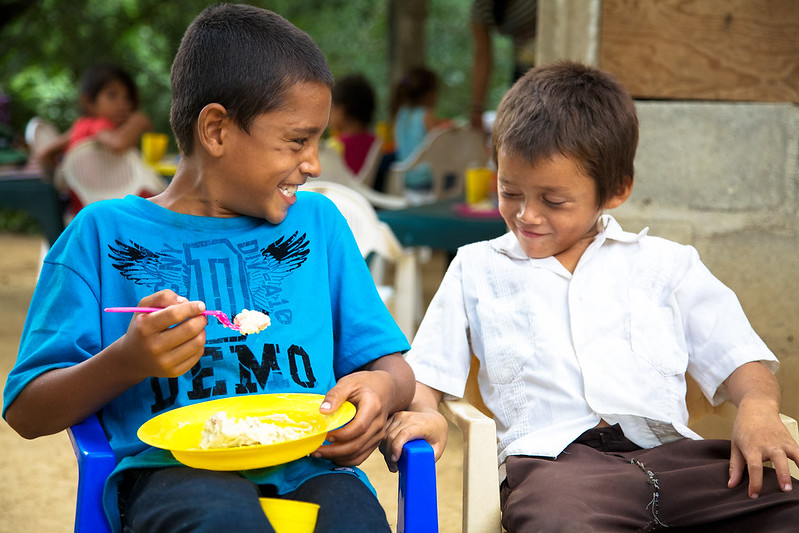
In Honduras, just 38% of high school students graduate. At El Hogar, a tuition-free school supported by international aid, that number jumps to 92%. After years of work, helping with the world’s poorest countries, INGOs of all sizes have realized the importance of working locally in order to accomplish sustainable progress in a region, avoid unnecessary power struggles, honor the people that they are serving and get to root causes. And working locally often means working smaller. “And this is where the benefit of the larger organizations, working with the smaller organizations, is so good,” Gibbons says. “Because these smaller organizations who are right there in and their communities will know more quickly where needs are shifting, or what is most culturally appropriate or needed.”
The Goal of Any Good Aid Organization
The goal of any good aid organization, Gibbons says, is to put themselves out of business. She lifts up the example of Splash International, an organization that provides water, sanitation and hygiene (WASH) in high need cities throughout the world. It plans to accomplish its implementation goals and close its doors in 30 years and it is on track to see that happen.
“Those relationships are what will create the ability to scale later, to pivot quickly and to meet the right needs at the right time. So the relationships are crucial.” Fundraising is a matter of relationships, which are a matter of trust and working locally. Often, working more intimately creates relationships that can last for a long time and create generational change in different regions. Gibbons emphasized that fundraising ultimately comes down to relationships, with trust as the foundation.
In her view, smaller organizations that work locally and closely with communities are especially positioned to develop long-term bonds. Those connections, she noted, can create ripple effects that last for generations. At the same time, she acknowledged that smaller INGOs face challenges—such as limited visibility and resources—which makes collaboration with larger organizations essential for sustaining impact.
Building Trust Quicker
Smaller INGOs in Honduras and beyond are flexible in relational terms, as well. Able to form relationships and build trust more rapidly than larger organizations. An example of this is Splash International’s work in Addis Ababa. The organization started with government schools in implementing WASH solutions like water fountains, child-friendly toilets, and hand-washing stations. After implementing them in all of the government schools, with the help of the local government, it is scaling up and reaching out to the housing and business sectors in the region. “And this I would say that that gets back to the question of scale,” Gibbons said, “and how sometimes we underestimate the smaller organizations’ role in sector solutions. They have the ability to try new things and learn quickly at a smaller scale and then translate those learnings into larger investments that can be multiplied.”
Another benefit of smaller INGOs in Honduras and beyond is the collaboration that takes place among the organizations. “I think for the most part it’s a very supportive environment,” Gibbons said about the collaboration between small organizations. “Executive directors of small organizations know that they need each other. We’re always learning from each other and being supported.” Though sometimes they are vying for the same money from funders, “There’s more collaboration than competition,” Gibbons said.
Having an Abundance Mindset is Crucial
Overall, one of the biggest assets of running, or working for, smaller INGOs is the ability to revamp the system in creative ways. Gibbons believes there’s enough out there to provide for the needs of the poorest and neediest in the world. “I really do, in my heart, believe that there’s enough for everyone, not only to survive but to thrive. The sector has some opportunities to be creative and think differently, and that’s exciting to be part of. I’m grateful to have the chance to be part of the solutions.” While she hurts for all who are hurting because of the budget cuts, she also sees a window for positive growth and change within the INGOs sector.
Looking Ahead
Because of their ability to work locally, work collaboratively and work creatively, smaller INGOs in Honduras and beyond are making a big difference in providing important humanitarian aid to the world. The landscape of world aid is going through a shift, and smaller INGOs are providing relief where it is needed and working at a smaller scale and in a nimbler way to provide scalable solutions.
– Gregory Walker
Gregory is based in York, PA, USA and focuses on Global Health for The Borgen Project.
Photo: Flickr
