Ensuring Secure Land Rights for Women Alleviates Poverty
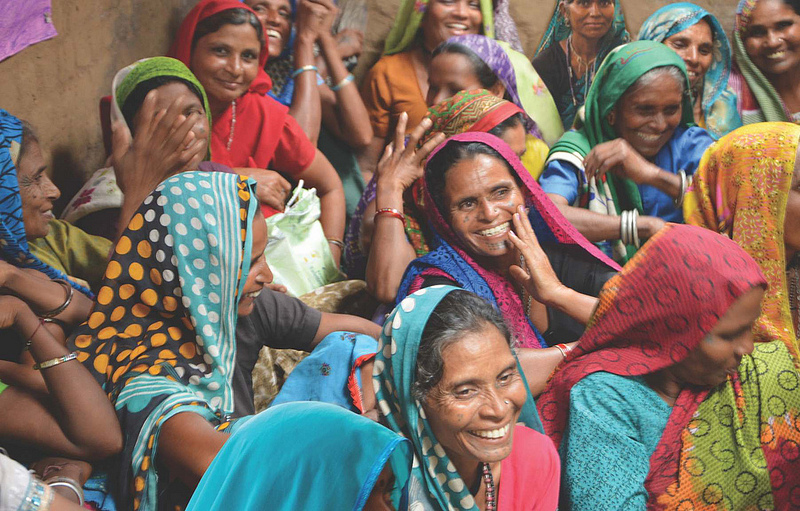
Land ownership plays an important role in the fight against global poverty. Secure land rights for women living in poverty allows them to live a more “healthy, safe and productive life,” according to the World Bank. According to the United Nations (U.N.), more than 380 million women and girls lived in extreme poverty in 2022 with projections of more women living in extreme poverty by 2030 than present-day if current trends continue in sub-Saharan Africa. Women need direct access to land for “gender equality, food security, health, family welfare, protection from sexual violence and other forms of physical abuse,” the World Bank stresses. The risk of women facing domestic violence decreases eight times when women have land ownership rights.
Benefits of Secure Land Rights for Women
As of 2023, according to the U.N., women account for only “one in five landholders” worldwide despite making up 43% of global agricultural workers and producing “80% of food in developing countries.” In some countries where women lack secure land rights, when women become widows, their inlaws may force them off their husband’s property/land, leaving them without arable land from which to derive income and sustenance for themselves and their children, the U.N. explains. More than 100 countries continue to deny the right for women to inherit their husband’s property. Secure land rights for women increase economic empowerment and food security, mitigating multi-dimensional and fiscal poverty in the developing world.
Women’s Land Rights and its Impact on Children
Women’s land rights have a significant impact on children’s quality of life by strengthening food security, health and welfare and education. In developing nations where women cannot be title holders of land, many mothers cannot afford to send their children to school due to low household incomes.
The U.N. highlights that by empowering women through land rights, household nutrition can improve due to access to agricultural produce available for both sustenance and income. In fact, children would face a 33% lower risk of being severely underweight if women had stronger property and inheritance rights. Furthermore, women tend to prioritize the well-being of their families in their choices both nutritionally and generally.
Women’s Land Rights and Productivity
Secure land rights for women also help alleviate global poverty by increasing productivity. This is visible in Tanzania, where as of 2023, more than 80% of women are engaged in the agricultural industry. In Tanzania, women with stronger land rights earn up to 3.8 times more income and are more inclined to have their own personal savings. According to the U.N., global hunger would decrease by 17% (equating to about 150 million people) if “women had the same access to productive resources as men” to rise out of poverty and achieve economic independence.
The U.N. reports that, through traditional knowledge, women are able to “find innovative solutions to address desertification, land degradation and drought.” This is visible in areas such as Jordan, where a women-run plant nursery began with the aim of producing drought-resistant seedlings for land restoration.
Examples of Progress in Securing Women’s Land Rights
In 1956, the government of India created the Hindu Succession Act to give equal inheritance rights to both sons and daughters. Amended in 2005, the act explicitly gives daughters rights to their parents’ land and property. However, a 2013 U.N. Women’s survey found that one in four women did not know they had any right to inherit family land with just one in eight women inheriting parts of their family land. Furthermore, the study also found that fears of creating conflict in the family held women back from claiming their rightful share of land.
The Landesa’s Girl Project, run by Landesa, an organization dedicated to securing land rights for millions of families, collaborated with the Indian government in 2010, in the states of Andhra Pradesh, Bihar and Madhya Pradesh, to educate children both girls and boys about women’s land rights, helping to close the gap between policy and practice. The initiative has enabled women to improve their socio-economic prospects through better awareness and access to information about their right to ownership of land.
In Sierra Leone, ownership of land for women is an economic resource as women depend on the land for their livelihood and subsistence. Lack of ownership limits their economic opportunities and leaves them vulnerable to displacement, violence and extreme poverty. The introduction of the Customary Land Act and the Land Commission Act in 2022 has helped promote gender equality throughout Sierra Leone. The Customary Land Act has meant that the liquidation of family-owned land requires both the consent of the husband and wife.
Moreover, in Sierra Leone, the National Land Commission Act mandates the formation of a committee to regulate land administration, stipulating that a minimum of 30% of the committee members must be women. This provision aims to empower women and enhance their rights and control over land.
Secure land rights for women help alleviate global poverty, which is why SDG 5 (the goal to reduce gender inequality) and SDG 1 (the aim to eradicate poverty) go hand-in-hand.
– Kishan Patel
Photo: Flickr
