Updates on SDG 1 in Bangladesh
 The United Nations (U.N.) Sustainable Development Goals (SDGs) help direct all countries toward a more sustainable future. Members of the U.N. General Assembly developed 17 SDGs in 2015 to reduce poverty, eradicate widespread hunger and address other global challenges. Assuming all countries follow the yearly agenda, all developing countries will enjoy a more prosperous life by 2030. This article will highlight the progress of SDG 1 in Bangladesh.
Since 2015, Bangladesh has made remarkable improvements in reducing poverty (SDG 1). For instance, by 2010, the proportion of Bangladeshis living below the international poverty line decreased by 8.3%. Similarly, the proportion of Bangladeshis living below the domestic poverty line decreased by 9.9% from 2010 to 2018. While this is an exceptional improvement, Bangladesh still has much to improve by 2030.
5 Ways Bangladesh Works Toward SDG 1
- Increasing Opportunities for Women. Bangladesh has a large, young workforce. More than half of Bangladesh’s population is younger than the age of 25 and approximately 2 million people enter the workforce every year. Many women, however, do not participate in the workforce. This is particularly apparent in rural areas where the employment gap between men and women is especially high. According to the SDG Fund, only 36.4% of women are employed; unfortunately, this employment rate is 46.9% lower than that of men. Addressing this disparity between women and men is necessary to reduce poverty in Bangladesh over time.
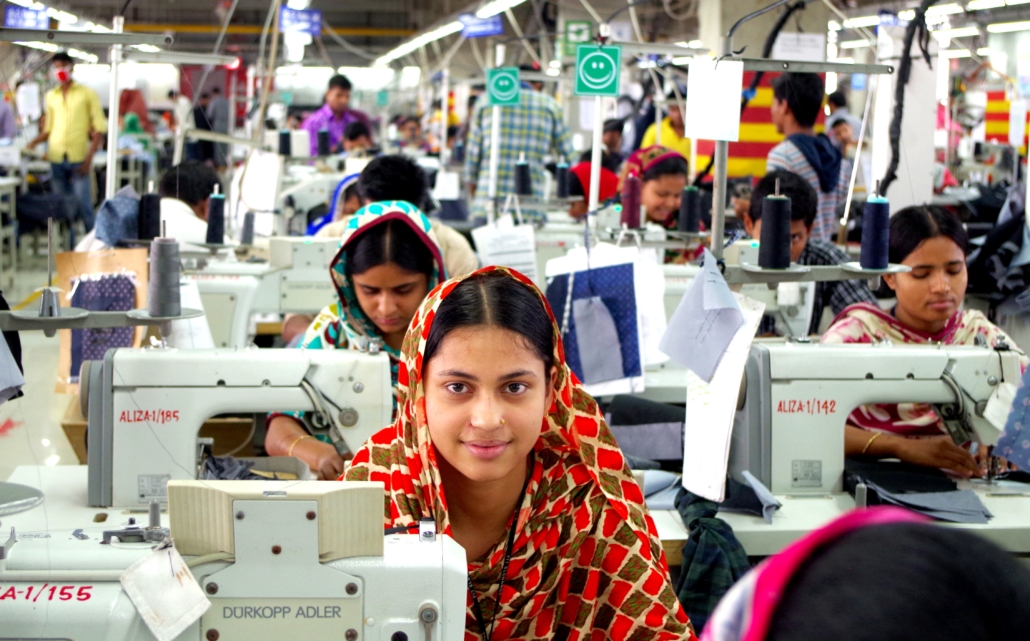
- Growing the Economy. Bangladesh is well-known for its garment production industry, the second-largest in the world. Many businesses hire firms from Bangladesh to manufacture their products. This, in turn, provides Bangladeshis with more work opportunities and provides revenue for the economy. Garment exports from Bangladesh continue to rise by approximately 16% every year.
- Increasing Digital Power. Like Bangladesh’s garment industry, the digital power and technology industry continues to grow rapidly. Bangladesh has the largest number of information technology (IT) freelancers in the world: more than 600,000 IT freelancers work within the country. Freelancers are able to work remotely and assist people worldwide; therefore, these jobs are relatively secure. Much of Bangladesh’s youth seek IT experience due to the good pay and job security.
- Concentrating on Lagging Regions. Economic and environmental issues disproportionately impact the rural areas of Bangladesh. Ergo, these regions are more prone to poverty than urbanized cities. In order to dissipate national poverty and reach SGD 1 in Bangladesh, officials focus on improving lives in these lagging regions. Therefore, the SDG Fund’s program primarily supports rural districts such as the Kurigram district in Northwest Bangladesh and the Satkhira district on the country’s southwest coastline.
- Improving Infrastructure. Improved infrastructure is another vital aspect of fighting poverty in Bangladesh. According to the World Economic Forum Global Competitiveness Report from 2013, the country’s overall infrastructure ranked 134th out of 142 countries. However, since the development of the SDGs, Bangladesh, with financial help from the World Bank, paved 800 kilometers of new roads while maintaining 4,500 kilometers of rural roads in 26 districts. Officials also implemented road safety engineering measures and a community awareness campaign regarding road safety.
Looking to the Future
Bangladesh has made significant progress since implementing the SDGs. By increasing opportunities for women, growing the economy, increasing digital power, concentrating on lagging regions and improving infrastructure, Bangladesh can achieve its goal of providing its people a more prosperous life by 2030. More specifically, these poverty reduction methods will help achieve SGD 1 in Bangladesh.
– Heather Law
Photo: Flickr
