5 Facts About School Fees In Africa
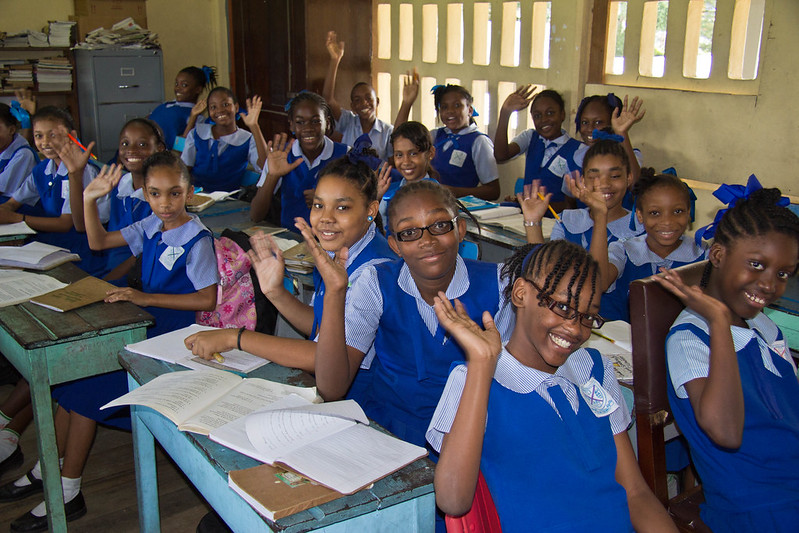 School fees are a major barrier to widespread, effective education in Africa. Many children in impoverished families simply cannot afford to pay the required fees to attend school. As a result, they never receive a proper education. It is important to know basic facts about the issue because the first solutions that come to mind are not always the best ones. For example, removing fees altogether isn’t necessarily a solution because that can lead to overcrowded and underfunded schools. Here are five facts about the complicated topic of school fees in Africa.
5 Facts About School Fees in Africa
- School fees have been common in Africa since the 1980s. Structural adjustment programs in the 1980s urged schools to move to “user fees” to fund many public necessities, such as education, instead of paying for these necessities through taxes. Not long after fees were implemented, poor families began struggling to send their children to school. A 1986 study found that in 33 of 63 developing countries, the poorest 40% of families would have to spend over 10% of their yearly income to send two children to primary school. This statistic shows the harmful effects of the implementation of school fees on poor families in the 1980s. However, school fees in Africa today are still too high for many families to afford. Many children in Africa are not getting the education they need. For example, one out of every five children between the ages of 6 and 11 are out of school in Sub Saharan Africa. Between the ages of 12 and 14, the proportion increases to about a third. School fees contribute heavily to education exclusion. When fees are eliminated, African schools see a huge increase in pupils. For example, Kenya eliminated primary school fees in 2003 and as a result, enrollment rose by 2 million students.
- Yet, abolishing fees can cause further problems. When schools abolish fees, the immediate results are a drastic increase in students, as occurred in Kenya. This increase can be counted as positive. On the other hand, it can leave many schools without enough funding to support the new pupils. Space, supplies and teachers face the most stress from the increase in students. A 2015 study found that primary schools in Sub Saharan Africa that had fees also had a smaller student to teacher ratio. In many African countries, tax bases are small and the government alone is unable to financially support education; thus, the abolition of fees leaves some schools drastically underfunded. Dr. Jay Kaufman, who worked on a study about school fees in Africa, spoke to The Borgen Project about some of the issues that eliminating school fees caused. “Basically, in many countries that removed fees, there was no further investment in the educational system. So the result was classes jam-packed with students, many students sharing a single desk and therefore no successful education whatsoever,” Kaufman stated.
- Fees are only part of the problem. There are many more financial barriers keeping students out of schools in Africa. Many African schools require uniforms, and procuring them can be too high a cost for many families. The cost of books, school supplies and transportation can impede children seeking education as well. Additionally, having students in school and not in the workforce can put a financial strain on families, especially once their children reach their teens.
- COVID-19 could spark increased fee rates. Many African countries had high gross enrollment rates in the 1960s, 70s and early 80s. However, many of these rates had fallen by the mid-1990s due to economic downturns. Based on this trend, economic crises pose a threat to students who may already be struggling to pay fees. Given the economic fallout caused by the pandemic, many countries in Africa may struggle to maintain the same rates of funding to education. This could potentially result in increased fees. This, along with families’ inability to make money during the pandemic, could subsequently result in more students dropping out of school.
- Nonprofit organizations can provide long-term solutions. Aid For Africa is an alliance of NGOs working to support elementary school students financially in Burundi, Ghana, Kenya, Malawi, Rwanda, South Africa, Tanzania and Uganda. BEADS For Education sponsors girls in Kenya from fourth grade through college, easing the financial burden on their families. Currently, the organization sponsors over 300 girls. The Maasai Girls Education Fund focuses on getting girls from the Maasai tribe in Kenya into schools. The organization provides these girls with scholarships to assure that they have the means to attend school.
Moving Forward
The exclusionary education caused by school fees in Africa is a complicated, multifaceted issue that does not have a single, clear solution. Nonetheless, it is a pressing issue that affects children across all of Africa. Knowing some key facts about the situation is essential if interventions are to be effective in opening up educational opportunities to impoverished children. Such knowledge is also key to making changes that are sustainable in the uncertain post-COVID-19 era.
– Sophia Gardner
Photo: Flickr
