Fragility and Rule of Law in Sudan
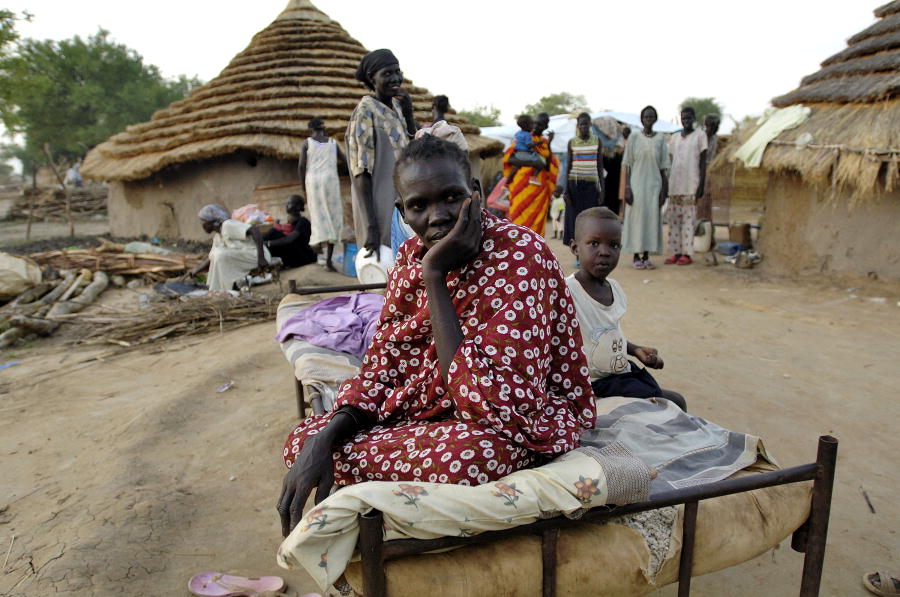 The civil war has impacted fragility and the rule of law in Sudan, and the safety of 50 million people. According to the World Food Programme (WFP), a total of 24.6 million people are acutely food insecure, while 637,000 face catastrophic levels of hunger. Meanwhile, Sudan is in the top four countries in the world for the highest prevalence of global acute malnutrition, at an estimated 13.6%. Sudan has also lost an estimated 5.2 million jobs, and economic activity in Sudan’s capital, Khartoum, has plummeted.
The conflict has weakened central governance and key infrastructure, requiring humanitarian efforts from the international community. However, armed clashes, widespread insecurity and lack of funding has made it increasingly difficult for aid agencies to reach affected communities.
About the Recent Civil War
The current Sudanese civil war began on April 15 2023, during Ramadan, when Rapid Support Force (RSF) members were deployed across the country, a move which the Sudanese armed forces saw as a threat. Before this, Political disagreements increased tensions between Gen. Abdel Fattah al-Burhan, the de facto president and head of Sudan’s armed forces, and his deputy, Gen. Mohamed ‘Hamedti’ Hamdan Dagalo, leader of the RSF. The two rose to power after the 2019 coup of dictator Omar al-Bashir, as well as subsequent coups of the transitional government.
Disagreements centered on the increase of Hamedti’s power in government, the integration of the RSF into the Sudanese army, and the multiple delays in establishing a democratic government. Bouts of conflict have wracked the rule of law in Sudan since its independence in 1956, when it was already embroiled in the first Sudanese civil war.
Sudan’s History
Before independence, Sudan was part of the Anglo-Egyptian condominium. Although both the U.K. and Egypt administered the region, the U.K. held more authority. In 1954, both countries signed a treaty which would grant sovereignty to the new Republic of Sudan in 1956. Despite this, war gripped the country when the first Sudanese civil war began in 1955 as a result of cultural divides and political and economic inequality in the region.
Britain governed the Sudanese north and south as different entities. The north comprised wealthier, more educated Arab and Muslim populations, whereas the south comprised poorer Christian or pagan peoples who were less politically conscious. Due to its wealth, the north leveraged more political power from both colonial and post-colonial administrations, thereby driving further inequality between the regions. Discontent between the North and South grew after the 1947 Juba conference, where both the North and South would be subsumed into one government, further dissipating southern autonomy. In addition, northern Islamization and Arabization of the south heightened even further animosity between the two. The aftermath of the war and continuation of North/South inequalities would lay the groundwork for the second Sudanese civil war in 1983, and would also lead to the succession of South Sudan in 2011.
The Dictatorship of Omar Al-Bashir
In 1989, during the second Sudanese civil war, Brigadier General Omar Al-Bashir ousted the democratically elected government in a military coup and became head of state. Accusations of electoral fraud and corruption marred his dictatorship of the country, which incited numerous protests. Furthermore, his governance focused heavily on strict Sharia law interpretations, with many rights taken away through morality policing and persecution of religious minorities and Sunni apostates.
In 2009, the International Criminal Court (ICC) indicted him for five counts of crimes against humanity and two counts of war crimes. Then, in 2010, the ICC added three additional counts of Genocide to his indictment. These charges related to the treatment of ethnic minorities, including the Fur, Zaghawa and Masalit, during the Darfur war.
In 2019, a military coup that the SAF and RSF jointly carried out overthrew him. The aftermath left a power vacuum, impacting the rule of law in Sudan and the fragility of the government.
A New Government
On March 4, 2025, the RSF and allied groups signed a transitional constitution for a parallel government in regions under their military control. The new government aims to gain diplomatic legitimacy from opposing forces and establish more access to advanced weaponry.
In a UN Security Council meeting, U.S. Representative John Kelley stated, “Attempts by the RSF and aligned actors to establish a government in RSF-controlled territory in Sudan are unhelpful for the cause of peace and security in Sudan, and risk a de facto partition of the country.”
The 2025 Sudan Humanitarian Needs and Response Plan
In December 2024, the U.N.’s Office for the Coordination of Humanitarian Affairs (OCHA) developed the 2025 Sudan Humanitarian Needs and Response Plan. It aimed to provide humanitarian assistance to 21 million people and reduce mortality in areas with a risk of further deterioration of rule of law in Sudan.
Recently as part of the response plan, between May 4th and 8th, the World Food Programme distributed food to more than 335,000 people in Tawila in response to worsening conditions. This program has raised $600 million, however, this falls woefully short of the much-needed total requirement of $4.1 billion.
Because of global funding shortfalls, the Emergency Relief Coordinator asked humanitarian teams to ensure that the most life-saving assistance reaches the most vulnerable populations.
It has shortened its target to 17.3 million people, for which $2.4 billion is needed to provide. This amounts to $0.38 per person per day over one year.
On March 10th, the United Nations Resident and Humanitarian Coordinator in Sudan, Clementine Nkweta-Salami, commented on the funding shortfalls in a press release. She stated that “The abrupt funding cuts and suspensions will end life-saving humanitarian assistance for millions of women, children and other vulnerable groups across the country. Without urgent funding, famine is likely to spread in the coming months. This is a time when every lifeline must flow to save lives. I call on all our major donors to reconsider their decisions to reduce funding for life-saving humanitarian assistance in Sudan. I also urge other governments, donors, foundations, charities, faith-based networks, the private sector and individuals to urgently step up to help fill the gaps left by these devastating reductions.”
– Samuel Devine
Samuel is based in Cardiff, Wales and focuses on Business and Politics for The Borgen Project.
Photo: Flickr
