Recovering From the Punjab Floods
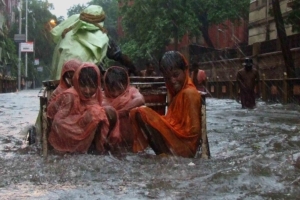 In September 2025, states in northern India faced heavy rains, flash floods and overflowing rivers. Entire villages and thousands of hectares of farmland were submerged. About 35% of Punjab’s population works in agriculture and they experienced the region’s worst flooding in four decades, severely disrupting livelihoods. The Punjab floods caused at least 51 deaths and more than 400,000 people were forced to flee.
Additionally, hundreds of thousands of Punjabis were left without electricity or clean water. Even before the floods, Indian farmers were facing increasing hardships. Many had accumulated high debts while struggling with low incomes and heavy crop losses due to the climate crisis, which has created extreme weather conditions that defy predictability and planning.
The recent flooding has worsened these challenges, leaving many farmers with nothing left. Observers on the ground have stated that for many farmers, recovering from the Punjab floods is proving extremely difficult.
The Good News
The good news is that financial assistance has been provided to help farmers rebuild their lives. By the end of September 2025, the Punjab government—led by the Aam Aadmi Party (the Common Man Party)—announced a 20,000-rupee ($230) allowance for farmers who lost their crops to the floods. In addition, relief efforts have come from all directions, including Non-Resident Indians, global Sikh charities and local volunteers.
Pritpal Singh of Hanspal Traders in Kapurthala built more than 100 boats and distributed them free of charge to support rescue operations. Buffalo and cattle have also been purchased for dairy farmers who lost their animals in the floods. The charity Khalsa Aid rescued stranded families and livestock and provided clean drinking water, ration bags and medical assistance.
Khalsa Aid also deployed specialized de-watering systems that have already dried more than 1,000 acres of waterlogged land. The organization’s team is also working directly with farmers in the Abohar area to help them restore their fields and resume cultivation. This support has become a lifeline for many whose livelihoods were severely threatened by the floods.
Recovering From the Punjab Floods
There is a prolonged economic challenge ahead for farmers, as they require considerable investment to recover from the floods. Climate instability is hitting developing countries the hardest, with some of the most financially vulnerable people in the world being affected. Punjabi farmers have already been living in precarious conditions and extreme weather conditions have exacerbated their problems.
However, the relief efforts for the Punjab floods have demonstrated that the Asian diaspora can collaborate with local volunteers in India to assist farmers and communities in rebuilding their lives. The response has been a large, well-coordinated effort involving multiple countries, diverse groups and both governmental and nongovernmental bodies. Agriculture is widely recognized as crucial to Punjab and it is clear that farmers operate with limited resources.
This reality has driven everyone involved in the relief work to sustain their efforts and support long-term recovery.
– Suneel Mehmi
Suneel is based in the United Kingdom and focuses on Good News for The Borgen Project.
Photo: Flickr
