Agricultural Initiatives Bringing Poverty Reduction in Peru
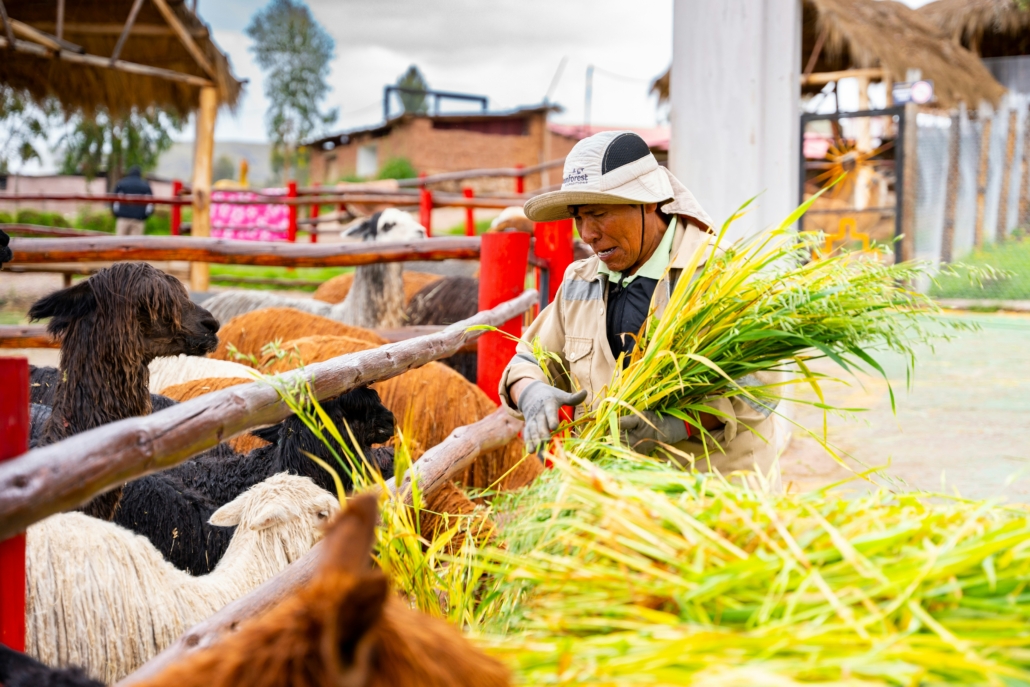 Since the early 21st century, Peru has led Latin America in expanding their economy and improving quality of living. The poverty rate fell from 60% to 24%, while non-traditional agricultural exports rose by 15 times in value. Many of these achievements trace back to the divisive presidency of Alberto Fujimori from 1990 to 2000. Although he ruled with an authoritarian hand, Fujimori enacted drastic market reforms and created programs aimed at building schools and roads in poorer regions.
From 2013 onward, though, Peru’s rapidly expanding economy, including its agriculture industry, slowed. And recently, after COVID-19 hit Peru especially hard, recent events such as the war in Ukraine have skyrocketed inflation, worsening the food crisis. About half of the population is moderately food insecure as staple foods like potatoes suddenly have become unaffordable. Recently, though, effective initiatives expanding the agricultural industry have offered hope of a major turnaround toward economic growth and poverty reduction in Peru.
Why Agricultural Growth Aids Poverty Reduction in Peru
There is ample evidence suggesting an increase in agricultural growth can help lower rates of poverty. Investment in agriculture is two and a half to three times more successful at raising the income of the poor than non-agricultural investment, and in the 1990s and 2000s, countries experiencing exceptionally high agricultural growth rates, such as Malawi, Mozambique and Brazil also saw large reductions in poverty. In fact, higher agricultural growth marked early development in several places, such as Western Europe and Japan. Therefore, in order to decrease rates of poverty in Peru, targeting the productivity and development of the agricultural sector is essential.
World Bank Group Projects
Over the years, the World Bank Group has spearheaded numerous efforts to reduce poverty in Peru through improvements in agriculture. About 189 member countries operate the organization, who act as shareholders and have an impressive history in combating poverty: they built an international system of agriculture research centers in 1971, aided in the reconstruction of Yugoslavia in 1995, and financed $5 billion for education projects in 2010.
Since the early 2000s, the World Bank has been successful in improving Peru’s irrigation sector, especially in coastal areas. In 2010, the World Bank approved an ambitious project directed at improving irrigation for farmers in Peru’s Sierra, or mountainous regions of the Andes. At the time, the Sierra held a third of all irrigated land in the country, and agriculture represented the largest share of household income. Through the implementation of pipes, filters, small reservoirs and promoting the creation of farmers’ groups, crop yields increased, impacting nearly 18,758 farmers.
In 2025, the World Bank approved a 10-year, $200 million program to expand access to clean water in the cities of Lima and Puno. As a result, the hindrance farmers encounter from untreated wastewater and droughts will fall significantly, thereby boosting the agricultural industry. This will build onto the irrigation improvements realized earlier in a country where agriculture employs a quarter of the workforce. As a result, rural areas of Peru with higher poverty rates will experience increased development and economic growth.
The Hand-in-Hand Initiative
The Food and Agriculture Organization (FAO) created the Hand-in-Hand Initiative in 2019, developing into one of its primary programs. The organization has pushed for agricultural development in 83 countries, including Peru.
In the Sierra, the project is connecting smallholder farmers to larger markets and fair contracts with private companies. As a result, farmers such as Irineo Núnez Vargas have brought their crops to global markets through contracting with companies like Tiyapuy thanks to these initiatives.
The Inter-American Development Bank
After World War II, leaders formed the Inter-American Development Bank (IDB) to lead economic development in Latin America. Though the United States is the largest shareholder, nearly every nation in the Western Hemisphere is a member. The IDB achieves its goals through grants, loans and economic research.
In 2024, the IDB approved an $85 million loan with the purpose of increasing productivity in Peru’s agricultural sector. It is set to benefit about 92,000 farmers, especially focusing on women and ethnic groups. Unlike the other initiatives, the IDB plans to enhance agriculture technology and agriculture research throughout the country, not only limited to a single ecosystem.
Takeaways
History shows that if farmers struggle, an entire nation usually struggles too. While focusing on agricultural improvements in Peru might appear slow and indirect at confronting poverty, it is actually one of the best methods at doing so. As a result, these many initiatives are essentially laying the groundwork for economic growth and poverty reduction in Peru for decades to come.
– Ben Anderson
Ben is based in Madrid, Spain and focuses on Business and Politics for The Borgen Project.
Photo: Unsplash
