Poverty Reduction in Cuba
 While poverty reduction in Cuba has been at the forefront of its government’s policies since the 1959 revolution, poverty, food insecurity and inequalities in universal services still exist today. As of 2019, Cuba’s multidimensional poverty index score was 0.003, with only 0.7% of its population considered poor. Although one of the lowest in the region, certain indicators, such as the Cuban childhood poverty figure, have steadily increased since 2012. With an economic dependence on the tourism industry and imports, while also suffering under the United States’ strongest trade embargo; Cuba remains at risk for instability.
Since 1959, Cuba’s socialist program has addressed poverty by prioritizing food rations, healthcare, literacy and housing for all of its citizens. Despite hardships due to frequent natural disasters, a resource-poor environment and forced isolation from the world market; the Cuban people have remained both steadfast in their principles and adaptable in moments of crisis. As Cuba recovers from the impacts of the COVID-19 pandemic and fights against the United States’ oil blockade, unity and creativity are of the utmost importance when reducing poverty.
Healthcare
Cuba’s planned, state-controlled economy allows for much of the national budget to fund universal healthcare, education and food rations. During the Batista regime of the 1950s, nearly half of the country’s physicians were located in Havana. The centralization of healthcare in cities created severe disparities between quality of care for rural and urban citizens. At that time, Cuba had a single rural hospital, and the rural infant mortality rate was 100 deaths per 1,000 births.
In 1960, the government formed the Rural Medical Service, placing recent graduated physician volunteers in rural areas, and by 1970, there were 53 rural hospitals in Cuba. Through the Family Doctor and Nurse Program, every Cuban has had access to one of more than 13,000 teams of neighborhood doctors and nurses since 1999. These local doctors ensure that the Cuban Health System regularly engages with all of the country’s citizens.
It also gives the government access to aggregated community diagnoses that lead to greater analysis of risk factors and the nation’s most pressing needs. This has led to a reduction of the infant mortality rate from 38.7 per 1,000 live births in 1970 to 4.0 per 1,000 live births in 2018, and has strengthened women’s health services through the establishment and expansion of the National Maternal-Child Health Program. Furthermore, Cuba’s commitment to universal healthcare and public health exceeds its own borders. Since the end of 2018, approximately 400,000 Cuban health professionals have worked in more than 150 countries.
Food and Housing
Although to varying amounts, food rations have been a staple of poverty reduction in Cuba. Recently, limited access to foreign currency for imported food, natural disasters such as Hurricane Melissa and fuel shortages have led to increased food security issues for the island. As the government-issued food baskets are almost entirely imported, Cuba has partnered with the World Food Programme (WFP) for assistance in reducing imports and increasing food self-sufficiency.
This partnership seeks to improve assistance in maintaining food access amid natural disasters, and to strengthen nutrition systems for vulnerable groups, such as expanding school lunches for children. In 2025, 1,540,107 Cubans benefitted from the World Food Programme’s aid—particularly through food assistance and disaster relief from Hurricane Melissa.
Cuba’s 2019 Constitution reiterates these goals. It defines healthcare, education, food security and shelter as human rights, and upholds the state’s goal to achieve food security and housing for all of its citizens. The Cuban government plans to increase shelter construction programs and food rations to accomplish this. By deeming these basic necessities as natural rights, the Cuban government seeks to create both a baseline of security and a healthy, well-educated workforce.
Future Strategies
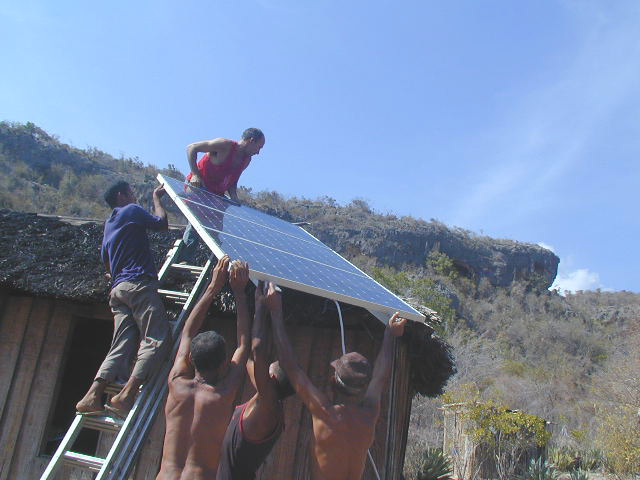
Due to the recent oil blockade, Cuba has turned to solar power. In 2025, Cuba, with financial help from China, installed around 1,000 megawatts of solar generation. As of February 2026, the Cuban government announced it would waive personal taxes for up to eight years for business people investing in renewable energy. Even local taxi drivers have installed solar panels on the roofs of their vehicles in response to the scarcity of oil. While the oil blockade presently harms Cubans, they are already preparing for an alternative future.
Leader Miguel Díaz-Canel has begun preparations for poverty reduction in Cuba amid increased sanctions and economic instability. Alongside investments in renewable energy, Díaz-Canel has prioritized a decentralization of authority—giving more power to local municipalities and state-owned enterprises—with the goal of expanding local production and reducing reliance on imports. Above all, Díaz-Canel cites “cooperation and collaboration…based on principles of solidarity, integration and complementarity,” as the core principles necessary for Cuban prosperity.
– Josh Megson
Josh is based in Albemarle, NC, USA and focuses on Good News for The Borgen Project.
Photo: Wikimedia Commons
