Artisans Fighting Poverty in Peru
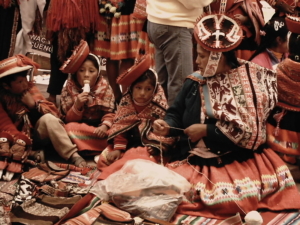 Peru is a country in South America with a population of 34.22 million people. The global pandemic did a lot of damage to Peru’s economy and poverty rates in the country have increased significantly since 2019. Currently, 27.6% of the population lives beneath the national poverty line and much of that poverty is centralized in rural parts of Peru.
In fact, rural poverty is higher than the national average, at a whopping 39.3%. Ending poverty in rural areas is vital to ending poverty nationwide. Still, it is tough, as many rural areas speak distinct languages and specialize in different forms of cultural art.
However, it is this cultural art that many programs have chosen to focus on in one of the many attempts to alleviate financial difficulty in rural areas.
The MGD Achievement Fund
The MGD Achievement Fund’s joint program in Peru focused on reducing poverty across four of the country’s most disadvantaged regions. It did this by building inclusive creative industries in tourism, handicrafts, organic agriculture and gastronomy. The program enriched the poorest parts of Peru by using traditional heritage to stimulate tourism through handicrafts and foods, as well as promoting organic agriculture.
Much of its work was done with the help of the United Nations (U.N.), specifically the Food and Agriculture Organization, the U.N. World Tourism Organization and the country’s Ministerio de la Producción (Ministry of Production). Focusing on the regions of Ayacucho, Cusco, Lambayeque and Puno, the program distributed official certificates to 126 artisans, 26 entrepreneurs in rural tourism and 49 regional cooks. The program was a huge success and more than 2,500 families across Peru increased their incomes, maintained their traditional practices and cared for the environment around them.
The program also documented many traditional arts and ensured they could continue for seasons to come.
The Awamaki Program
Awamaki uplifts Peruvian artists. It is a nonprofit that operates in Peru’s Sacred Valley, also known as the Urubamba Valley. It is based in the town of Ollantaytambo and focuses on addressing the widespread poverty throughout the valley.
The heart of the program is a cooperative of five women-led groups across the valley and it allows these women to receive skills-based training for their art. Their art is sold throughout the valley and beyond and all profits go back into their communities. The organization also helps facilitate tours in the region, bringing money into small towns.
It offers tours in both Spanish and Quechua, the native language of many regions in South America. The group also teaches computer classes to residents and offers English classes to help bolster international relations in the future.
Conclusion
Overall, Peru is a beautiful country with a wonderful heritage that is close to the hearts of many. Some have spent their entire lives doing their traditional art, making their own traditional food and speaking their traditional languages. Documentation and appreciation of heritage can be a huge stepping stone, especially when that heritage is so closely intertwined with the area’s finances. Honoring culture while promoting growth is the most effective tool for alleviating poverty.
– Eddie Hofmann
Eddie is based in Seattle, WA, USA and focuses on Business and Good News for The Borgen Project.
Photo: Flickr
